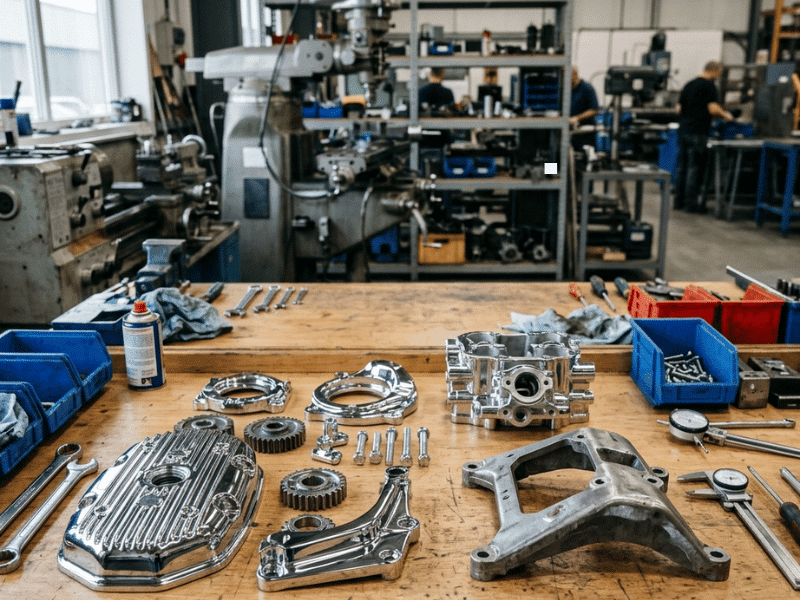
Chrome plating shows up everywhere in automotive, restoration, and manufacturing work. It gives metal a bright, mirror-like finish and adds corrosion protection. But here’s the part most people miss: chrome isn’t a polish, and it isn’t paint. It’s a real layer of metal bonded to your part through an electrochemical process. That distinction changes everything about how you strip, repair, or refinish a chromed surface.
So here’s the short answer up front: you can remove chrome plating with three broad approaches—mechanical, chemical, and electrolytic (reverse electroplating). Which one you choose isn’t about what’s easiest. It comes down to three variables: your substrate material, whether the coating is hard chrome or decorative chrome, and how much substrate damage and safety risk you can accept.
This guide skips the shallow overview. We’ll walk through the “how” and the “which to choose” using an engineering decision lens, and we’ll keep safety essentials—hexavalent chromium toxicity, PPE, and waste disposal—front and center throughout.
In this guide:
- Why decorative and hard chrome demand different removal logic
- A comparison table covering 6 methods, ranked by risk, cost, and fit
- Specific advice for steel, aluminum, brass, and plastic substrates
- A pre-project checklist and clear signals for when to outsource
What Is Chrome Plating?
Chrome plating deposits a thin layer of chromium onto a metal surface through electroplating. The result is a hard, reflective finish that resists wear far better than the bare base metal underneath—brighter and more mirror-like than polished aluminum. That’s why you see it on automotive trim, faucets, machine components, and aerospace parts.
The process runs on electricity. The part goes into a chemical bath, and an electric current pushes chromium ions out of solution and onto the surface, where they bond and build up an even coat. Here’s the key point: Chrome plating is fundamentally an electrochemical deposition process. So when you remove it, you either grind it off physically or strip it “in reverse” using chemical or electrolytic methods. Grasp that, and every method below makes sense.
Decorative Chrome vs. Hard Chrome: Why Removal Methods Differ
Many chrome-stripping jobs fail because nobody checked which type of chrome was there first.
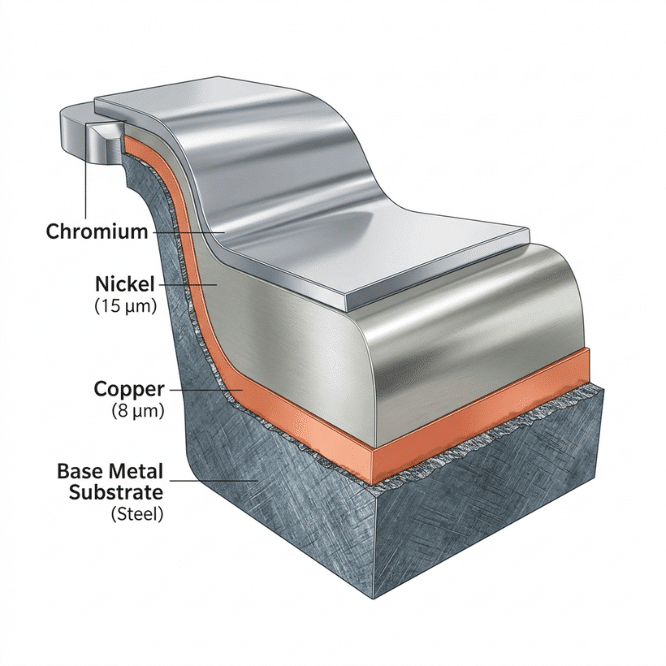
- Decorative chrome (bright chrome): roughly 0.002–0.02 mm thick, built for looks. You’ll find it on bumpers, trim, and motorcycle parts. Underneath, it almost always has a nickel layer—sometimes a copper/nickel multilayer stack. That nickel does the heavy lifting for smoothness and shine, and the thin chrome on top delivers the final reflective finish. Stripping the chrome is just step one; the underlayers still need attention.
- Hard chrome (industrial chrome): roughly 0.02–0.04 mm thick, built for wear resistance, corrosion protection, and low friction. You’ll find it on hydraulic rods, molds, shafts, and engine components. Nobody cares if it looks pretty—they care if it lasts.
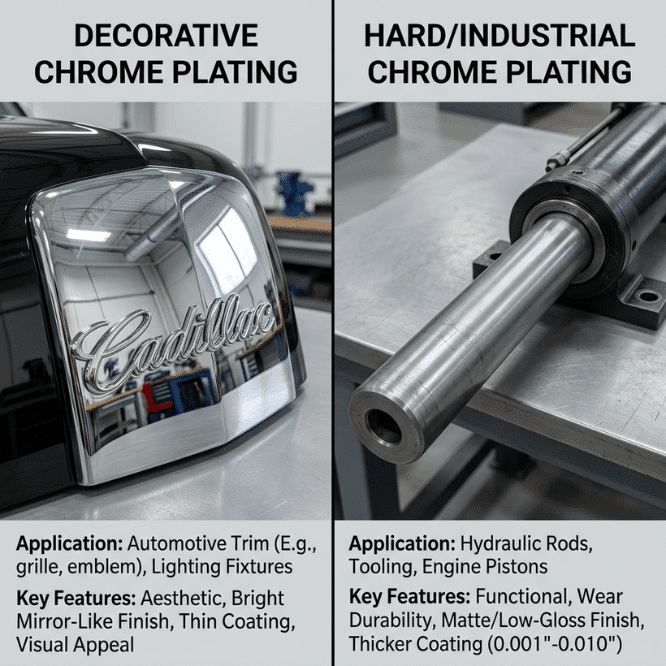
Why does this dictate your method? Hard chrome is thicker and harder, so mechanical grinding is slow and easily damages the substrate—chemical or electrolytic methods usually work better. Decorative chrome is thin, so mechanical removal can be more economical. But you must anticipate the nickel layer, or you’ll wrongly assume the chrome “won’t come off.” Thickness and layer structure set both the removal time and the risk level.
Why Chrome Fails: Pitting and Peeling
Understanding how chrome breaks down helps you decide whether to strip and refinish a part—and it explains a lot of failures.
Chrome is brittle. If the base metal bends or the plating was applied poorly, the chrome can crack or flake. But the biggest long-term risk is pitting. Once the chrome layer gets scratched, moisture sneaks underneath and starts corroding the base metal. That trapped rust spreads beneath the surface, and by the time you notice, the damage is usually done—the corrosion breaks the bond holding the plating in place, and the chrome peels.
If you’re seeing bubbling, flaking, or rust creeping out from under the finish, the plating has already failed. Stripping and refinishing is often the only real fix.
Does Removing Chrome Plating Damage the Substrate?
It can—or it can be avoided—depending on whether your method matches the material. Since this is the worry that stops most people, here’s the direct answer: with the right method, you can strip chrome plating without significant substrate damage.
Risk varies by base material:
- Steel: most tolerant; acid and electrolytic methods are both relatively safe.
- Aluminum: vulnerable to strong alkalis. Sodium hydroxide attacks the aluminum substrate directly, so tread carefully.
- Brass: copper alloys are sensitive to strong acids—control soak times tightly.
- Plastic: basically off-limits for corrosive chemical methods, which destroy the substrate outright.
Remember this: your choice of method directly determines substrate integrity. The table below exists to help you make that choice.
Chrome Plating Removal Methods Compared
| Method | Suitable Substrate | Hard / Decorative Chrome | Substrate Damage Risk | Safety Risk | Cost | Batch Fit | DIY Advised? |
|---|---|---|---|---|---|---|---|
| Abrasive blasting | Metal | Both (hard chrome slow) | Medium | Medium (chrome dust) | Medium | Medium–large | With caution |
| Grinding / sanding | Metal | Mostly decorative | Medium–high | Medium (chrome dust) | Low | Small | Yes, with PPE |
| Hydrochloric acid (HCl) | Metal | Both | Medium | High (strong acid + chrome) | Low | Small–medium | Not advised |
| Sodium hydroxide (NaOH) | Some metals (not aluminum) | Both | Medium | High (strong alkali + chrome) | Low | Small–medium | Not advised |
| Professional stripping solution | Many metals | Both | Low | Medium (needs compliant disposal) | Medium | Medium–large | Not advised |
| Reverse electroplating | Metal | Hard chrome preferred | Low | Very high (chromic/sulfuric acid) | High | Medium–large | Prohibited |
How to read this table quickly. If you want zero substrate damage, look first at professional stripping solutions and reverse electroplating. If you need low-cost small cosmetic parts, mechanical methods win on value. If plastic is involved, immediately rule out any corrosive chemical method. Any row marked “High” or “Very high” for safety is unsuitable for on-site DIY without proper protection and waste handling.
Mechanical Chrome Removal Methods
The core idea: grind the chrome off physically, skip the harsh chemicals—but control the chrome-laden dust.
Abrasive Blasting
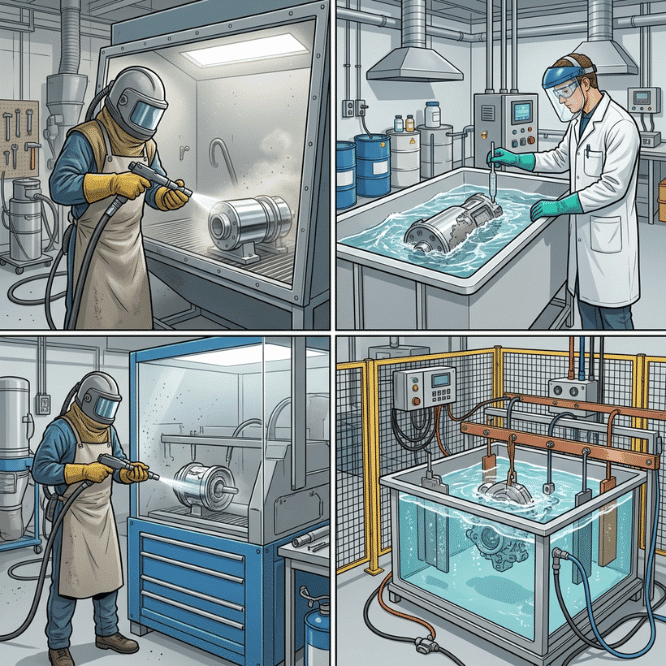
Abrasive blasting (media blasting) strips chrome using a high-velocity spray of fine abrasive particles—aluminum oxide or glass beads are common. It’s a go-to choice in auto shops and automated production lines for batch removal. It handles metal parts well, reaches into recessed areas your hand and sandpaper never will, and tackles complex geometries at the same time.
Safety note: blasting generates fine chrome-containing dust, and inhaling hexavalent chromium carries a cancer risk. Wear goggles and a dust respirator (N95 or better), and work in an enclosed, dust-extracted station.
Grinding and Sanding
For small areas and cosmetic parts, sanding is the most accessible method. Start with a coarse grit to break through the hard outer chrome, then step up to finer grits gradually—this smooths the base metal instead of tearing it up and saves cleanup later. But manual removal demands a steady touch: uneven pressure gouges the substrate, and the wrong tooling leaves deep scratches you’ll spend hours fixing. Go easy on soft aluminum, especially. Once you cut into the base metal, there’s no undo button.
Pros, Cons, and When to Use Mechanical Methods
- Pros: no strong acids or alkalis, minimal waste-liquid burden, low equipment barrier.
- Cons: easy to scratch or thin the substrate, limited efficiency on hard chrome, and dust protection is non-negotiable.
Use mechanical methods when the part is metal, the area is small, and proper dust control is in place.
Chemical Chrome Removal Methods
The core idea: dissolve the chrome with acid or alkali—fast, but with a high safety and waste-disposal bar. Gloves, goggles, and a chemical-resistant apron are the minimum during operation.
Hydrochloric Acid Stripping
Hydrochloric acid (also sold as muriatic acid) is a common acid, typically at 30–40% concentration. Submerge the metal part, let the chrome react and lift off, then remove promptly. Leaving it too long damages the substrate—once the chrome and nickel are gone, the acid starts attacking the base metal. Note two rules: HCl is for metal only—never plastic, and both mixing and soaking require an acid-resistant container, not an ordinary bucket that will corrode.
Sodium Hydroxide Stripping
Sodium hydroxide is the strong-alkali route, suitable for some metals (never aluminum). It’s slower than acid and often requires extended soaking to fully lift the plating. The process is straightforward: soak → clean → rinse → dry. Caustic solution is corrosive too—splashes will burn skin and eyes.
Professional Stripping Solutions
Commercial stripping solutions are formulated products. They react more predictably, treat the substrate more gently, and lower the risk of residue and over-etching. They suit jobs with meaningful batch volume and consistent quality requirements, and they’re the mainstream choice for factory-level chrome removal.
One Rule for Every Chemical Method: Neutralize
No matter which chemical you use, neutralize it once the chrome is gone. Skip this step, and the acid or alkali keeps working, chewing into your base metal. Rinse thoroughly and neutralize before the part sits.
Safety and Waste Handling
Chemical stripping produces hexavalent chromium waste liquid—a confirmed carcinogen and environmental pollutant. Never pour it down the drain. It must be collected, neutralized, and handed to a licensed hazardous-waste handler in accordance with proper procedures. Never mix chemicals or acids either—combining the wrong ones creates toxic fumes that can be lethal in an enclosed space. Keep the air moving, and work in a space with strong ventilation. Without compliant disposal capacity, you shouldn’t run chemical stripping on-site. That’s the fundamental reason many of these methods aren’t DIY-friendly.
Electrolytic / Reverse Electroplating Removal
How It Works
Reverse electroplating flips the plating process: a DC power source applies a reverse charge to “pull” chromium ions off the substrate and back into solution. A typical setup uses an acid-water mix (around 100:1) formulated with chromic and sulfuric acids, maintained at roughly 120–150°F (about 49–66°C).
When to Use It
Electrolytic removal causes minimal substrate damage and offers high control, so it’s especially suited to high-value precision parts—think hydraulic rods and molds that must keep tight dimensional tolerances and can’t be scratched. It’s the professional favorite: controlled, clean, and gentle on the base metal.
Risks and Professional Requirements
This route involves highly toxic, corrosive, and carcinogenic chemicals such as chromic and sulfuric acids, as well as electrical current and heat. The safety risk is extreme. It must be performed by qualified professionals in a proper facility. Everyday users should never attempt it.
Chrome Removal by Substrate Material
Removing Chrome from Steel
Steel tolerates removal well, so both acid stripping and electrolytic methods apply. For hard-chrome steel parts such as hydraulic rods, electrolytic removal is usually preferred to preserve dimensional accuracy.
Removing Chrome from Aluminum
Use strong alkalis with caution on aluminum—sodium hydroxide attacks the aluminum substrate directly. Favor gentler professional stripping solutions or an electrolytic approach, and strictly control timing.
Removing Chrome from Brass
Brass surfaces need protection to keep strong acids from over-attacking the copper alloy. Limit soak times, favor milder formulations, and neutralize and rinse promptly after stripping.
Removing Chrome from Plastic
Plastic parts (such as chrome-plated ABS) should avoid any corrosive chemical method, or the substrate will swell and become scrap. Favor mechanical methods, or hand the part to a service provider with a dedicated plastic-stripping process.
How to Verify Complete Chrome Removal
Start with a visual check: when the chrome’s signature mirror reflection disappears, and the underlying metal or nickel shows through, the chrome is usually gone.
Key reminder: after the chrome comes off, decorative parts often still have a nickel layer—sometimes a copper layer too. A surface shifting from “mirror bright” to “matte dull” likely means you’ve exposed the nickel, not the substrate. To decide whether more stripping is needed, sand a small spot and inspect the cross-section color, or send it for testing to confirm the presence of residue. Don’t mistake “exposed nickel” for “not fully removed.”
Post-Removal Surface Treatment
Surface Cleaning
Thoroughly remove any residual acid, alkali, or stripping solution. Rinse several times with clean water and dry. Leftover chemicals continue to corrode the substrate and weaken adhesion for any subsequent coating.
Protect the Bare Metal Fast
Once the chrome is off, the base metal is exposed and will start rusting fast. As soon as the surface dries, protect it with a primer or a coat of protective oil. Skip this, and you can watch flash rust form within hours.
Inspection and Acceptance
Check surface roughness, look for pitting, and watch for substrate damage from over-etching or aggressive grinding. For precision parts, measure critical dimensions to confirm they’re still within tolerance.
Refinishing: Replating, Painting, or Powder Coating
After removal, you can replate, paint, or powder coat as needed. If you’re replating, substrate surface quality and cleanliness directly control how well the new layer adheres—so only proceed once the part passes inspection.
Pre-Project Checklist
Good results start before you touch a single tool. Run through this first:
- Identify the coating—hard chrome or decorative chrome (likely with a nickel underlayer).
- Confirm the substrate—steel, aluminum, brass, or plastic—and its risk profile.
- Match a method using the comparison table, prioritizing substrate safety.
- Test a hidden spot first—so a bad reaction doesn’t ruin a valuable part.
- Verify your safety setup—PPE, ventilation, and compliant waste handling.
- Plan the finish you want after removal, so surface prep supports it.
If any step raises a red flag—especially waste disposal—that’s your signal to outsource.
When to Use a Professional Chrome Stripping Service
Use this simple if/then logic:
- If it’s a high-value precision part → choose professional stripping or an electrolytic method to protect dimensions and the substrate.
- If it’s a cosmetic or decorative part, mechanical methods are usually more economical.
- If it’s a plastic part → avoid corrosive chemistry and favor a dedicated professional process.
- If it’s a small, complex part → ultrasonic or professional chemical methods offer more control.
- If you lack compliant waste-disposal capacity → outsource any chemical or electrolytic stripping.
A professional provider’s value isn’t just equipment. It’s safety compliance, the licensing to handle hexavalent chromium waste, and consistent quality at scale. Those three things are exactly what’s hardest to guarantee on your own.
Frequently Asked Questions
1. Does removing chrome plating damage the base metal?
Not significantly if you pick the right method. Steel is tolerant, aluminum dislikes strong alkalis—just control method and timing.
2. What’s the safest way to remove decorative chrome?
Professional stripping solutions or electrolytic methods are gentler on the substrate and more controllable than DIY strong acid.
3. How do you remove chrome plating from plastic parts?
Avoid corrosive chemistry. Favor mechanical methods or a provider with a dedicated plastic-stripping process.
4. Does stripping chrome also remove the nickel underneath?
Usually not. Decorative chrome typically sits on nickel, so you’ll often need a separate step to strip the nickel.
5. Can I paint or powder coat right after chrome removal?
Yes, but clean and inspect the surface first. It must be free of residual chemicals and oils to ensure adhesion.
6. Can you paint over chrome without removing it?
You can, but adhesion is the problem. Chrome is smooth and non-porous, so paint struggles to grip. If you go this route, scuff the surface thoroughly and use an adhesion promoter or self-etching primer—though it will still hold up worse than paint on a properly stripped surface.
7. Can you re-chrome a part after the original plating has been stripped?
Absolutely, and it’s often the best path. Once the old chrome is stripped and the base metal is smoothed and prepped, a plating shop can build fresh nickel and chrome layers. A clean, properly prepped surface is exactly what a quality re-chrome job needs.
8. What’s the difference between real chrome and chrome-look spray paint?
Real chrome is a layer of chromium metal deposited by electroplating—hard, reflective, and corrosion-resistant. Chrome-look spray paint just mimics the shine with pigment and won’t match the depth, durability, or rust protection of the real thing.
9. Why does chrome plating start to peel or flake over time?
Peeling usually traces back to a scratch or a poor plating job. Once moisture gets under the chrome, it rusts the base metal, and that rust breaks the bond holding the plating in place. Flexing or bending the part can also crack the brittle chrome layer.
10. How much does chrome plating removal cost?
It depends on method, substrate, batch size, and whether you outsource. Mechanical methods cost the least; electrolytic and professional stripping cost more. Get an actual quote.
11. Can abrasive blasting fully remove hard chrome?
It can, but hard chrome is thick and hard, so blasting is slow and can damage the substrate. Chemical or electrolytic methods suit hard chrome better.
12. When should I outsource to a professional stripper?
For high-value parts, plastic parts, large batches, or whenever you lack PPE and compliant waste handling.
13. Is HCl stripping safe? Can I do it at home?
Not advised. Hydrochloric acid is highly corrosive and produces chrome-laden waste. Home settings lack protection and compliant disposal, increasing the risk.
14. Is there a big time difference between stripping hard chrome and decorative chrome?
Yes. Hard chrome is thicker and harder, so removal usually takes noticeably longer than for thin decorative chrome.
15. Why must reverse electroplating be done professionally?
It involves highly toxic, carcinogenic chemicals like chromic and sulfuric acid, plus electrical current and heat—an extremely high safety and compliance bar.
16. How do I confirm a surface is ready for replating after removal?
Check roughness, confirm no pitting, verify that dimensions are within tolerance, and ensure the surface is clean and residue-free.
Conclusion
The decision logic for removing chrome plating is clear: identify the substrate and coating type first, then choose a mechanical, chemical, or electrolytic method, and treat safety and compliance as lines you never cross. Decorative chrome means anticipating the nickel underlayer; hard chrome means protecting substrate dimensions. Those details decide success or failure.
If you’re dealing with high-value precision parts, plastic components, or steady batch volume, professional stripping is usually the safer bet. We offer end-to-end surface finishing—from stripping to replating, polishing, painting, anodizing, and passivation—across many materials, sizes, and batch quantities. Tell us your material, part dimensions, and quantity to get a quote and process recommendations. Hand your chrome-removal job to a professional team today.