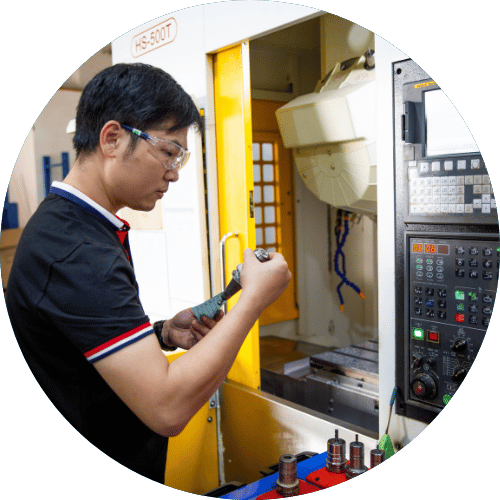
Grinding plays a crucial role in modern manufacturing, serving as a key process for achieving precision, smooth finishes, and tight tolerances in a wide range of industries. This article breaks down the complexities of grinding into clear, digestible insights, making it easier to grasp the fundamentals and appreciate its significance in today’s production landscape.
What is Grinding?
Understanding Grinding and Its Core Principles
Grinding stands as a vital machining process that removes material from a workpiece using an abrasive wheel. Unlike cutting tools, which rely on sharp edges to slice through material, grinding employs countless abrasive particles on the wheel’s surface to shear off tiny chips. This process ensures high precision, smooth finishes, and the ability to work with rigid or brittle materials that other methods might struggle to handle.
The grinding wheel, often made of materials such as aluminum oxide or silicon carbide, rotates at high speeds, generating friction that shapes the workpiece. The process involves three key actions: cutting, plowing, and rubbing. Cutting removes material, plowing displaces it, and rubbing generates heat and smooths the surface. Together, these actions define grinding’s unique ability to achieve tight tolerances and exceptional surface quality.
How Grinding Compares to Other Machining Processes
Grinding differs significantly from other machining methods, such as milling, turning, or drilling. While processes like milling use sharp-edged tools to carve out material in larger chunks, grinding focuses on achieving precision and a smooth surface finish. It excels in applications where achieving micrometer-level accuracy or mirror-like finishes is essential, such as in aerospace, automotive, and tool manufacturing.
Another key distinction lies in the materials each process can handle. Grinding works effectively on hard-to-machine materials, such as hardened steel, ceramics, and superalloys, which can wear down or damage traditional cutting tools. Additionally, grinding generates less stress on the workpiece, reducing the risk of deformation, especially in delicate or thin components.
In summary, grinding stands apart by offering unmatched precision, versatility, and the ability to work with challenging materials, making it an indispensable process in modern manufacturing.

The Evolution of Grinding Technology
Historical Milestones in Grinding
Grinding has a rich history that dates back centuries, evolving from rudimentary techniques to the highly advanced processes used today. Early civilizations relied on simple grinding stones to shape tools and weapons, using manual effort to achieve basic functionality. These early methods laid the groundwork for more sophisticated approaches as technology progressed.
The Industrial Revolution marked a turning point for grinding. Engineers developed powered grinding machines to meet the growing demand for precision in manufacturing. Innovations like the grinding lathe and the introduction of abrasive wheels in the 19th century revolutionized the process, enabling manufacturers to achieve finer finishes and tighter tolerances. By the early 20th century, grinding had become a cornerstone of industrial production, particularly in sectors like automotive and aerospace.
The mid-20th century witnessed further advancements with the introduction of synthetic abrasives, including aluminum oxide and silicon carbide. These materials enhanced the durability and efficiency of grinding wheels, allowing for faster material removal and improved surface quality. This period also witnessed the development of specialized grinding machines tailored for specific applications, such as cylindrical and surface grinders.
Modern Advancements in Grinding: The Rise of CNC Technology
The advent of computer numerical control (CNC) technology transformed grinding into an exact and automated process. CNC grinding machines use computer programming to control the movement of the grinding wheel and the workpiece, ensuring unparalleled accuracy and repeatability. This innovation has significantly reduced human error and increased production efficiency.
CNC grinding offers several advantages over traditional methods. Manufacturers can now produce complex geometries and intricate shapes with ease, meeting the demands of industries like medical device manufacturing and aerospace engineering. Additionally, CNC systems enable multi-axis grinding, allowing for the creation of components with intricate contours and angles.
Modern grinding technology also incorporates advanced monitoring systems. Sensors track variables such as temperature, vibration, and wheel wear in real-time, ensuring consistent quality and preventing defects. Furthermore, the integration of automation, such as robotic loading and unloading, has streamlined production lines, reducing downtime and labor costs.
In recent years, the focus has shifted toward sustainability and energy efficiency. Innovations like high-speed grinding and the use of eco-friendly coolants have minimized environmental impact while maintaining high performance. These advancements highlight the ongoing evolution of grinding technology, ensuring its relevance in an ever-changing manufacturing landscape.
How Grinding Works: A Simplified Process
Step-by-Step Explanation of the Grinding Process
Grinding transforms raw materials into precisely finished components through a systematic process. It begins with the preparation of the workpiece, which is securely clamped or mounted to ensure stability during the operation. The grinding wheel, rotating at high speeds, comes into contact with the material, removing small amounts of it with each pass.
The process starts with rough grinding, where the abrasive wheel removes larger amounts of material to shape the workpiece. This stage focuses on achieving the desired dimensions and preparing the surface for finer finishing. As the operation progresses, the grinding wheel performs intermediate passes to refine the shape and reduce surface irregularities.
Finally, the finishing stage polishes the workpiece to achieve the required surface quality and tight tolerances. This step often involves slower wheel speeds and finer abrasives to ensure a smooth, defect-free finish. Throughout the process, operators or automated systems monitor variables like wheel speed, feed rate, and material removal rate to maintain precision and consistency.
Key Components and Their Roles in Grinding
Several critical components work together to ensure the grinding process runs smoothly and delivers high-quality results. Each element plays a specific role in shaping and finishing the workpiece:
- Grinding Wheel
The grinding wheel serves as the primary tool in the process. Made from abrasive materials like aluminum oxide, silicon carbide, or diamond, the wheel removes material through cutting, plowing, and rubbing actions. The choice of wheel depends on factors like the material being ground, the desired finish, and the required precision. - Workpiece
The workpiece is the material being shaped or finished. It can range from metals like steel and aluminum to ceramics and composites. Proper clamping or mounting ensures the workpiece remains stable during grinding, preventing errors or defects. - Coolant
Coolant plays a vital role in maintaining the efficiency of the grinding process. It reduces heat generated by friction, preventing thermal damage to the workpiece and extending the life of the grinding wheel. Coolants also help flush away debris, ensuring a clean grinding surface. - Grinding Machine
The grinding machine provides the platform for the operation. It houses the grinding wheel, workpiece holder, and other essential components. Machines vary in design, from surface grinders to cylindrical and centerless grinders, each tailored for specific applications. - Dressing Tool
The dressing tool maintains the grinding wheel’s sharpness and shape. Over time, the wheel’s abrasive particles wear down or become clogged with debris. Dressing restores the wheel’s cutting ability, ensuring consistent performance throughout the process.
By understanding these steps and components, manufacturers can optimize grinding operations to achieve precision, efficiency, and high-quality results.
Types of Grinding Processes
Overview of Major Grinding Methods
Grinding processes vary widely, each tailored to specific applications and material requirements. Understanding the major types of grinding enables manufacturers to select the most suitable method for their particular needs, thereby ensuring precision and efficiency.
1. Surface Grinding
Surface grinding is a machining process that focuses on achieving flat, smooth surfaces on a workpiece. It employs a rotating abrasive wheel that traverses the material’s surface, removing small amounts of material with each pass. This method is widely used for components such as machine parts, tools, and dies, where flatness, dimensional accuracy, and surface finish are critical.
How It Works
- Machine Design: Surface grinding machines are typically designed with either horizontal or vertical spindles. The grinding wheel moves in a corresponding direction, while the workpiece remains stationary or moves along a table.
- Precision: The process allows for extremely tight tolerances, making it ideal for applications requiring high accuracy.
Advantages of Surface Grinding
- High Precision: Achieves tight tolerances and excellent surface finishes, making it suitable for critical applications.
- Versatility: Can be used on a wide range of materials, including metals, ceramics, and composites.
- Flatness and Smoothness: Ensures uniform flatness and smoothness, essential for components like dies and machine parts.
- Cost-Effective for Small Material Removal: Ideal for removing small amounts of material efficiently without compromising quality.
Disadvantages of Surface Grinding
- Limited to Flat Surfaces: Not suitable for complex geometries or intricate shapes.
- Material Removal Rate: Slower compared to other grinding methods, making it less efficient for large-scale material removal.
- Heat Generation: Can cause thermal damage or warping in sensitive materials if not properly managed.
- Equipment Costs: Requires specialized machinery, which can be expensive to purchase and maintain.
By weighing these advantages and disadvantages, manufacturers can determine whether surface grinding is the optimal choice for their specific application. When precision and surface quality are paramount, surface grinding remains a go-to method in modern manufacturing.

2. Cylindrical Grinding
How It Works
- Workpiece Rotation: The workpiece rotates around its axis while the grinding wheel moves along the same axis, ensuring uniform material removal.
- Types of Cylindrical Grinding:
- External Cylindrical Grinding: Targets the outer surface of the workpiece, commonly used for shafts and other external cylindrical components.
- Internal Cylindrical Grinding: Focuses on the inner diameter, ideal for components like bearings and bushings.
Applications
Cylindrical grinding is essential for manufacturing components that demand high precision, smooth finishes, and tight tolerances. It is commonly used in industries such as automotive, aerospace, and heavy machinery.
Advantages of Cylindrical Grinding
- High Precision: Delivers exceptional accuracy, making it suitable for critical applications requiring tight tolerances.
- Versatility: Can handle a wide range of cylindrical shapes, including tapered, stepped, and contoured surfaces.
- Surface Finish: Produces smooth, polished surfaces, enhancing the performance and longevity of components like bearings and shafts.
- Material Compatibility: Works effectively on various materials, including hardened steels, alloys, and ceramics.
- Repeatability: Ensures consistent results across multiple workpieces, ideal for mass production.
Disadvantages of Cylindrical Grinding
- Complex Setup: Requires precise alignment of the workpiece and grinding wheel, which can be time-consuming.
- Limited to Cylindrical Shapes: Not suitable for non-cylindrical or irregular geometries.
- Heat Generation: Excessive heat during grinding can lead to thermal damage or material distortion if not properly controlled.
- Equipment Costs: Cylindrical grinding machines are specialized and can be expensive to purchase and maintain.
- Slower Material Removal: Compared to other machining methods, cylindrical grinding may have a lower material removal rate, especially for large-scale operations.
By understanding the capabilities and limitations of cylindrical grinding, manufacturers can leverage this process to produce high-quality components with precision and reliability. Its ability to deliver superior surface finishes and dimensional accuracy makes it a cornerstone in modern manufacturing.

3. Centerless Grinding
Centerless grinding eliminates the need for a workpiece holder or center, making it ideal for high-volume production. The process uses two wheels: a grinding wheel and a regulating wheel. The grinding wheel removes material, while the regulating wheel controls the workpiece’s rotation and feed rate. This method excels in producing small, cylindrical parts like pins, rods, and bushings with consistent dimensions and finishes.
How It Works
- Dual-Wheel System: The process involves two wheels:
- Grinding Wheel: Removes material from the workpiece to achieve the desired shape and finish.
- Regulating Wheel: Controls the rotation and feed rate of the workpiece, ensuring stability and precision during grinding.
- Workpiece Support: The workpiece is supported by a work rest blade positioned between the two wheels, eliminating the need for clamping or centering.
- Continuous Operation: The workpiece is fed through the wheels, allowing for continuous material removal and high production rates.
Applications
Centerless grinding is ideal for manufacturing small, cylindrical components such as pins, rods, bushings, and rollers. It is commonly used in industries like automotive, aerospace, and medical device manufacturing, where precision and efficiency are critical.
Advantages of Centerless Grinding
- High Production Efficiency: The continuous operation and lack of setup for individual workpieces make it ideal for mass production.
- Consistent Quality: Delivers uniform dimensions and surface finishes across large batches of parts.
- No Need for Workpiece Centering: Eliminates the need for a center or chuck, reducing setup time and complexity.
- Versatility: Can handle a wide range of part sizes and materials, including metals, ceramics, and composites.
- Cost-Effective: Reduces labor and setup costs, especially for high-volume production.
- Precision and Surface Finish: Achieves tight tolerances and smooth finishes, enhancing the performance of components.
Disadvantages of Centerless Grinding
- Limited to Cylindrical Parts: Not suitable for non-cylindrical or irregularly shaped components.
- Complex Setup for Specific Parts: Requires precise adjustment of the grinding and regulating wheels, which can be time-consuming for new part designs.
- Material Limitations: Some materials may require additional cooling or lubrication to prevent thermal damage during grinding.
- Initial Equipment Costs: Centerless grinding machines can be expensive to purchase and maintain.
- Skill-Dependent: Requires skilled operators to set up and maintain optimal grinding conditions.

4. Creep-Feed Grinding
Creep-feed grinding removes large amounts of material in a single pass, making it suitable for complex shapes and deep cuts. The process uses a slow feed rate and a high-depth cut, allowing the grinding wheel to penetrate deeply into the workpiece. Manufacturers often use creep-feed grinding for aerospace components, turbine blades, and other intricate parts requiring precision and efficiency.
How It Works
- Slow Feed Rate, High Depth of Cut: Unlike conventional grinding, creep-feed grinding uses a very slow feed rate combined with a high-depth cut. This allows the grinding wheel to penetrate deeply into the workpiece, removing significant material in one pass.
- Specialized Grinding Wheels: The process requires high-performance grinding wheels capable of withstanding the increased forces and heat generated during deep cuts.
- Precision and Stability: The machine setup ensures stability and accuracy, even under the high stresses of deep material removal.
Applications
Creep-feed grinding is widely used for manufacturing intricate and high-precision components, such as:
- Aerospace Components: Turbine blades, vanes, and other parts requiring complex geometries and tight tolerances.
- Power Generation: Components for gas and steam turbines.
- Automotive: Engine parts and transmission components.
- Medical Devices: Precision surgical tools and implants.
Advantages of Creep-Feed Grinding
- High Material Removal Rate: Removes large amounts of material in a single pass, reducing overall machining time.
- Complex Geometries: Excels at producing intricate shapes and deep cuts that are difficult to achieve with other grinding methods.
- Precision and Accuracy: Delivers tight tolerances and excellent surface finishes, even for complex parts.
- Reduced Machining Steps: Combines roughing and finishing in one operation, minimizing the need for additional processes.
- Versatility: Suitable for a wide range of materials, including superalloys, hardened steels, and ceramics.
Disadvantages of Creep-Feed Grinding
- High Equipment Costs: Requires specialized machines and grinding wheels, which can be expensive to purchase and maintain.
- Heat Generation: The deep cuts and slow feed rate generate significant heat, which can lead to thermal damage or material distortion if not properly managed.
- Setup Complexity: Requires precise machine setup and skilled operators to achieve optimal results.
- Limited to Specific Applications: Best suited for parts requiring deep cuts or complex shapes, making it less versatile for simpler tasks.
- Wheel Wear: The high forces involved can lead to faster wear of the grinding wheel, increasing maintenance and replacement costs.

5. Center-Type Grinding
Center-type grinding is a machining process that supports the workpiece at both ends, providing stability and precision during operation. This method is particularly effective for grinding long, slender components, ensuring consistent results and high-quality finishes.
How It Works
- Workpiece Support: The workpiece is held between two centers—one at each end—ensuring stability and preventing deflection during grinding.
- Grinding Wheel Movement: The grinding wheel traverses along the length of the workpiece, removing material to achieve the desired shape, dimensions, and surface finish.
- Rotational Symmetry: The workpiece rotates around its axis, allowing for uniform material removal and precise shaping.
Applications
Center-type grinding is widely used in industries that require high-precision cylindrical components, such as:
- Automotive: Shafts, axles, and crankshafts.
- Aerospace: Spindles and other cylindrical parts requiring tight tolerances.
- Industrial Machinery: Rollers, rods, and other long components.
Advantages of Center-Type Grinding
- High Stability: Supporting the workpiece at both ends minimizes deflection, ensuring precision even for long and slender components.
- Uniform Material Removal: The rotational symmetry of the workpiece allows for consistent grinding along its entire length.
- Versatility: Suitable for a wide range of cylindrical components, including those with varying diameters or complex profiles.
- Precision and Surface Finish: Achieves tight tolerances and smooth finishes, enhancing the performance and durability of components.
- Adaptability: Can be used for both external and internal grinding, depending on the machine setup.
Disadvantages of Center-Type Grinding
- Setup Complexity: Requires precise alignment of the workpiece and centers, which can be time-consuming.
- Limited to Cylindrical Shapes: Not suitable for non-cylindrical or irregularly shaped components.
- Workpiece Length Restrictions: The length of the workpiece is limited by the machine’s capacity and the distance between centers.
- Heat Generation: Prolonged grinding can generate heat, potentially causing thermal damage or distortion if not properly managed.
- Equipment Costs: Center-type grinding machines and accessories can be expensive to purchase and maintain.

Simplifying the Understanding of Grinding Processes
To better visualize these grinding methods, imagine the following scenarios:
- Surface grinding resembles sanding a flat piece of wood, where the abrasive moves across the surface to smooth it out.
- Cylindrical grinding works like sharpening a pencil, where the rotating pencil (workpiece) meets the abrasive sharpener (grinding wheel).
- Centerless grinding operates like rolling a dowel between two rotating surfaces, one grinding and the other guiding.
These analogies help clarify the unique characteristics of each grinding process, making it easier to understand their applications and benefits.
Choosing the Right Grinding Tools
A Guide to Selecting Grinding Wheels and Machines
Selecting the right grinding tools ensures efficiency, precision, and durability in manufacturing processes. The choice of grinding wheel depends on several factors, including the material of the workpiece, the desired finish, and the type of grinding operation. Abrasive materials like aluminum oxide work well for steel and ferrous metals, while silicon carbide suits non-ferrous metals and softer materials. For ultra-hard materials like ceramics or carbide, diamond or cubic boron nitride (CBN) wheels deliver the best results.
The wheel’s grit size also plays a crucial role. Coarse grits remove material quickly but leave a rough finish, making them ideal for initial shaping. Finer grits, on the other hand, produce smoother finishes and are better suited for finishing operations. Additionally, the wheel’s bond type—whether vitrified, resin, or metal—affects its strength and performance. Vitrified bonds offer rigidity and precision, while resin bonds provide flexibility and shock resistance.
Choosing the right grinding machine is equally important. Surface grinders handle flat surfaces, while cylindrical grinders excel at shaping round components. Centerless grinders work best for high-volume production of small cylindrical parts, and specialized machines like creep-feed grinders tackle complex shapes and deep cuts. Matching the machine to the application ensures optimal performance and minimizes wear and tear.

The Role of Coolants in Grinding Efficiency
Coolants play a vital role in maintaining the efficiency and quality of grinding operations. They reduce heat generated by friction, preventing thermal damage to the workpiece and extending the life of the grinding wheel. Coolants also flush away debris, ensuring a clean grinding surface and reducing the risk of wheel clogging.
Manufacturers can choose from various types of coolants, including water-based, oil-based, and synthetic options. Water-based coolants offer excellent cooling properties but may require additives to prevent rust. Oil-based coolants provide better lubrication, making them ideal for high-speed operations. Synthetic coolants combine the benefits of both, offering cooling and lubrication without the drawbacks of rust or residue.
Proper coolant application is essential for achieving the desired results. Operators must ensure the coolant reaches the grinding zone effectively, using nozzles or flood systems to cover the entire area. Regular maintenance of the coolant system, including filtration and replacement, keeps the operation running smoothly and prevents contamination.
Prioritizing Safety Equipment in Grinding Operations
Safety equipment protects operators from potential hazards during grinding. Grinding wheels rotate at high speeds, and improper handling can lead to accidents or injuries. Operators should always wear personal protective equipment (PPE), including safety goggles, gloves, and hearing protection, to shield themselves from flying debris, sparks, and noise.
Using wheel guards on grinding machines adds an extra layer of protection by containing fragments in case of wheel breakage. Operators should also inspect grinding wheels for cracks or damage before use, as faulty wheels can fail under pressure. Maintaining a safe distance from the wheel and ensuring proper workpiece clamping further reduces risks.
By carefully selecting grinding tools, applying coolants effectively, and prioritizing safety, manufacturers can optimize their grinding operations while ensuring a safe and efficient work environment.
Applications of Grinding Across Industries
Grinding in the Automotive Industry
The automotive sector relies heavily on grinding to produce high-precision components that ensure vehicle performance and safety. Manufacturers use grinding to create engine parts, such as crankshafts, camshafts, and cylinder heads, where tight tolerances and smooth finishes are crucial. For example, crankshaft grinding ensures the proper alignment and balance of the engine, reducing vibrations and improving efficiency. Similarly, grinding brake discs and pads ensures consistent braking performance and safety.
In addition to functional components, grinding also plays a role in aesthetic finishes. Polishing exterior parts, such as trim pieces and emblems, enhances the vehicle’s appearance, meeting consumer expectations for quality and style. High-volume production lines in the automotive industry frequently utilize centerless grinding to manufacture small, cylindrical components, such as fuel injectors and valve stems, with consistent dimensions and finishes.

Aerospace Applications of Grinding
The aerospace industry demands precision and reliability, making grinding an essential process for manufacturing critical components. Turbine blades, for instance, require complex shapes and tight tolerances to ensure optimal performance in jet engines. Creep-feed grinding excels in this application, removing large amounts of material in a single pass while maintaining accuracy.
Grinding also plays a key role in producing landing gear components, which must withstand extreme loads and stresses. Surface grinding ensures flat, smooth surfaces for proper assembly and operation. Additionally, manufacturers use cylindrical grinding to create shafts and bearings that meet the stringent requirements of aerospace applications.
A real-world example involves the production of titanium components for aircraft. Titanium’s strength and resistance to heat make it ideal for aerospace applications, but its hardness poses challenges for machining. Grinding provides a solution, allowing manufacturers to shape and finish titanium parts with precision and efficiency.
Medical Industry: Precision Grinding for Life-Saving Devices
The medical field depends on grinding to produce high-precision instruments and implants that meet strict quality standards. Grinding ensures the smooth surfaces and tight tolerances required for surgical tools, such as scalpels, forceps, and bone saws. These tools must perform reliably and minimize tissue damage during procedures.
Grinding also plays a crucial role in manufacturing medical implants, such as hip joints, knee replacements, and dental crowns. For example, grinding creates the smooth, contoured surfaces of artificial joints, ensuring proper fit and reducing wear over time. Manufacturers often use CNC grinding machines to produce these components with the accuracy needed for patient safety and comfort.
A notable case study involves the production of stents, which are small, mesh-like tubes used to keep blood vessels open. Grinding ensures the precise dimensions and smooth edges of stents, reducing the risk of complications during implantation. The process also allows for the creation of intricate designs, such as drug-eluting stents that release medication over time.
Real-World Examples of Grinding’s Impact
Across industries, grinding has enabled advancements in technology and manufacturing. In the automotive sector, grinding has improved fuel efficiency by producing lightweight, high-precision engine components. In aerospace, it has contributed to safer, more efficient aircraft by enabling the production of complex, high-performance parts. In the medical field, grinding has enhanced patient outcomes by ensuring the quality and reliability of life-saving devices.
These examples highlight grinding’s versatility and importance in modern manufacturing, demonstrating its ability to meet the unique demands of diverse industries.
Advantages and Challenges of Grinding
Benefits of Grinding: Precision and Versatility
Grinding offers unmatched precision, making it a go-to process for industries that demand tight tolerances and high-quality finishes. Unlike other machining methods, grinding can achieve micrometer-level accuracy, ensuring components meet exact specifications. This precision is essential in applications such as aerospace turbine blades, automotive engine parts, and medical implants, where even minor deviations can compromise performance or safety.
The versatility of grinding further enhances its value. Manufacturers can utilize grinding to process a wide range of materials, from soft metals like aluminum to hard-to-machine materials such as ceramics, hardened steel, and superalloys. Grinding also accommodates a wide range of shapes and sizes, from flat surfaces to intricate geometries, making it suitable for diverse applications. For example, surface grinding creates smooth, flat finishes, while cylindrical grinding shapes round components with precision.
Another advantage lies in the ability to produce superior surface finishes. Grinding minimizes surface irregularities, creating smooth, polished surfaces that improve functionality and aesthetics. This benefit is significant in industries like medical device manufacturing, where smooth surfaces reduce friction and enhance biocompatibility.
Grinding also generates less stress on the workpiece compared to other machining methods. This characteristic reduces the risk of deformation, especially in thin or delicate components. Additionally, grinding can handle high-volume production efficiently, making it ideal for industries that require consistent quality at scale.

Common Challenges in Grinding and Solutions
Despite its advantages, grinding presents several challenges that manufacturers must address to optimize performance and maintain quality. One common issue involves heat generation during the process. Friction between the grinding wheel and the workpiece produces heat, which can cause thermal damage, such as burns, cracks, or changes in material properties. To mitigate this, operators use coolants to dissipate heat and maintain a stable grinding temperature. Proper coolant application and regular system maintenance ensure effective heat management.
Wheel wear and clogging also pose challenges. Over time, the abrasive particles on the grinding wheel wear down or become clogged with debris, reducing cutting efficiency and surface quality. Regular wheel dressing restores the wheel’s sharpness and shape, ensuring consistent performance. Using the right abrasive material and bond type for the application further minimizes wear and clogging.
Another challenge involves achieving the desired balance between material removal rate and surface finish. Aggressive grinding can remove material quickly but may compromise surface quality, while slower grinding improves the finish but increases cycle time. Operators must carefully adjust parameters like wheel speed, feed rate, and depth of cut to strike the right balance.
Vibration and chatter can also impact grinding performance, resulting in poor surface finishes and reduced accuracy. Ensuring proper machine setup, workpiece clamping, and wheel alignment minimizes these issues. Advanced monitoring systems that track vibration and other variables in real time help identify and address problems before they impact quality.
By understanding these challenges and implementing practical solutions, manufacturers can maximize the benefits of grinding while minimizing its drawbacks. This approach ensures consistent quality, efficiency, and reliability across a wide range of applications.
Tips for Optimizing Grinding Operations
Best Practices for Improving Efficiency and Quality
Optimizing grinding operations requires a combination of proper techniques, equipment settings, and process monitoring. Start by selecting the right grinding wheel for the material and application. Consider factors such as abrasive type, grit size, and bond type to ensure the wheel meets the workpiece’s requirements. For example, use diamond or CBN wheels for hard materials like ceramics or superalloys, while aluminum oxide works well for steel.
Adjusting machine parameters plays a critical role in achieving efficiency and quality. Set the wheel speed, feed rate, and depth of cut to achieve a balance between material removal and surface finish. A higher feed rate increases productivity but may compromise surface quality, so fine-tune these settings based on the desired outcome. Regularly monitor these parameters to maintain consistency throughout the operation.
Proper workpiece clamping ensures stability during grinding, reducing the risk of vibration or movement that can affect accuracy. Use fixtures or magnetic chucks to secure the workpiece firmly, especially for delicate or thin components. Additionally, align the grinding wheel and workpiece correctly to prevent uneven material removal or surface defects.
Coolant application significantly impacts grinding performance. Ensure the coolant reaches the grinding zone effectively by using nozzles or flood systems. Proper coolant flow reduces heat, minimizes thermal damage, and flushes away debris, improving both efficiency and surface quality. Regularly check the coolant system for clogs or contamination to maintain its effectiveness.
Maintenance Tips for Grinding Machines
Regular maintenance ensures that grinding machines run smoothly and perform consistently. Start by inspecting the grinding wheel for wear, cracks, or damage before each use. Replace worn or damaged wheels immediately to prevent accidents and maintain cutting efficiency. Regularly dressing the wheel restores its sharpness and shape, ensuring optimal performance.
Clean the machine thoroughly after each use to remove debris, dust, and any remaining coolant residue. Accumulated debris can affect machine accuracy and lead to premature wear of components. Pay special attention to the grinding wheel, worktable, and coolant system during the cleaning process.
Lubricate moving parts like spindles, bearings, and guideways to reduce friction and prevent wear. Use the manufacturer-recommended lubricants and follow the specified schedule to ensure proper maintenance. Regular lubrication extends the machine’s lifespan and improves its performance.
Check the machine’s alignment and calibration periodically. Misaligned components can lead to uneven grinding, poor surface finishes, and reduced accuracy. Use precision tools to verify alignment and make necessary adjustments.
Monitor the machine’s vibration levels during operation to ensure optimal performance. Excessive vibration can indicate issues like unbalanced wheels, loose components, or worn bearings. Address these problems promptly to prevent further damage and maintain grinding quality.
By following these best practices and maintenance tips, manufacturers can optimize grinding operations, improve efficiency, and ensure high-quality results. Consistent attention to detail and proactive care keep machines running at peak performance, reducing downtime and extending their lifespan.
Future Trends in Grinding Technology
Emerging Technologies: AI and Automation in Grinding
The integration of artificial intelligence (AI) and automation is transforming grinding technology, making processes smarter, faster, and more efficient. AI-powered systems analyze real-time data from sensors embedded in grinding machines, enabling predictive maintenance and process optimization. These systems identify patterns, detect anomalies, and recommend adjustments to improve performance and reduce downtime. For example, AI can monitor wheel wear and suggest dressing schedules, ensuring consistent quality without manual intervention.
Automation further enhances grinding operations by streamlining workflows and reducing human error. Robotic arms handle tasks such as loading and unloading workpieces, enabling machines to operate continuously with minimal supervision. Multi-axis CNC grinding machines, combined with automation, produce complex geometries with unparalleled precision. This level of automation not only boosts productivity but also ensures repeatability, making it ideal for high-volume production in industries like automotive and aerospace.
The combination of AI and automation also supports adaptive grinding, where machines adjust parameters dynamically based on real-time feedback. This capability improves efficiency and reduces material waste, aligning with the growing demand for more innovative manufacturing solutions.
Sustainability and Eco-Friendly Practices in Grinding
Sustainability has become a key focus in grinding technology, with manufacturers adopting eco-friendly practices to reduce environmental impact. High-efficiency grinding processes, such as high-speed grinding and minimum quantity lubrication (MQL), minimize energy consumption and coolant usage. MQL systems deliver a fine mist of lubricant directly to the grinding zone, reducing waste while maintaining performance.
Recycling and reusing grinding materials also contribute to sustainability. Manufacturers now recover and repurpose used abrasives, reducing the need for raw materials and lowering production costs. Additionally, advancements in grinding wheel technology have led to the development of longer-lasting wheels, which reduce waste and improve efficiency.
Eco-friendly coolants and lubricants, made from biodegradable or non-toxic materials, further support sustainable grinding practices. These alternatives reduce the risk of environmental contamination and improve workplace safety. By prioritizing sustainability, manufacturers not only meet regulatory requirements but also enhance their reputation as environmentally responsible businesses.
Conclusion
Grinding technology continues to evolve, driven by innovations like AI, automation, and sustainable practices. These advancements improve efficiency, precision, and environmental responsibility, ensuring grinding remains a cornerstone of modern manufacturing. Explore cutting-edge grinding solutions and services to stay ahead in this rapidly advancing field.