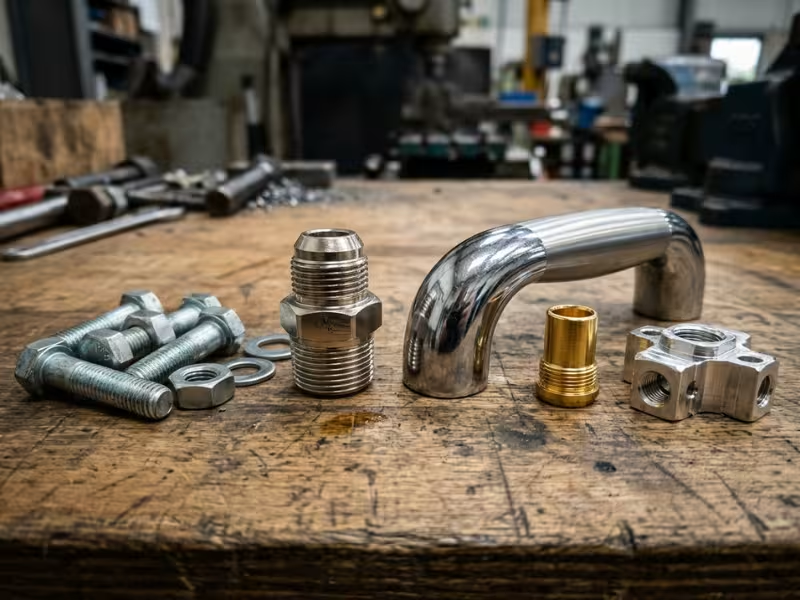
A steel bolt rusts after one wet winter. A connector starts dropping signals. A shiny handle turns dull.
Most of these failures start at the surface.
Plating bonds a thin layer of metal onto a base part and gives that surface new properties.
That thin layer can extend part life, cut material costs, improve appearance, and keep electrical contacts reliable. It is also one of the most important surface finish options for machined parts.
I work with buyers and engineers who make this choice every day. This guide explains how plating works, which types matter, and how to pick the right one for your part.
What Is Plating?
Plating is a surface finishing process that deposits a thin layer of metal onto another material. The part keeps its core strength and shape. Its surface takes on the traits of the new metal, such as corrosion resistance, conductivity, or shine.
That layer is usually very thin. Most finishes run from about 0.1 to 25 microns, though hard chrome often goes thicker. Metal ions in a liquid bath settle onto a clean surface and bond to it metal to metal. That bond is why good plating doesn’t peel like old paint.
Buyers often confuse plating with other finishes. Here is how they differ:
- Painting and powder coating add a polymer layer, not metal. They protect the part and add color, but they can’t carry current or take solder.
- Anodizing adds no new metal. It grows an oxide layer out of the aluminum itself, so it works only on aluminum and a few similar metals. For many precision aluminum parts, it is a practical alternative to plating, especially in aluminum CNC machining.
Plating shops build the metal layer through two main routes. Electroplating uses electric current. Electroless plating relies on a chemical reaction alone.
Why Plating Matters in Real Products
Most buyers don’t think about plating until a part fails. By then, the cost often goes well beyond the part itself. Here is where plating earns its place on a drawing.
It stops rust before it starts. Bare steel can begin to show red rust outdoors within weeks. A zinc layer corrodes first and sacrifices itself to protect the steel underneath. That’s why fasteners, brackets, and automotive underbody parts usually ship plated. When a customer tells me their bolts rusted early, I check the plating spec before anything else.
It keeps electrical contacts reliable. Copper conducts well, but it oxidizes. That oxide film raises contact resistance and can cause intermittent signals. Gold, silver, or tin plating on connectors, terminals, and PCB pads helps keep the contact surface clean through repeated mating cycles and years of service.
It helps parts last longer. Hydraulic rods, molds, and cutting tools face constant friction. A hard chrome or electroless nickel layer can raise surface hardness well above that of most steels. Shops can also plate worn shafts back to size, which often costs far less than machining a new part.
It delivers looks and value without the price of solid metal. A faucet handle doesn’t need to be solid nickel. A contact pin doesn’t need to be solid gold. Plating puts the expensive metal only where people see or touch it. A gold layer a few microns thick costs a small fraction of what a solid gold pin would.
So plating isn’t a cosmetic afterthought. It shapes how long a part survives, how well it performs, and what it costs you over its life.
How Plating Works
Every plating job moves through three stages. Each stage shapes the final finish. A mistake at any point tends to show up later as peeling, early rust, or rejected parts.
Surface Preparation: Where Most Failures Begin
Plating bonds only to clean, bare metal. Even a fingerprint or a thin oil film can block that bond.
Shops first use solvent or alkaline cleaners to remove oil, grease, and shop dirt. Next, an acid bath strips off rust, scale, and oxides. A final activation dip readies the surface so the new metal can grip it.
Operators rinse parts between every step. If they skip a rinse, chemicals from one tank carry into the next and contaminate the bath.
When a client sends me a peeled part, I check the prep first. In my experience, poor cleaning causes more failures than the plating bath itself. A very cheap quote can hide a rushed prep line.
Metal Deposition: Building the Layer
Once the surface is ready, the shop builds the metal layer in one of two ways.
In electroplating, the part acts as the cathode, or negative side, in a bath of dissolved metal. Electric current pulls metal ions onto its surface. Edges and corners draw more current, so they build thicker plating than holes and recesses.
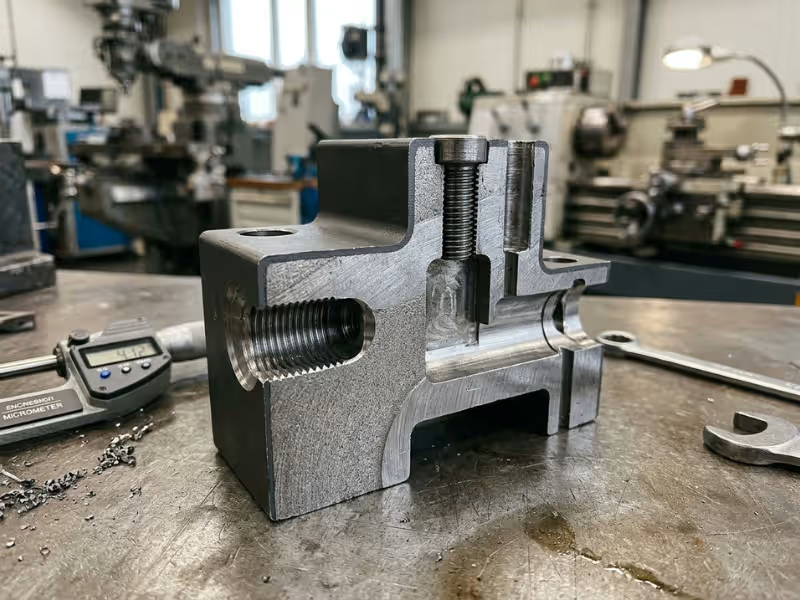
Electroless plating uses no electricity. A chemical reducing agent in the bath deposits metal evenly on every surface the liquid touches. Threads, blind holes, and internal channels get nearly the same coverage as flat faces.
Four factors control thickness and uniformity:
- Current density
- Bath chemistry
- Temperature
- Time
A good shop tracks all four. If any one drifts, you can end up with thin spots or a rough, dull finish.
Post-Treatment and Quality Checks
The job doesn’t end when parts leave the tank. Operators rinse and dry them quickly to prevent stains and water spots.
Many finishes need one more step:
- Chromate or trivalent passivation boosts the corrosion resistance of zinc.
- Sealers fill tiny pores in the deposit.
- Baking drives trapped hydrogen out of high-strength steel and helps prevent brittle cracking.
Reliable shops then test their work. They measure thickness with X-ray or magnetic gauges and check adhesion with bend or tape tests. Many also run salt spray tests to verify corrosion resistance. Ask your supplier for these reports, because they show you what you actually received.
Electroplating vs. Electroless Plating
Electroplating is the workhorse of the industry. It costs less on simple parts, runs fast, and works with a wide range of metals. Electroless plating is the specialist you call when a part has deep holes, threads, or tight tolerances that need the same thickness everywhere.
Neither process is “better.” The right one depends on the part’s shape, its job, and your budget.
|
Factor |
Electroplating |
Electroless Plating |
|---|---|---|
|
Power source |
External electric current (rectifier) |
Chemical reducing agent in the bath |
|
Thickness uniformity |
Uneven: edges build up, recesses run thin |
Very even, often within ±10% across the part |
|
Best for |
High-volume parts, decorative finishes, sacrificial corrosion protection |
Precision parts, wear surfaces, internal coverage, non-conductive substrates |
|
Cost tendency |
Lower per part, especially in barrel runs |
Higher, because chemistry costs more and deposition runs slower |
|
Typical metals |
Zinc, nickel, chrome, copper, tin, silver, gold |
Mainly nickel-phosphorus; also copper, palladium, and gold |
|
Geometry suitability |
Flat or simple shapes with open surfaces |
Complex shapes, blind holes, threads, internal bores |
Here is the quick test I give buyers. Hold the part up and look for areas a straight line can’t reach. Deep bores, internal threads, and sharp inside corners point toward electroless nickel.
If the part is a bolt, bracket, or flat panel, electroplating often wins on cost with little or no loss in performance.
Tolerance matters too. Electroplating can build extra thickness on edges, so precision parts sometimes need masking or post-machining. Electroless nickel lets you plan an exact, even thickness into the drawing. That can save a grinding step.
Common Types of Plating and When to Use Each
Most plating questions come down to a handful of metals. Each one solves a specific problem and brings its own weak spots. Here is how I explain them to buyers before they finalize a drawing.
Zinc Plating: The Low-Cost Rust Shield
Zinc protects steel by corroding first. Even if a scratch exposes the steel, the zinc nearby keeps protecting it.
It costs less than almost any other finish. Shops often barrel-plate thousands of fasteners at once. A chromate or trivalent passivate adds color and extra protection: clear, blue, yellow, or black.
Typical uses include bolts, brackets, clips, and automotive hardware.
Choose zinc for steel parts that see indoor use or moderate outdoor exposure. Avoid it for marine sites and for heat above roughly 120°C, where standard passivates start to break down. In those cases, ask about zinc-nickel instead.
High-strength steel needs a post-plate bake to avoid hydrogen embrittlement. Put that bake on your spec, not just the plating.
Nickel Plating: The Versatile All-Rounder
Nickel gives you hardness, wear resistance, and a clean, attractive finish. It also works as a base layer under chrome and gold.
You will see two very different versions.
Electrolytic nickel looks bright and costs less. It suits decorative parts, plumbing fixtures, and underlayers. Like all electroplating, it builds up on edges and runs thin in recesses.
Electroless nickel deposits a nickel-phosphorus alloy with even thickness everywhere. It reaches about 500–600 HV as plated and can approach 900–1,000 HV after heat treatment. Mid- and high-phosphorus grades resist corrosion well. High-phosphorus grades are essentially non-magnetic.
Choose electroless nickel for molds, valves, pump parts, and precision components with bores or threads. Choose electrolytic nickel when looks and cost matter more than uniformity.
For parts that stay in long contact with skin, check nickel release limits, since nickel allergies are common and regulated in the EU.
Chrome Plating: Shine or Serious Hardness
People use the word “chrome” for two very different finishes. Mixing them up leads to costly mistakes.
Decorative chrome is extremely thin, often under 1 micron, and sits on top of nickel. The nickel does most of the corrosion work. The chrome adds that blue-white shine and scratch resistance. You see it on faucets, trim, and furniture hardware.
Hard chrome goes on much thicker, often 20 to 250 microns, and usually goes straight onto steel. It delivers high hardness and low friction for hydraulic rods, pistons, and rolls.
Choose hard chrome for sliding wear. Don’t rely on it alone for corrosion protection, because its microcracks can let moisture through.
Check compliance early. Hexavalent chromium faces tight limits under REACH. Trivalent chrome now covers many decorative jobs. Electroless nickel or thermal spray coatings can replace hard chrome in some wear applications.
Gold Plating: Contacts That Must Not Fail
Gold doesn’t oxidize. That keeps contact resistance low and stable for years, even at very low signal levels.
Engineers specify hard gold, alloyed with cobalt or nickel, for connectors that mate hundreds of times. Soft gold suits wire bonding. PCBs often use ENIG, a thin gold layer over electroless nickel.
Thickness drives cost. A flash of about 0.1 micron works for solderability. Connector specs often call for 0.76 micron (30 microinches) or more for high mating cycles.
Put nickel under gold. Without that barrier, copper can migrate into the gold and degrade the contact.
Choose gold for signal connectors, sensors, and aerospace or medical electronics. Avoid mating gold contacts with tin contacts, as the pair invites fretting corrosion.
Silver Plating: Top Conductivity at a Lower Price
Silver conducts electricity and heat better than any other metal. It also costs far less than gold.
That makes it a strong choice for high-current parts: bus bars, switchgear contacts, and power terminals. RF components use it too.
The main drawback is tarnish. Sulfur in the air turns silver dark. The film usually stays thin and conductive, but it can bother customers who expect a bright finish. Anti-tarnish treatments help.
Silver can also migrate under DC voltage in humid conditions and cause short circuits on fine-pitch electronics.
Choose silver for power distribution and high-current contacts. Use caution near rubber plants, paper mills, or wastewater facilities, where sulfur levels run high. For low-voltage signal contacts, gold usually performs more reliably.
Tin Plating: The Solderable Workhorse
Tin solders easily, costs little, and resists mild corrosion. It is also non-toxic, which is why food cans use it.
Electronics makers rely on tin for component leads, terminals, and wire. Since RoHS pushed out tin-lead, pure tin has become a default solderable finish.
Pure tin has two known weak points.
- Tin whiskers. Tiny metal filaments can grow from the surface and short nearby circuits. Matte tin, a nickel underlayer, or reflow reduces the risk.
- Fretting corrosion. Tin is soft. Low-force contacts that vibrate can wear through the oxide and build debris that raises resistance.
Choose tin for soldered joints, crimp terminals, and food-contact parts. Avoid it for high-cycle connectors or parts that run near tin’s low melting point of 232°C.
Copper and Other Less Common Plating Options
Not every finish serves as the final working surface. Some play a support role in the plating stack, while others show up only in niche applications.
Copper bonds well and levels surfaces. Shops use it as a strike on zinc die castings before nickel and chrome. It also starts the plating stack on plastics and builds the walls of PCB through-holes. It tarnishes fast, so it almost always needs a top layer.
Rhodium gives jewelry and some electrical contacts a bright, hard, scratch-resistant surface. It costs a lot, so shops apply very thin layers.
Cadmium once dominated aerospace fasteners for its lubricity and salt-water resistance. It is toxic and heavily restricted now. Zinc-nickel replaces it in most new designs.
Anodizing often lands on these lists, but it isn’t plating. It converts the aluminum surface into oxide instead of adding metal. For aluminum parts, it is often the better choice.
How to Choose the Right Plating
Most plating mistakes happen at the drawing stage, not in the tank. A buyer picks a finish because it looks good or quotes low, and the part fails in the field.
I walk clients through five questions, in this order. Each answer narrows the next choice.
Step 1: Start With the Service Environment
Ask where the part will spend most of its life.
- Indoor and dry: Clear zinc or bright nickel usually works.
- Outdoor: Zinc with a heavier passivate, or zinc-nickel for longer life.
- Marine or road salt: Zinc-nickel, high-phosphorus electroless nickel, or stainless steel.
- High humidity: Watch for silver tarnish and tin whiskers.
- High heat: Standard zinc passivates weaken around 120°C. Nickel handles heat far better.
Write the environment on the drawing. A note like “outdoor, coastal, 10-year life” tells a plater more than a finish name.
Step 2: Define the Job the Coating Must Do
Once you know the environment, pick the one job that matters most. A single finish rarely does everything well.
- Resist corrosion: zinc, zinc-nickel, electroless nickel
- Conduct reliably: gold for low-level signals, silver for high current
- Reduce wear: hard chrome or heat-treated electroless nickel
- Look good: nickel plus chrome
- Take solder: tin or ENIG
When two jobs compete, rank them. A connector needs conductivity first and appearance last.
Step 3: Check the Base Material
The metal underneath decides what will bond and what needs help.
- Steel plates easily. High-strength steel needs a post-plate bake to prevent hydrogen embrittlement.
- Copper and brass need a nickel barrier under gold or tin. Without it, base metal can diffuse into the top layer.
- Aluminum needs a zincate pretreatment before most plating. For many aluminum parts, anodizing is the simpler answer.
- Plastic needs etching and a conductive starter layer. Plating-grade ABS bonds reliably. Most other plastics struggle.
- Zinc die castings need a copper strike before nickel.
Step 4: Consider Shape and Tolerance
Now hold the part up and look at its geometry. Electroplating builds up on edges and runs thin in bores and inside corners.
Remember that plating grows every surface. A 10-micron layer adds about 20 microns to a shaft diameter. On a tight fit, that can mean a part that won’t assemble.
Two habits save trouble:
- Mark critical dimensions “before plating” or “after plating” on the drawing.
- Ask the shop to mask threads and bearing seats when needed.
For parts with deep holes or tight tolerances, electroless nickel gives you predictable thickness everywhere.
Step 5: Balance Budget and Compliance
Price per part tells only half the story. Thicker zinc might add a few cents yet significantly extend salt spray life. A part that sits deep inside a machine justifies a longer-lasting finish, because replacing it costs far more than plating it right.
Check compliance before you approve a sample. RoHS limits cadmium, lead, and hexavalent chromium in electronics. REACH restricts hexavalent chrome processes and nickel release on skin-contact items. Ask your supplier for written declarations.
If the environment is harsh, the geometry is complex, and thickness consistency matters, electroless nickel may be a better fit than a lower-cost decorative plating.
Practical Selection Examples
Selection logic makes more sense when you see it applied to real parts. These four requests come up often, and here is how I work through each one.
An Outdoor Steel Fastener
A customer needs M10 bolts for a fence bracket in a mild inland climate. The part needs corrosion resistance. The base metal is low-carbon steel, and the shape is simple.
Barrel zinc plating at 8–12 microns with a trivalent passivate fits well and costs very little per piece. Before I approve it, I ask about the bolt grade. For grade 10.9 or harder, I add a bake within a few hours of plating. If the site sits near the coast, I move the customer to zinc-nickel.
An Electrical Connector
Here the current decides the finish, not the look. A signal connector that carries milliamps and mates hundreds of times needs hard gold over 1.3–2.5 microns of nickel. The nickel blocks copper migration and gives the thin gold a firm base.
A power terminal that carries 100 amps and rarely gets unplugged is a different case. Silver often makes more sense there. It handles heat well and costs far less than thick gold. Paying for gold on that terminal usually wastes money.
A Decorative Bathroom Fixture
A brass faucet handle must look flawless and survive daily cleaning in a humid room. Chrome on its own usually isn’t enough for that job.
I use a layered system. A copper layer smooths the surface when needed. Bright nickel goes on next for leveling and corrosion protection. A thin chrome top coat then adds color and scratch resistance. For longer life, I often specify duplex nickel.
The chrome gets the credit, but the nickel does most of the work. If the buyer sells into Europe, I steer them toward trivalent chrome.
A Wear-Prone Machine Shaft
The answer here depends on the details. A hydraulic piston rod that slides through seals all day typically needs hard chrome, ground and polished after plating. That finish gives high hardness and low friction.
Keyways, cross-holes, or a tight bearing fit change the call. Electroless nickel often works better on those shafts. It coats every surface evenly, so you can hold tolerance without grinding.
Corrosive fluid shifts the choice again. In that case, I lean toward high-phosphorus electroless nickel. I heat treat it only if wear matters more than corrosion, because heat treatment trades away some corrosion resistance for hardness.
Notice the pattern. Each decision starts with the part’s real job and environment. The finish name comes last.
Common Problems With Plating
Most plating complaints I hear fall into four groups. A part peeled. A finish wore out too soon. Someone doubted the cost. Or two quotes looked nothing alike. Here is what usually sits behind each one.
Why Plating Peels or Blisters
Peeling usually starts under the plating, not in it. Leftover oil, oxide, or polishing compound blocks the metal-to-metal bond. The part looks fine on the dock, then the layer lifts after a bend, a torque test, or a few heat cycles.
Blisters have a different cause. Trapped cleaner, moisture, or gas sits under the layer and pushes it up when the part warms. Dirty baths and skipped rinses cause most of them.
High-strength steel adds one more risk. Plating can push hydrogen into the steel and make it crack under load, even under a perfect-looking finish. A timely bake helps prevent it.
How Long Plating Lasts
No single number covers every part. Four things set the clock: metal type, thickness, environment, and wear.
Zinc corrodes on purpose, so its life tracks thickness. More zinc buys more years. A gold flash on a connector can wear through after a few dozen insertions, while thicker hard gold can survive thousands. Decorative chrome on an indoor faucet can look good for a decade. The same finish on a boat trailer may pit in two winters.
When buyers ask me about service life, I ask about the environment and the wear first.
Is Plating Worth It Compared With Stainless or Solid Metal?
On cost, plating often wins. It puts the expensive metal only on the surface. A zinc-nickel plated steel bracket often costs a fraction of a 316 stainless one.
Plating isn’t always the answer, though. Stainless makes more sense when parts get cut, welded, or deeply scratched after finishing. It also tends to win when nobody can reach the part for maintenance. Compare lifetime cost, not unit price.
Why Plating Quotes Vary So Much
Two shops can both quote “nickel plating” and plan very different jobs. One means 5 microns of bright nickel with basic cleaning. The other means 25 microns of electroless nickel, a bake, and full thickness reports.
Price moves with:
- Thickness and tolerance
- Prep needs for the base metal
- Post-treatment, such as baking or sealing
- Testing, certificates, and masking labor
Send every shop the same full spec: process, thickness range, standard, and required tests. Then the quotes become comparable.
FAQ
What is the difference between plating and coating?
Coating is the broad term for any layer you add to a surface, including paint, powder, and polymer films. Plating is one type of coating, and it always deposits metal. That metal bonds directly to the part. It can conduct current, take solder, and resist wear in ways paint can’t.
How thick is plating usually?
Most functional and decorative finishes fall between 0.1 and 25 microns. Decorative chrome often stays under 1 micron. Zinc on fasteners typically runs about 5–12 microns. Hard chrome can reach 250 microns or more.
Always state a thickness range on your drawing. “Zinc plated” alone lets the shop pick the cheapest option.
Does plating affect part dimensions?
Yes, and on machined parts it matters. Plating adds thickness to every coated surface, so a shaft diameter grows by twice the plating thickness. On 60° threads, the pitch diameter grows by roughly four times the plating thickness, which can stop a nut from threading on.
For tight-tolerance parts, decide early whether dimensions apply before or after plating. Your machinist can then cut features slightly undersize, or your finisher can mask critical areas.
Can plastic be plated?
Yes, but not every plastic. Shops etch the surface and add a thin electroless copper or nickel layer to make it conductive. Then they electroplate on top.
ABS and PC/ABS plate reliably, which is why car grilles and appliance knobs use them. Polypropylene, nylon, and most other plastics need special prep and still tend to bond poorly.
What is the difference between galvanizing and zinc plating?
Both use zinc, but the process and thickness differ. Hot-dip galvanizing dips steel into molten zinc and builds a rough layer of roughly 45–100 microns. Zinc plating uses electric current and leaves a smooth, thin layer, usually under 15 microns.
Choose galvanizing for outdoor structural steel, guardrails, and poles. Choose zinc plating for threaded fasteners and small parts where fit and appearance matter.
Can plated parts be stripped and replated?
In most cases, yes. Shops remove the old layer with chemical or reverse-current stripping, then prep and plate again. They rebuild worn hard chrome rods this way regularly.
Stripping can etch the base metal slightly, though. High-strength steel also needs a bake afterward. Ask about dimensional loss before you send precision parts.
What affects plating cost?
The metal sets the baseline, so gold and silver cost far more than zinc. Beyond that, price moves with thickness, part size, volume, and whether the shop racks or barrels the parts.
Masking, baking, special testing, and certificates all add labor. Bulk barrel jobs can cost cents per part. Racked precision parts can cost dollars each.
Is gold plating solid gold?
No. Gold plating puts a thin gold layer, often 0.1 to 2.5 microns, over brass, copper, or nickel. Plated consumer items can wear through with daily use.
In electronics, that thin layer is the whole point. You get gold’s contact performance without paying for solid metal.
Get the Surface Right, and the Part Follows
Plating bonds a thin layer of metal to a part. That layer changes how the surface behaves. It can fight rust, carry current, resist wear, or hold a shine.
The finish name matters less than the fit. First, match the plating to the environment. Then match it to the job the part must do. Last, check that it suits the base metal underneath.
Before you request a quote, gather three facts: where the part will live, what it is made of, and how it is shaped. Add your tolerance and critical dimension notes. Then bring everything to a supplier who handles both machining and finishing. A capable CNC machining service can align material choice, geometry, and surface finish from the start, so the part fits, performs, and lasts.