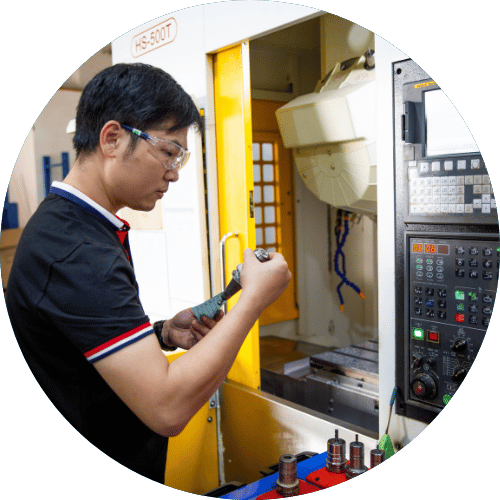
Grinding machines are the backbone of precision machining, offering unmatched accuracy, versatility, and efficiency across a wide range of industries. From shaping and finishing materials to achieving tight tolerances and superior surface finishes, these machines play a critical role in modern manufacturing. This comprehensive guide explores the various types of grinding machines, their applications, and the advantages they bring to industries such as automotive, aerospace, medical, and toolmaking. Whether it’s cylindrical, surface, bench, or specialized grinders, each type is designed to meet specific machining needs, ensuring high-quality results and consistent performance.
Types of Grinding Machines
Grinding machines are essential tools in precision machining, used to shape and finish materials with high accuracy. They come in various types, each designed for specific applications and workpiece geometries. Below is a closer look at cylindrical grinding machines and their subtypes.
Cylindrical Grinding Machines
Cylindrical grinding machines are specialized tools designed to shape the external or internal surfaces of cylindrical workpieces. These machines rotate the workpiece while a grinding wheel removes material to achieve the desired shape, size, and surface finish. They are widely used in industries such as automotive, aerospace, and manufacturing, where precision and consistency are critical.

1. External Cylindrical Grinders
External cylindrical grinders are used to machine the outer surface of cylindrical objects. The workpiece is typically mounted between centers or held in a chuck, allowing it to rotate as the grinding wheel moves along its length. This process ensures a smooth, uniform finish and is ideal for components like shafts, rods, and rollers.
- Applications: Automotive shafts, hydraulic rods, and industrial rollers.
- Key Features: High precision, smooth surface finish, and suitability for long, cylindrical parts.
2. Internal Cylindrical Grinders
Internal cylindrical grinders are designed to machine the inner surfaces of cylindrical objects, such as bores, holes, or tubes. The grinding wheel, which is smaller in size, is positioned inside the workpiece to remove material from the interior. This type of grinding is essential for achieving precise dimensions and finishes in internal features.
- Applications: Bearings, bushings, and engine components with internal bores.
- Key Features: Compact grinding wheels, high accuracy for internal diameters, and suitability for small or intricate parts.
3. Universal Cylindrical Grinders
Universal cylindrical grinders are versatile machines that can perform both external and internal grinding operations. They are ideal for complex projects that require multiple machining processes on a single workpiece. These machines often feature adjustable components and advanced controls to handle a wide range of tasks.
- Applications: Multi-step machining of complex parts, such as crankshafts and camshafts.
- Key Features: Flexibility, multi-functionality, and the ability to handle diverse workpiece geometries.
Surface Grinders
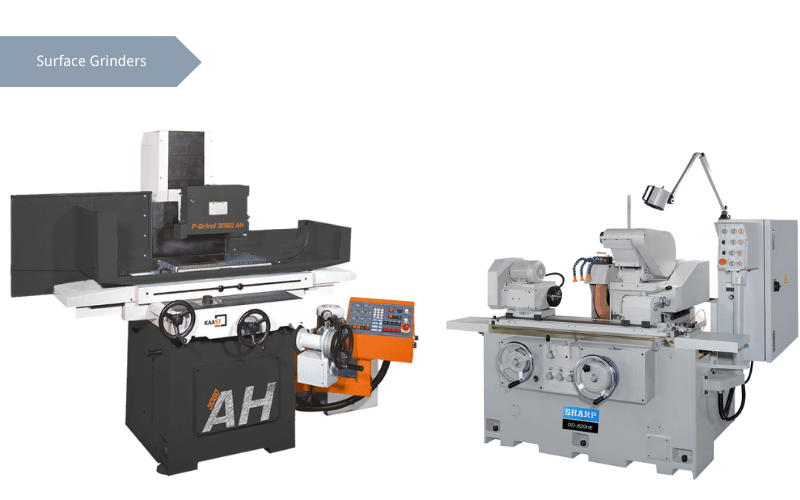
Surface grinders are precision machines designed to create smooth, flat surfaces on workpieces. They are indispensable in industries such as toolmaking, metalworking, and manufacturing, where achieving high precision and fine finishes is crucial. By removing material from the surface of a workpiece, these machines ensure flatness, uniformity, and the desired texture. Surface grinders are commonly used for tasks such as preparing molds, dies, and machine components.
Types of Surface Grinders
Surface grinders come in various configurations, each tailored to specific applications and workpiece geometries. Below are the primary types of surface grinders and their unique features:
1. Horizontal Spindle Surface Grinders
Horizontal spindle surface grinders feature a grinding wheel mounted horizontally. The wheel moves back and forth across the workpiece, which is typically clamped to a stationary table. These machines are ideal for grinding large, flat surfaces with exceptional accuracy and consistency.
- Applications: Tool and die making, large metal plates, and machine bases.
- Key Features:
- High precision for flat surfaces.
- Suitable for large workpieces.
- Consistent material removal across the surface.
2. Vertical Spindle Surface Grinders
In vertical spindle surface grinders, the grinding wheel is mounted vertically, and the workpiece is rotated beneath it. This configuration is particularly effective for smaller, more intricate parts that require precise surface finishes.
- Applications: Small components, intricate parts, and items with detailed surface requirements.
- Key Features:
- Compact design for smaller workpieces.
- Excellent for achieving fine finishes on intricate surfaces.
- Rotating workpiece ensures even grinding.
3. Rotary Surface Grinders
Rotary surface grinders use a rotating table to hold the workpiece while the grinding wheel moves across it. This setup is ideal for circular or irregularly shaped parts, as the rotation ensures uniform grinding across the entire surface.
- Applications: Circular parts, gears, and components with irregular shapes.
- Key Features:
- Efficient for grinding circular or non-linear surfaces.
- Rotating table ensures even material removal.
- Suitable for high-volume production of specific shapes.
Bench and Pedestal Grinders
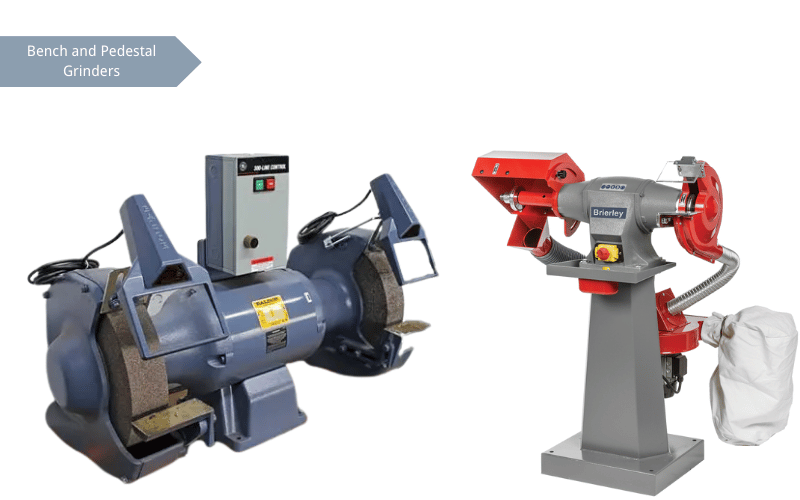
Bench and pedestal grinders are essential tools in workshops, maintenance facilities, and industrial settings. These versatile machines are used for sharpening tools, deburring edges, shaping materials, and performing general grinding tasks. Their compact design and ease of use make them indispensable for a wide range of applications, from light-duty tasks to heavy-duty industrial work.
Types of Bench and Pedestal Grinders
1. Bench Grinders
Bench grinders are compact, stationary machines mounted on a workbench. They typically feature two grinding wheels of different grits—one coarse and one fine—allowing users to switch between tasks like material removal and precision sharpening. Bench grinders are ideal for smaller tools and components, making them a staple in home workshops and smaller facilities.
- Applications:
- Sharpening tools such as chisels, drill bits, and blades.
- Removing rust or paint from small parts.
- Shaping and smoothing edges on metal or wood.
- Key Features:
- Compact size for easy placement on a workbench.
- Dual grinding wheels for versatility.
- Suitable for light-duty and precision tasks.
2. Pedestal Grinders
Pedestal grinders are larger, more robust machines mounted on a stand or pedestal. They are designed for heavy-duty grinding tasks and are commonly found in industrial environments. With their powerful motors and larger grinding wheels, pedestal grinders can handle larger tools and workpieces with ease.
- Applications:
- Grinding and shaping larger tools or components.
- Heavy material removal in industrial settings.
- Deburring and smoothing edges on large workpieces.
- Key Features:
- Sturdy pedestal mount for stability during operation.
- Larger grinding wheels for heavy-duty tasks.
- High power output for industrial applications.
Safety Features and Best Practices
Both bench and pedestal grinders are equipped with essential safety features to protect users during operation. These include:
- Eye Shields: Transparent shields that protect the user’s eyes from flying debris and sparks.
- Tool Rests: Adjustable rests that provide support for the workpiece, ensuring stability and precision.
- Spark Guards: Barriers that prevent sparks from reaching the user or surrounding areas.
Best Practices for Safe Operation:
- Always wear safety goggles or a face shield to protect your eyes.
- Ensure the tool rests are adjusted close to the grinding wheel to prevent the workpiece from slipping.
- Inspect grinding wheels regularly for cracks or damage and replace them if necessary.
- Avoid applying excessive pressure on the workpiece to prevent overheating or wheel damage.
Cylindrical Grinding Process
Overview of Cylindrical Grinding
Cylindrical grinding is a precision machining process used to shape the external or internal surfaces of cylindrical workpieces. The process involves rotating the workpiece while a grinding wheel removes material to achieve the desired dimensions, surface finish, and tolerances. This method is highly effective for producing smooth, round surfaces and is widely used in industries requiring high precision.
The grinding wheel, made of abrasive materials, rotates at high speed while the workpiece is either held between centers or mounted on a chuck. The process can be performed on external surfaces (external cylindrical grinding) or internal surfaces (internal cylindrical grinding). Advanced machines, such as universal cylindrical grinders, can handle both types of operations, making them versatile for complex projects.
Applications of Cylindrical Grinders
Cylindrical grinders are used across various industries for a wide range of applications. Here are some common uses:
-
Automotive Industry
Cylindrical grinding is essential for manufacturing engine components like crankshafts, camshafts, and connecting rods. These parts require high precision and smooth finishes to ensure optimal performance. -
Aerospace Sector
In aerospace, cylindrical grinding is used to produce critical components such as landing gear, turbine shafts, and hydraulic cylinders. The process ensures these parts meet strict tolerances and durability requirements. -
Tool and Die Making
Cylindrical grinders are used to create and maintain tools, dies, and molds. The process ensures these components have the necessary precision and surface quality for high-performance applications. -
Manufacturing Industry
Cylindrical grinding is widely used to produce machine parts, rollers, and spindles. It is also employed in the production of bearings, which require exceptional roundness and smoothness. -
Medical Field
The process is used to manufacture surgical instruments and implants, where precision and surface finish are critical for functionality and biocompatibility.
Advantages of Cylindrical Grinding
Cylindrical grinding offers several benefits that make it a preferred choice for precision machining:
- High Precision and Accuracy
The process delivers exceptional dimensional accuracy and surface finish, making it ideal for applications requiring tight tolerances. - Versatility
Cylindrical grinders can handle a wide range of materials, including metals, ceramics, and composites. They are also capable of machining both external and internal surfaces. - Improved Surface Quality
The grinding process produces smooth, polished surfaces that enhance the performance and longevity of components. This is particularly important for parts subjected to high stress or friction. - Cost-Effectiveness
While the initial investment in cylindrical grinding equipment may be high, the process reduces material waste and minimizes the need for additional finishing operations, resulting in long-term cost savings. - Consistency and Repeatability
Cylindrical grinding ensures consistent results across multiple parts, making it ideal for mass production and high-volume manufacturing.
By combining precision, versatility, and efficiency, cylindrical grinding plays a crucial role in modern manufacturing, enabling industries to produce high-quality components that meet stringent performance standards.
Other Grinder Machines
Tool and Cutter Grinders
Tool and cutter grinders are specialized machines designed to sharpen and recondition cutting tools such as drills, end mills, and reamers. These machines are essential in tool-making and maintenance, ensuring tools remain sharp and precise for optimal performance.
- Functionality
Tool and cutter grinders use a rotating grinding wheel to reshape and sharpen the cutting edges of tools. They can handle a variety of tool geometries, making them versatile for different industries. - Applications
- Tool Manufacturing: Used to produce new cutting tools with precise angles and dimensions.
- Tool Maintenance: Ideal for regrinding worn tools to extend their lifespan and maintain cutting efficiency.
- Specialized Tools: Capable of creating custom tools for specific machining tasks.
- Features
These machines often feature multiple attachments and adjustable settings, enabling high precision and flexibility in tool grinding.
Jig and Belt Grinders
Jig and belt grinders are versatile machines used for shaping, finishing, and polishing workpieces. They are commonly found in workshops and manufacturing facilities for a variety of tasks.
Jig Grinders
- Purpose
Jig grinders are used for precision grinding of holes, contours, and complex shapes. They are ideal for applications requiring high accuracy, such as mold and die making. - Applications
- Mold Making: Used to grind intricate shapes and cavities in molds.
- Die Making: Ensures precise dimensions and smooth finishes in dies.
- Aerospace and Electronics: Suitable for creating small, detailed components.
- Advantages
Jig grinders offer exceptional precision and are capable of achieving tight tolerances, making them indispensable for high-accuracy tasks.
Belt Grinders
- Purpose
Belt grinders use an abrasive belt to grind, sand, or polish surfaces. They are versatile and can handle a wide range of materials, including metal, wood, and plastic. - Applications
- Metalworking: Used for deburring, surface finishing, and shaping metal parts.
- Woodworking: Ideal for sanding and smoothing wooden surfaces.
- Fabrication: Commonly used in custom fabrication shops for general grinding tasks.
- Advantages
Belt grinders are easy to use, cost-effective, and capable of handling both rough and fine grinding tasks. They are also available in various sizes, from handheld models to large industrial machines.
Centerless Grinding Machines
Centerless grinding machines are unique in that they do not require the workpiece to be clamped or held between centers. Instead, the workpiece is supported by a work rest blade and rotated between a grinding wheel and a regulating wheel.
- Functionality
The grinding wheel removes material from the workpiece, while the regulating wheel controls its rotation and feed rate. This setup allows for continuous grinding without the need for repositioning. - Applications
- High-Volume Production: Ideal for mass production of cylindrical parts, such as shafts, pins, and tubes.
- Automotive Industry: Used to produce precision components like fuel injectors and camshafts.
- Medical Field: Suitable for manufacturing small, precise parts like surgical instruments.
- Advantages
- Efficiency: Centerless grinding is faster than traditional methods, as it eliminates the need for clamping and repositioning.
- Precision: Capable of achieving tight tolerances and smooth finishes.
- Versatility: Can handle a wide range of part sizes and materials.
By understanding the unique features and applications of these grinder machines, you can select the right equipment to meet your specific machining needs.
Components and Features of Grinding Machines
Essential Machine Tools
Grinding machines consist of several key components that work together to achieve precision and efficiency in material removal. Understanding these tools is crucial for selecting the right machine for your needs.
- Grinding Wheel
The grinding wheel is the primary tool in a grinding machine. Made of abrasive materials, it rotates at high speeds to remove material from the workpiece. Different wheel types and grits are available for various applications, such as rough grinding, fine finishing, or cutting hard materials. - Workpiece Holder
The workpiece holder secures the material being machined. Depending on the machine type, this can be a chuck, magnetic table, or centers. A stable holder ensures precision and prevents movement during grinding. - Spindle
The spindle drives the grinding wheel, providing the necessary speed and torque. High-quality spindles are essential for maintaining accuracy and reducing vibration. - Control Panel
Modern grinding machines feature advanced control panels that allow operators to adjust parameters like speed, feed rate, and depth of cut. Some machines also include digital displays and automation for enhanced precision. - Base and Frame
The base and frame provide structural support to the machine, ensuring stability during operation. A rigid frame minimizes vibrations, which can affect the quality of the finish.
Role of Coolant in Grinding
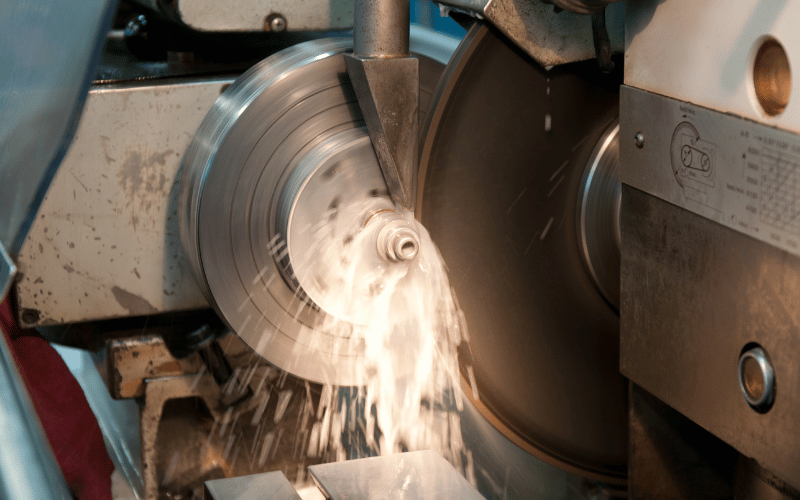
Coolant plays a vital role in the grinding process by improving efficiency, extending tool life, and ensuring a high-quality finish. Here’s how it contributes:
- Heat Dissipation
Grinding generates significant heat due to friction between the wheel and the workpiece. Coolant absorbs and dissipates this heat, preventing thermal damage to the material and maintaining dimensional accuracy. - Lubrication
Coolant reduces friction between the grinding wheel and the workpiece, minimizing wear on the wheel and improving surface finish. - Chip Removal
During grinding, small particles of material, known as chips, are removed from the workpiece. Coolant helps flush these chips away, preventing them from clogging the wheel or scratching the surface. - Types of Coolants
- Water-Based Coolants: Commonly used for general grinding tasks, offering effective cooling and lubrication.
- Oil-Based Coolants: Provide superior lubrication and are ideal for high-precision applications.
- Synthetic Coolants: Designed for specific tasks, offering a balance of cooling and lubrication.
Proper coolant management, including filtration and regular replacement, is essential to maintain its effectiveness and prevent contamination.
Flexible Grinders and Their Uses
Flexible grinders are versatile machines designed to handle a wide range of grinding tasks. They are ideal for applications requiring adaptability and precision.
- What Are Flexible Grinders?
Flexible grinders are equipped with adjustable components, such as movable spindles and interchangeable grinding wheels. This flexibility allows them to perform various operations, including surface grinding, cylindrical grinding, and polishing. - Applications
- Custom Fabrication: Flexible grinders are used in workshops to handle unique or irregularly shaped workpieces.
- Maintenance and Repair: Ideal for refurbishing worn parts, such as shafts and tools, by restoring their original dimensions and finish.
- Prototyping: Used in manufacturing prototypes where multiple grinding operations are required on a single machine.
- Advantages
- Versatility: Capable of performing multiple grinding tasks without the need for separate machines.
- Cost-Effective: Reduces the need for additional equipment, saving space and investment costs.
- Precision: Offers high accuracy and adaptability, making it suitable for complex projects.
By understanding the components, the role of coolant, and the flexibility of grinders, you can optimize their use for various applications, ensuring efficiency and precision in your machining processes.

Advantages of Using Grinding Machines
Grinding machines are essential tools in precision machining, offering unmatched accuracy, consistency, and surface quality. Their versatility and reliability make them indispensable across industries such as aerospace, automotive, medical, and manufacturing. Below is a detailed exploration of their key advantages:
1. Precision and Accuracy in Workpieces
Grinding machines are renowned for their ability to achieve exceptional precision, making them ideal for applications requiring tight tolerances and intricate details.
- Tight Tolerances:
- Grinding machines can produce components with tolerances as tight as a few microns, ensuring exact specifications are met.
- This level of precision is critical for industries like aerospace (e.g., turbine blades), automotive (e.g., engine components), and medical (e.g., surgical instruments).
- Dimensional Accuracy:
- Grinding ensures uniform dimensions across the entire workpiece, reducing the risk of defects or inconsistencies.
2. Consistent and Repeatable Results
Modern grinding machines are equipped with advanced automation and control systems, ensuring consistent quality across multiple parts.
- Key Benefits:
- Once programmed, the machine can replicate the same level of precision repeatedly, making it ideal for mass production.
- Automated grinding reduces human error, ensuring uniformity and reliability in every batch.
- Consistency in production minimizes rework and waste, improving overall efficiency.
3. Superior Surface Finish
Grinding machines are capable of producing smooth, polished surfaces that enhance both the appearance and functionality of components.
- Key Benefits:
- Achieves fine surface finishes with minimal roughness, which is essential for parts like bearings, shafts, and molds.
- Reduces friction and wear, improving the performance and lifespan of components.
- Provides a visually appealing finish, which is often required for consumer-facing products or high-end applications.
4. Versatility Across Materials and Applications
Grinding machines can handle a wide range of materials and applications, making them highly versatile.
- Key Benefits:
- Suitable for metals (e.g., steel, aluminum), ceramics, composites, and even hardened materials.
- Capable of machining complex shapes, internal and external surfaces, and intricate details.
- Widely used for sharpening tools, creating molds, and producing high-precision components.
5. Cost-Effectiveness in Production
While grinding machines may require a significant initial investment, they offer long-term cost savings through efficiency and reduced waste.
- Key Benefits:
- Removes only the necessary amount of material, minimizing waste and maximizing material usage.
- Reduces the need for additional finishing operations, streamlining the production process.
- Ensures high-quality results, lowering the likelihood of rework or rejected parts.
Efficiency in Material Removal
Grinding machines excel in material removal, offering a combination of speed and precision that boosts productivity.
- High-Speed Operations
Grinding wheels rotate at high speeds, allowing for rapid material removal without compromising accuracy. This makes grinding an efficient choice for both rough and fine machining tasks. - Hard Materials
Grinding is particularly effective for machining hard materials like hardened steel, ceramics, and composites. Unlike other methods, grinding can handle these materials without causing excessive tool wear. - Minimal Waste
The precision of grinding minimizes material waste, reducing costs and making the process more sustainable. This is especially beneficial when working with expensive materials. - Versatility
Grinding machines can perform a variety of tasks, from removing large amounts of material to achieving fine finishes, making them suitable for a wide range of applications.
Comparative Benefits Over Other Machining Methods
Grinding machines offer several advantages over traditional machining methods like milling, turning, or drilling.
- Superior Surface Quality
While milling or turning can leave tool marks, grinding produces a smoother, more refined surface. This is crucial for components that require low friction or high aesthetic value. - Handling Hard Materials
Unlike cutting tools, which can wear out quickly when machining hard materials, grinding wheels are designed to withstand the demands of tough materials, ensuring longer tool life and consistent performance. - Complex Geometries
Grinding machines can handle intricate shapes and contours that are challenging to achieve with other methods. This makes them ideal for producing molds, dies, and custom components. - Reduced Tool Wear
Grinding wheels are more durable than traditional cutting tools, reducing the frequency of replacements and lowering operational costs. - Precision in Small Parts
For small, delicate components, grinding offers unmatched precision and control, ensuring the parts meet exact specifications without damage.
By combining precision, efficiency, and versatility, grinding machines provide a competitive edge in modern manufacturing, enabling industries to produce high-quality components with minimal waste and maximum accuracy.
Frequently Asked Questions
Q: What is a grinding machine used for?
A: A grinding machine removes material from a workpiece to achieve a specific surface finish or shape. Industries rely on these machines for precision grinding, which is essential for producing high-quality components like automotive parts, cutting tools, and metal pieces. The type of grinding machine—such as surface grinders, cylindrical grinders, or bench grinders—depends on the application and desired results.
Q: What are the different types of grinding machines?
A: Grinding machines come in various types, each designed for specific tasks. Common types include:
- Surface Grinders: For flat surfaces.
- Cylindrical Grinders: For external and internal cylindrical shapes.
- Centerless Grinders: For grinding without holding the workpiece between centers.
- Tool and Cutter Grinders: For sharpening and reconditioning cutting tools.
The choice of machine depends on the workpiece geometry and the required precision.
Q: How does a surface grinder work?
A: A surface grinder uses a rotating grinding wheel to remove material from a workpiece’s surface. The workpiece is secured on a flat table that moves incrementally, allowing precise grinding. The abrasive grinding wheel cuts into the material, creating a smooth finish. Coolant is often applied to reduce heat, improve efficiency, and extend the grinding wheel’s lifespan.
Q: What is cylindrical grinding?
A: Cylindrical grinding involves grinding the external or internal surfaces of a cylindrical workpiece. Cylindrical grinding machines rotate the workpiece while the grinding wheel removes material evenly, achieving the desired diameter and surface finish. This process is commonly used to manufacture components like shafts, pins, and rollers with high precision.
Q: What are CNC grinding machines?
A: CNC grinding machines are computer-controlled systems that automate the grinding process. These machines allow precise control over parameters like speed, feed rate, and depth of cut. CNC grinders are widely used in industries such as automotive and aerospace, where high precision and repeatability are essential. They handle complex grinding tasks efficiently with minimal human intervention.
Q: What is the role of coolant in grinding operations?
A: Coolant reduces heat generated during grinding, preventing thermal damage to the workpiece and grinding wheel. It maintains a consistent temperature, improves surface finish quality, and extends the life of grinding tools. Coolant also helps flush away debris, ensuring a clean and efficient grinding process.
Q: How is a bench grinder different from other types of grinders?
A: A bench grinder is a compact, versatile machine mounted on a workbench. It is primarily used for sharpening tools, cleaning, and shaping small metal parts. Unlike larger industrial grinders, a bench grinder typically has two grinding wheels of different grits, allowing users to perform multiple tasks. It is ideal for smaller projects and is commonly found in workshops and garages.
Q: What are the advantages of using grinding machines?
A: Grinding machines offer several advantages, including:
- High Precision: They achieve tight tolerances and excellent surface finishes.
- Efficiency: Grinding removes material quickly, making it suitable for mass production.
- Versatility: Different machines handle a variety of tasks, from surface grinding to cylindrical grinding.
- Advanced Technology: CNC grinding machines enhance precision, repeatability, and efficiency.
These benefits make grinding machines essential for industries requiring high-quality components.
Concluding Summary
Grinding machines are indispensable tools in precision engineering, enabling industries to produce components with exceptional accuracy, consistency, and surface quality. By understanding the unique features and applications of different types of grinders—such as cylindrical, surface, bench, and specialized machines—businesses can select the right equipment to meet their specific needs. The advantages of grinding, including its ability to handle hard materials, achieve tight tolerances, and deliver superior finishes, make it a preferred choice for high-performance manufacturing. As industries continue to demand precision and efficiency, grinding machines remain at the forefront of innovation, driving advancements in quality and productivity.