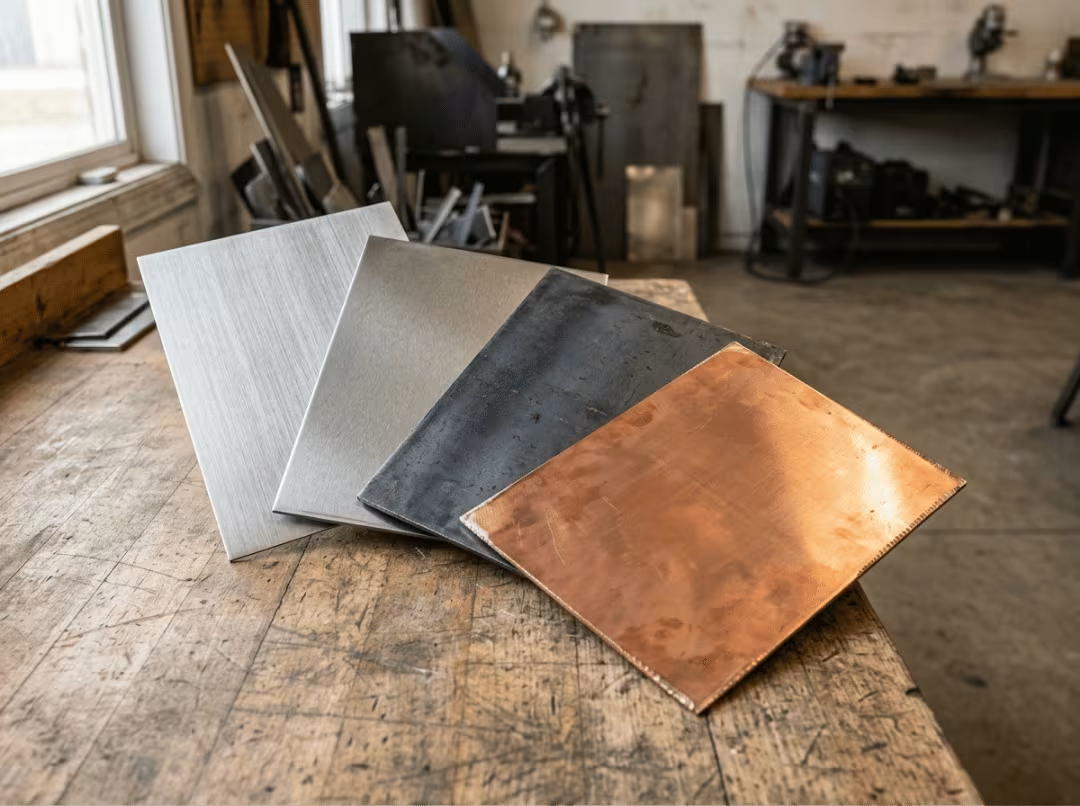
A prototype bracket cracks clean through at the bend line, and the whole build slips a week while you re-source stock. Picking the right sheet metal types for rapid prototyping is what separates a part that bends cleanly and tests true on the first try from one that doesn’t. The same drawing can be cut and formed in a dozen materials, and the wrong one costs you a rebuild, a delayed test, or worse — a result that looks fine but lies to you.
That last one is the real danger. A stand-in material can pass a fit check, then fail a load test in a way that tells you nothing about your actual production part. Whether you’re laser cutting, waterjet cutting, CNC bending, or running short-run stamping, the material you start with shapes every step that follows.
This guide gives you a repeatable way to match material to what your prototype actually needs to prove — not a spec-sheet dump you’ll skim once and forget.
What Actually Drives the Material Choice
You don’t weigh every property equally. You weigh them in the order your prototype’s purpose demands, and usually one or two factors decide the whole call. Here’s the ranking that holds up on most prototype builds:
- Mechanical load — tensile strength, yield, hardness, fatigue life. Start here only when the part actually carries the load during testing.
- Formability and bendability — the factor that quietly ruins the most prototypes. Ductile materials bend to tight radii without cracking; stiffer, harder ones split at the bend.
- Corrosion and service environment — moisture, chemicals, salt spray, sanitizing washdowns. If the part lives in a harsh environment, this jumps up the list fast.
- Weight and conductivity — decisive for aerospace, electronics, heat sinks, and enclosures where grams or watts matter.
- Weldability and joining — carbon steel welds easily; some aluminum alloys need specific filler and technique to hold.
- Finish and post-processing — anodizing, powder coating, plating, and passivation each behave differently depending on the base metal.
- Availability and lead time — common alloys in standard gauges ship fast. Exotics stretch your schedule by weeks.
- Cost and MOQ — on small prototype runs, setup and sourcing usually cost more than the raw material per part.
The trick is knowing which factor leads. A load-test part leads with mechanical properties, and everything else bends around that. A bend-heavy enclosure leads with formability, because a cracked flange kills the build no matter how strong the alloy is. A cosmetic demo leads with finish, since nobody’s stress-testing a concept model.
One rule governs all of this.
When the test result depends on how the material behaves, prototype in the production material. Substitute freely when it doesn’t, and save time and cost where they count.
The Five Sheet Metal Families for Prototyping
Almost every prototype material falls into five families, and knowing each one’s signature beats memorizing grade numbers. Carbon steel is cheap and forms easily. Stainless buys you corrosion resistance. Aluminum wins on lightweight. Copper and brass deliver conductivity and good looks. Specialty alloys handle extreme service conditions, such as high heat or harsh chemistry. Each section below covers the go-to grades, the trade-offs that actually bite, and when to reach for that family over the others.
Carbon Steels
Carbon steel is the default prototype material, and for good reason. It’s cheap, forms cleanly, welds without fuss, and ships in every gauge you’ll ever need — as long as corrosion isn’t part of the test.
The grades you’ll see most are the mild steels: 1008, 1010, and 1018. The first two are softer and bend beautifully, which makes them a safe pick for parts with tight radii. 1018 gives you a bit more strength while staying easy to machine and weld. For prototype work, that trio covers nearly everything.
The distinction that matters more than grade number is cold-rolled (CRS) versus hot-rolled (HRS). Cold-rolled steel is the default prototype because it offers a smooth surface, tighter thickness tolerances, and clean edges after laser cutting. That means less cleanup and parts that look close to production. Hot-rolled steel carries a rougher scale and looser tolerances, so save it for larger, thicker parts where surface finish doesn’t matter, and cost does.
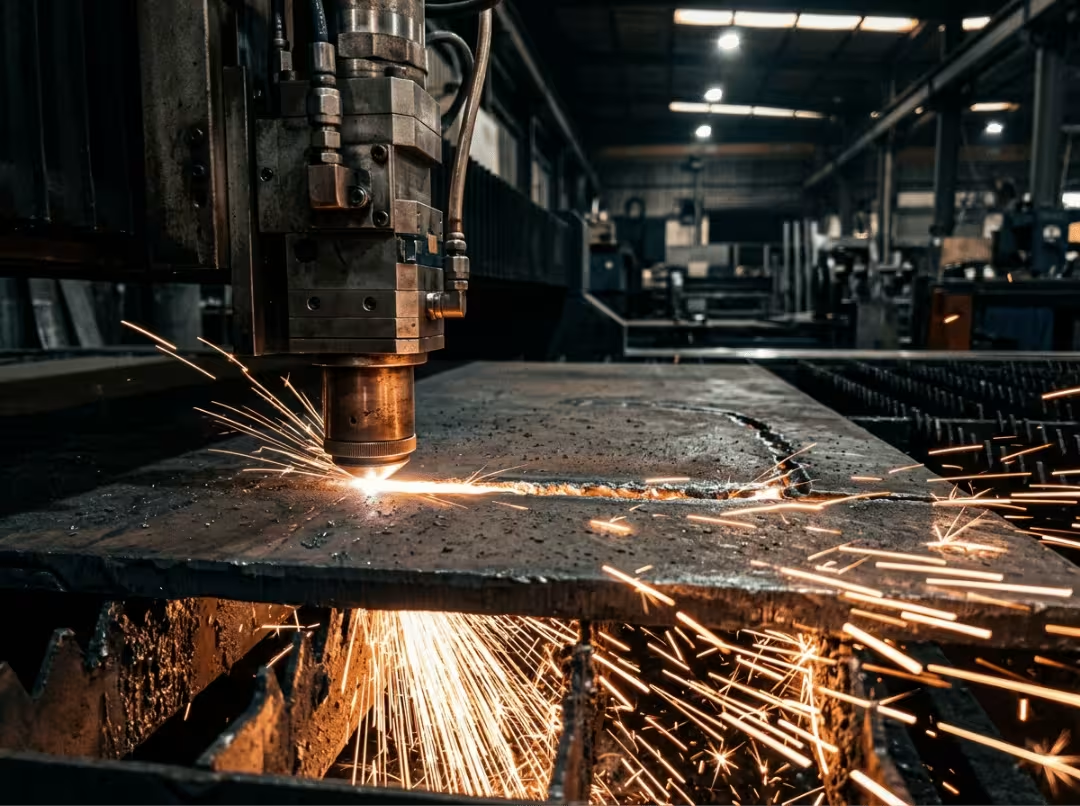
Carbon steel’s strengths are hard to beat early in a project: low cost, excellent formability, easy welding, and wide availability. The trade-off is corrosion. Bare carbon steel rusts, so it needs a coating to survive anything but a dry shop. It’s also heavier than aluminum, which rules it out where weight drives the design.
When to reach for it: structural brackets, chassis, enclosures, and any part that will be painted or powder coated. In those cases, the coating handles corrosion, so the base metal never has to — and you get production-like behavior for pennies.
Stainless Steels
Stainless earns its higher price when corrosion resistance or a sanitary finish is non-negotiable. But its forming behavior takes planning, and that’s where people get burned.
Three grades cover most prototype work. 304 is the all-purpose choice, balancing corrosion resistance, strength, and formability. 316 adds molybdenum, which buys real protection in marine, chemical, and chloride-rich environments where 304 would eventually pit. 17-4 PH is a high-strength, hardenable grade you reach for when the prototype must withstand the same stresses the production part will.
Now, the warnings: stainless doesn’t form like carbon steel. It work-hardens as you bend it, meaning the metal gets harder and more brittle right where you’re trying to shape it. Push a tight radius without planning for that, and you’ll crack the bend. Stainless also galls during forming — the surfaces cold-weld and tear instead of sliding — which chews up tooling and leaves scored parts. A stainless part that fights the press brake usually means the setup ignored these habits, not that the machine failed.
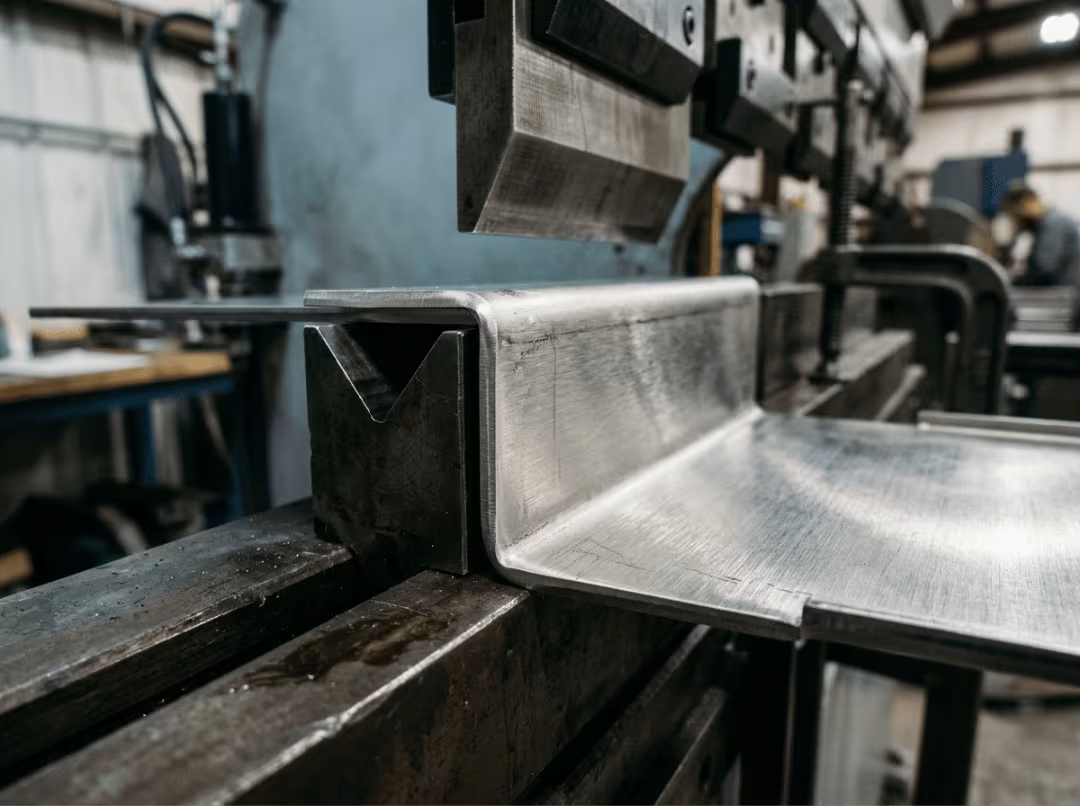
The practical fix is generous bend radii, the right tooling, and sometimes an extra forming step to ease the metal into shape. None of that is hard, but it has to be planned before the first bend.
The cost is higher than carbon steel, so don’t default to stainless out of habit. Reach for it only when the environment or finish genuinely demands it. As a quick example: a coastal sensor housing in 304 will show rust spots within months, while the same part in 316 shrugs off the salt.
When to reach for it: medical devices, food-processing equipment, outdoor and marine hardware, and any part that requires a sanitary or corrosion-resistant finish.
Aluminum Alloys
Aluminum wins on weight and corrosion resistance, but the alloy you pick decides whether it bends cleanly or cracks in your hands. Treat these three as different tools, not interchangeable options.
5052 is the one you want for formed sheet parts. It bends well, holds up to fatigue, and takes a tight radius without cracking — the closest thing to a no-drama aluminum for bent work. 6061 machines beautifully and has good strength, but it cracks under tight bends. It suits parts with few formed features or gentle radii, not a box folded on four sides. 7075 is strong, nearly matching some steels, but it’s brittle in bending and rarely the right call for sheet-forming prototypes. Specify it only when raw strength outranks the need to fold the part.
Beyond bending, aluminum brings real perks: roughly one-third the weight of steel, natural corrosion resistance without coating, and easy anodizing for color, added hardness, or wear resistance.
Then there’s springback, which will surprise you if you don’t plan for it. Aluminum recovers more than steel after a bend. You form the part, it looks right while it’s still clamped in the tool, and the moment you release it, the angle opens back up. A 90-degree bend relaxes to 92 or 93, and suddenly your flange doesn’t line up. The fix is over-bending — setting the press brake to bend past the target so the part springs back to spec. That means your tooling and brake settings need to be compensated for before the run, not corrected afterward.
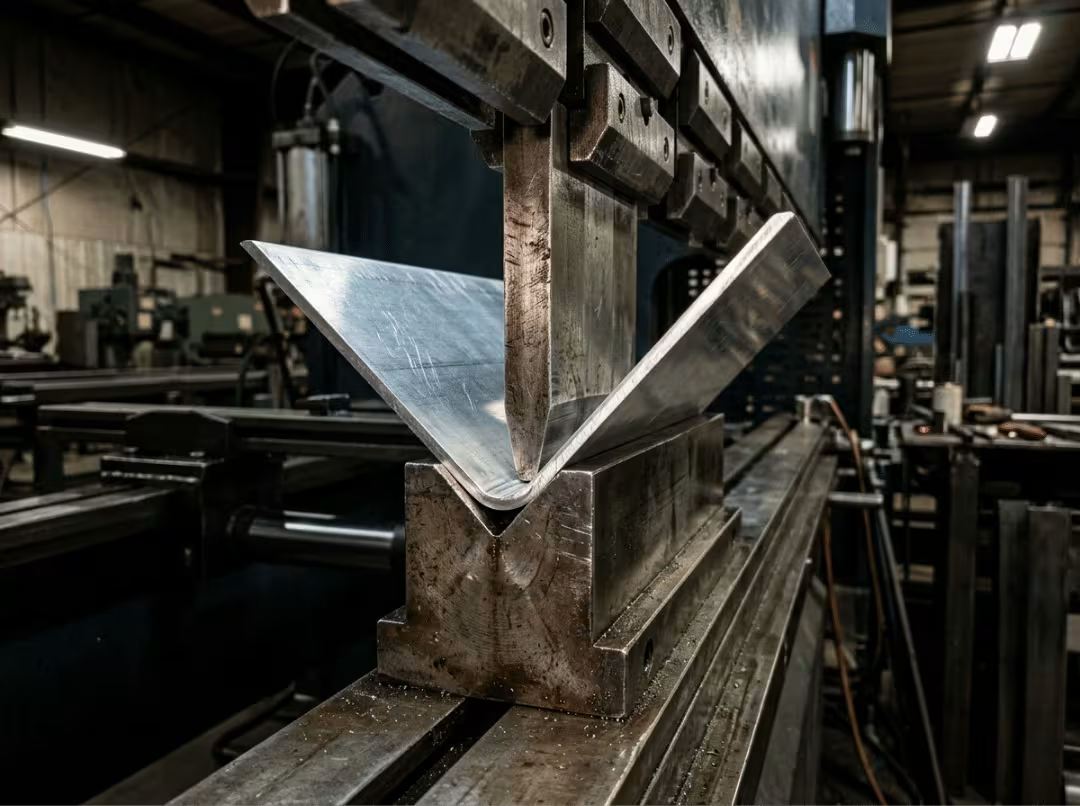
Here’s the difference in practice: fold a tight-radius bracket in 5052 and it comes out clean. Fold the same geometry in 6061, and you’ll likely see cracks along the outside of the bend. Same drawing, same tooling, completely different result — driven entirely by alloy choice.
When to reach for it: enclosures, brackets, heat sinks, drone and automotive parts, and consumer electronics housings where weight and corrosion resistance carry the design.
Copper and Brass
You pick copper or brass when conductivity or appearance outranks cost — not before. Outside that narrow set of jobs, they’re an expensive habit.
C110 copper is the conductivity choice. It conducts heat and current better than nearly anything else you can machine, making it the right choice for bus bars, heat sinks, and RF shielding. When the prototype has to demonstrate electrical or thermal performance, no cheaper stand-in can give you an honest result. Swapping in aluminum to save money produces data that doesn’t transfer.
C260 brass trades some conductivity for machinability and a polished look. It cuts and forms smoothly, resists corrosion without a coating, and finishes to a bright surface that genuinely represents a design. That’s why it turns up in decorative hardware, fittings, and trim where appearance is part of the spec.
Both metals work-harden faster than steel or aluminum. As you bend them, they stiffen and get brittle right where you need them to flex — which means generous radii, careful forming, and no assumption that they’ll behave like mild steel. Cost is the other constraint. They run more per pound than steel or aluminum, sometimes significantly. On a short prototype run, that premium is manageable, but it’s still real.
When to reach for it: electrical components, RF and thermal hardware, and decorative parts where conductivity or finish quality is the actual requirement.
Specialty and Exotic Alloys
Reach for these only when the prototype has to prove something about the final exotic material itself. If the test doesn’t hinge on titanium’s strength-to-weight ratio or Inconel’s heat resistance, a cheaper stand-in gets you to the answer faster and with far less sourcing pain.
Titanium Grade 2 is the baseline for corrosion-resistant, biocompatible parts. It handles harsh chemical environments and body-contact applications while staying lighter than steel. Grade 5 (Ti-6Al-4V) adds substantial strength at a higher price. It’s the right call when the part carries real structural load and can’t afford the weight penalty of steel.
Inconel 625 and 718 live at the temperature extremes. They hold strength and resist oxidation where most metals soften or scale — turbine sections, exhaust components, hot chemical hardware. When heat is the entire point of the test, nothing cheaper honestly replicates the material’s behavior.
The case against using them unless you must is simple: sheet stock is limited in gauge and size, lead times stretch into weeks, material costs are steep, and both forming and welding require special handling — controlled atmospheres, specific filler materials, and shops with real experience with the metal. One misstep scraps an expensive blank.
Be honest about what the prototype is testing. If it’s a fit check or an assembly trial, a steel or aluminum stand-in works fine. Note the substitution and move on.
When to reach for it: aerospace, motorsport, chemical processing, and medical implants — applications where the exotic material itself is what’s under evaluation.
The Five Families, Side by Side
One reference table quickly narrows most comparisons. Use it to shortlist, then verify against your actual part geometry, gauge, and local stock.
|
Family |
Relative Cost |
Formability |
Corrosion Resistance |
Strength-to-Weight |
Typical Lead Time |
|---|---|---|---|---|---|
|
Carbon steel |
Low |
Excellent |
Poor (needs coating) |
Moderate |
Fast |
|
Stainless |
Medium |
Fair (work-hardens) |
Excellent |
Good |
Fast |
|
Aluminum |
Medium |
Good (alloy-dependent) |
Good |
Excellent |
Fast |
|
Copper/Brass |
High |
Fair (work-hardens) |
Good |
Low |
Moderate |
|
Specialty alloys |
Very high |
Varies |
Excellent |
Excellent |
Slow |
The defaults aren’t hard to read out of that table. Carbon steel when cost dominates. Stainless when corrosion or a sanitary finish is non-negotiable. Aluminum when weight drives the design. Copper when conductivity is the whole requirement. Specialty alloys when the service environment is genuinely extreme and no substitute will produce honest data.
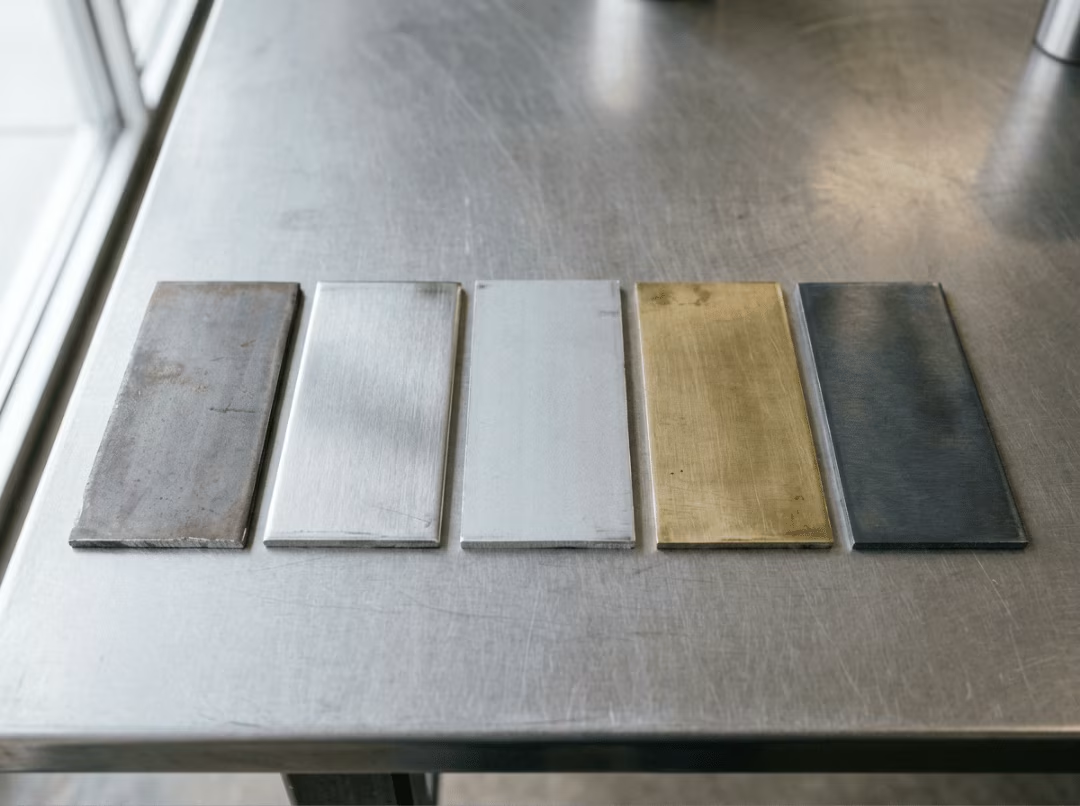
Two things can override the chart entirely. Stock availability varies by region — a call to a local supplier often beats any generic lead-time figure, and it can shift a material decision on the spot. And gauge matters more than people expect. Thinner stock forms more easily and bends tighter; thicker stock needs more bend allowance, heavier tooling, and wider radii. The same alloy in two different gauges can behave like different materials on the press brake.
What the Data Sheet Won’t Tell You
Prototype failures rarely come from picking the wrong tensile strength. They come from a bend that cracked, an edge that complicated a weld, or a finish that didn’t stick. None of that is on the spec sheet. Here’s what to account for before parts hit the shop floor.
Minimum bend radii. Every material has a radius below which it cracks, and aluminum’s is higher than most people assume — especially in 6061. Mild steel tolerates much tighter bends without complaint. Nail down the minimum radius before you commit to a geometry, not after the first part comes back split.
Springback. Aluminum and stainless steel recover more than carbon steel after a bend is released. The part looks right in the tool, then opens up a degree or two once it’s free. Over-bend compensation isn’t a workaround — it’s standard practice. Build it into the press brake setup before the first piece runs.
Cutting method interactions. Laser cutting is fast and accurate, but it leaves a heat-affected zone along every cut edge — a narrow band of altered metal that can crack under a tight bend or cause a weld to be inconsistent. Waterjet cuts cold and leaves a clean, unaffected edge. When a cut edge is going straight into a bend or a weld, the cutting method isn’t a logistics choice; it’s a quality decision.
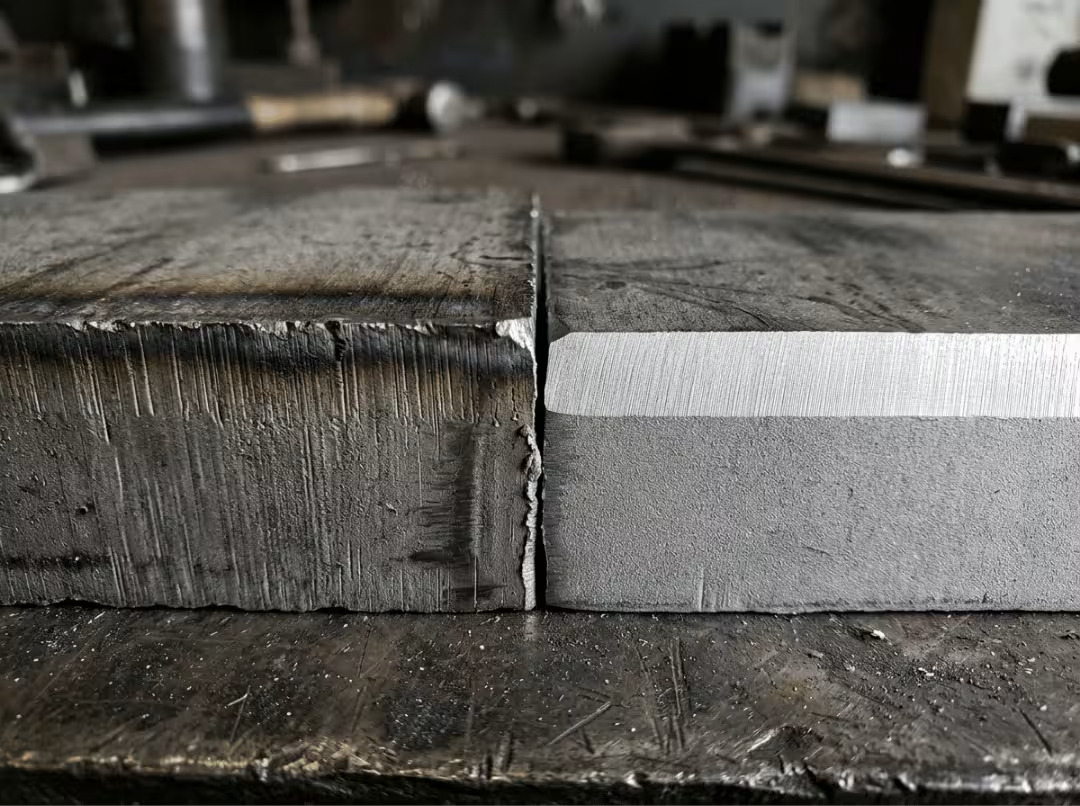
Tolerances matched to the test. Tight tolerances cost real money on prototype runs. A fit-check part doesn’t need the same precision as a load-tested one. Set tolerances to what the test actually requires, not to what the drawing template defaults to.
Finish prep by material. Stainless steel needs passivation to perform well in corrosive environments. Aluminum needs proper surface prep — typically an etch or conversion coat — before anodizing. Carbon steel needs blasting or chemical etching before paint will stick long-term. The finishing path isn’t interchangeable across materials.
Sheet-stock and MOQ reality. Most suppliers sell full sheets. On a single prototype, that’s waste. A local cutting service lets you buy only what you need, often with faster turnaround than ordering from a distributor.
Joining method locks in early. Welding, riveting, and adhesive bonding each impose their own material constraints. Some aluminum alloys need specific filler to weld without cracking. Adhesives perform differently on anodized versus bare aluminum. Decide how the part joins before you finalize the material — the two decisions feed each other.
Match the Material to Your Prototype’s Goal
Before you pull up a property chart, name what the prototype has to prove. That purpose tells you which criteria matter and which you can safely ignore — and it narrows the material choice faster than any comparison table.
Functional prototype. The part has to behave like the real thing: carry the same load, survive the same environment, join the same way. Use the production material. A stand-in that bends or fatigues differently produces test data that doesn’t transfer to the actual part. If the production design calls for 316 stainless, prototype in 316 — even at the added cost. The alternative is a test result you can’t act on.
Fit and assembly prototype. Dimensional accuracy is the only thing that matters here. You’re checking whether parts mate, holes line up, and clearances work. Material properties are irrelevant. Mild steel or 5052 aluminum are both fine stand-ins, and they cut and form fast enough to keep the build schedule moving.
Visual or concept model. This part gets judged by how it looks and feels, so finish, color, and coating options lead the selection. Brass holds a polished surface well. Aluminum anodizes cleanly. Coated carbon steel handles a painted concept. Pick whichever finishes to your target appearance, then work backward to stock availability.
Four questions sort any part into the right category:
- What loads does the part carry during the test?
- What environment does it face — temperature, moisture, chemicals?
- How does it join to neighboring components?
- Will the production version use the same material, or is a change likely later?
The answers usually land you on a family, sometimes on a specific grade.
The practical shortcut: when in doubt, prototype in the production material unless cost or lead time genuinely forces a substitution. When you substitute, write it into the engineering record — the material used and why. That single note keeps a prototype test result from being misread later as data from the final design. It’s a five-second step that prevents a surprisingly expensive class of mistakes.
Frequently Asked Questions
What is the most common sheet metal used for rapid prototyping?
Cold-rolled carbon steel is the default for general prototype work. It’s inexpensive, forms and welds easily, and produces clean edges after laser cutting in any standard gauge. Aluminum 5052 is a close second for parts where weight or corrosion resistance matters.
Can I prototype in a different material than my final production part?
Yes — when the test doesn’t depend on how the material behaves. Fit checks and assembly trials work fine with cheaper stand-ins. For functional tests where strength, fatigue, or corrosion are the variables, use the production material and document any substitution, so the data isn’t later misread as validation of the real design.
How does sheet thickness affect the material choice?
Thickness changes formability and tooling requirements. Thinner stock bends to tighter radii and is easier to form. Thicker stock needs more bend allowance, heavier tooling, and wider radii to avoid cracking. The same alloy can behave quite differently at two different gauges — pick thickness and material together, not separately.
When should I choose stainless steel over aluminum?
Choose stainless steel when corrosion resistance, load-bearing strength, or a sanitary finish is non-negotiable — medical, food processing, and marine parts are the usual cases. Choose aluminum when weight is the priority, and the environment is less aggressive. Stainless is heavier and harder to form than aluminum, so it’s not a safe default — reach for it only when the application actually requires it.
Is laser cutting or waterjet cutting better for sheet metal prototypes?
The right answer depends on what happens after the cut. Laser cutting is faster and dimensionally more precise, but it leaves a heat-affected zone that can cause problems at tight bends or downstream welds. Waterjet cuts cold with no thermal effect on the edge, which matters most when cut edges go directly into a forming or welding operation.
What is the minimum bend radius for different sheet metals?
Minimum bend radius varies by material and gauge, but the general pattern holds: ductile mild steel handles the tightest radii, aluminum needs more room than most people expect, and work-hardening metals like stainless and 6061 require even wider radii. Confirm the specific minimum before locking in a tight-radius feature — fixing it in the design is far cheaper than scrapping bent parts.
How long does it take to source sheet metal stock for a prototype?
Common alloys in standard gauges — cold-rolled steel, 304 stainless, 5052 and 6061 aluminum — typically ship within a few days. Specialty and exotic alloys like titanium and Inconel can take several weeks to source, depending on stock availability. A call to a local supplier gives you the most accurate lead time for your specific grade and thickness.
Conclusion
The material decision starts with the prototype’s purpose, not the property chart. If weight drives the design, 5052 aluminum offers formability and light weight without the corrosion issues. If corrosion resistance is non-negotiable, 304 or 316 stainless holds where cheaper metals won’t. If cost and availability are the binding constraints, cold-rolled steel covers most situations fast. Copper earns its price when conductivity is the requirement. Specialty alloys earn their price when the service environment leaves no room for a substitute.
That one choice determines how quickly parts arrive, what they cost, and whether the test result you get actually tells you something. Get it right, and the prototype does its job on the first build.
Set the criteria, weigh the five families against them, and pick the material that answers your prototype’s real question. Everything downstream follows from that.