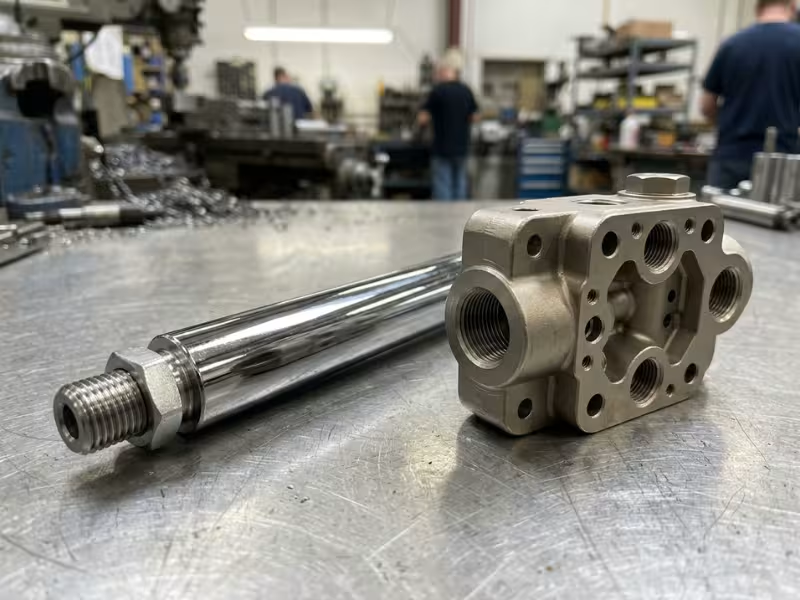
Hard chrome and electroless nickel often appear in the same conversation because both improve surface performance. But they do not solve the same problem in the same way.
I usually tell engineers and buyers to stop comparing them as if one simply replaces the other. Hard chrome often fits parts that need a very hard surface, low friction, and heavy wear performance. Electroless nickel often fits parts that need better corrosion protection, more even thickness, and closer dimensional control.
If you are deciding based on wear, corrosion, geometry, tolerance, or post-finishing, this comparison will help you make a cleaner choice. The right answer depends less on the coating name and more on how the part fails, how the shape behaves in plating, and how much rework your process can accept.
What’s the Real Difference? The Short Answer First
When a customer sends me a drawing, I ask one question before I talk about coatings: what does this part need to survive?
That answer usually points to one of two directions.
Hard chrome is the stronger fit when you need a thick, very hard, low-friction surface on a fairly simple shape. Think straight rods, shafts, and rollers. It stands up to heavy sliding wear, and you can grind it back to a precise size.
Electroless nickel is the stronger fit when you need even coverage, solid corrosion protection, and tight tolerances on a complex part. It reaches into bores, threads, and recesses that chrome struggles to coat evenly.
So the real split is not “harder vs. softer.” It is a tough, low-friction surface on simple geometry versus uniform protection on complex geometry.
Keep that split in mind. Every detail about wear, corrosion, thickness, and cost traces back to it. When a part falls somewhere in between, its failure mode and shape usually break the tie.
How the Two Coatings Behave Differently
You don’t need to master plating chemistry to choose well. You just need to know how each process lays down metal. That controls coverage, tolerance, and how much work happens after the part leaves the tank.
Hard Chrome in Practice
Hard chrome is an electroplating process. The shop places the part in a chromic acid bath, connects it to a power source, and electric current drives chromium onto the surface.
That current never spreads evenly. It crowds onto edges, corners, and high points, so chrome builds up thick there. Recesses, internal bores, and blind holes get starved. Platers call this the current-density effect, and it shapes almost every chrome job.
Good shops fight it with custom anodes, shields, and careful masking. Even so, a long bore or deep groove may barely get coated.
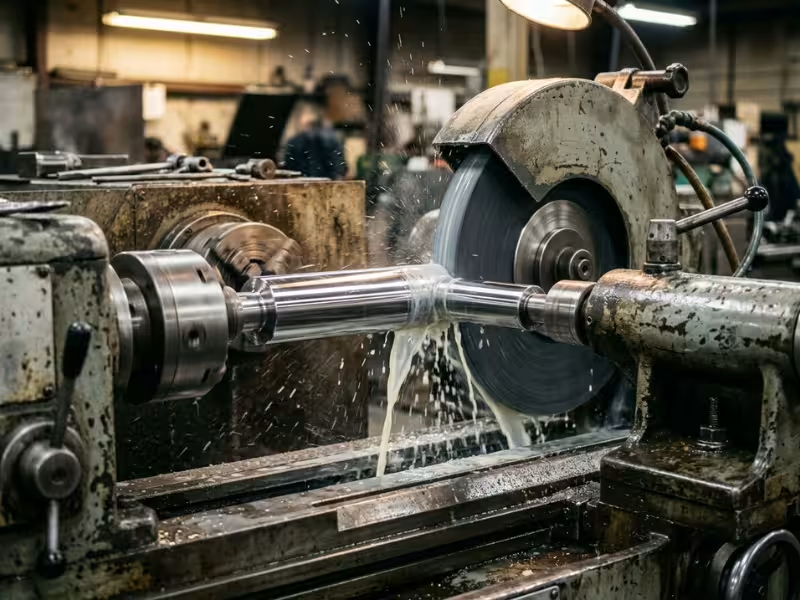
That’s why I tell clients to plan for grinding from day one. Most shops plate hard chrome oversize, then grind it back to final dimension. Grinding isn’t a rescue for a bad job. It’s part of the real process, and it belongs in your lead time and your quote.
Electroless Nickel in Practice
Electroless nickel uses no electric current at all. A chemical reaction in the bath deposits nickel onto the part, and the coating keeps catalyzing its own growth.
With no current involved, edges can’t steal metal from recesses. The coating grows at nearly the same rate everywhere the solution touches. Inside a bore, down a thread root, across a sharp corner, you get close to the same thickness.
That uniformity lets you plate a finished machined part and still hit tolerance without grinding. You can predict the buildup and machine the part slightly undersize to match.
The tradeoff is control. Bath chemistry drives everything: nickel concentration, pH, temperature, phosphorus content, and bath age. If a shop lets those drift, thickness and corrosion performance drift too. Always ask your plater how they monitor and replenish the bath.
Hard Chrome vs. Electroless Nickel: Side-by-Side Comparison
Clients often ask me for a quick view of both coatings next to each other, so here it is. Use the table to spot the gaps. Then read the notes below, because a few rows matter far more than the rest.
|
Factor |
Hard Chrome |
Electroless Nickel |
|---|---|---|
|
Deposit method |
Electroplated |
Chemical autocatalytic deposition |
|
Typical strength |
Very high hardness, low friction |
Uniform deposit, strong corrosion resistance |
|
Thickness control |
Less uniform on complex shapes |
Highly uniform |
|
Complex geometry |
Limited |
Excellent |
|
Wear resistance |
Excellent in high-load sliding wear |
Strong, especially after heat treatment |
|
Corrosion resistance |
Moderate on its own; microcracks matter |
Often better, especially high-phosphorus EN |
|
Post-finishing |
Often required |
Often minimal |
|
Typical best-fit parts |
Rods, shafts, rollers |
Valves, fittings, complex machined parts |
|
Regulatory pressure |
Higher due to chromium chemistry |
Lower, but still a regulated waste stream |
Wear and Friction: Name the Failure First
Hard chrome earns its place in high-load sliding contact. It typically reaches 68–72 HRC and has low friction. A hydraulic rod can slide through its seals millions of times and still keep a clean surface.
As-plated electroless nickel lands around 500–600 HV. Heat treatment can push low- and mid-phosphorus EN close to chrome’s hardness. But close is not equal. Under heavy sliding loads, chrome usually lasts longer.
Still, “wear resistance” means little until you name the wear. Abrasion, galling, adhesive wear, and fretting each attack a surface in their own way. I’ve seen EN outlast chrome where light abrasion and corrosion worked together. Define how the part fails, then pick the coating.
Corrosion Resistance: The Microcrack Problem
Many buyers get surprised here. Hard chrome resists corrosion only moderately on its own, and the reason hides inside the deposit.
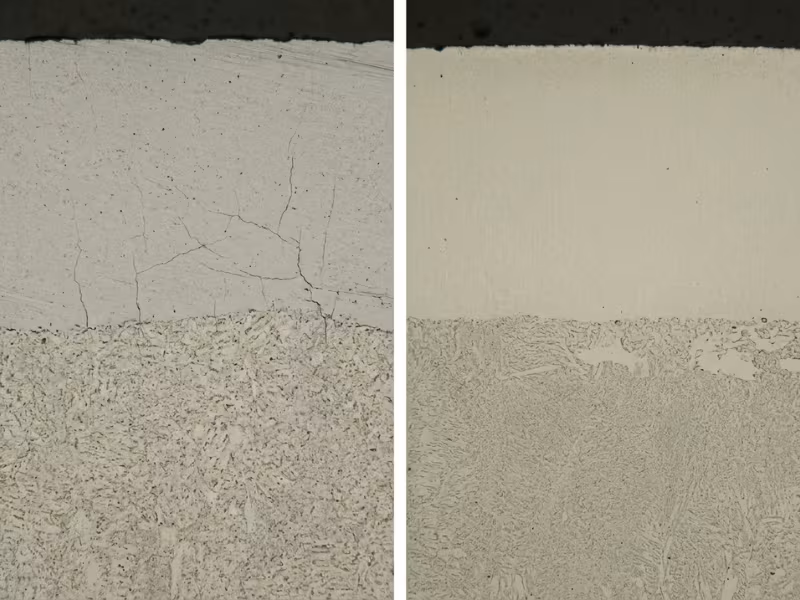
As chrome plates, internal stress builds and releases as a network of fine microcracks. On thinner deposits, those cracks can link from the surface down to the base steel. Moisture and salt follow those paths. Rust then starts under a coating that still looks bright. Thicker, properly ground chrome helps, and a nickel underlayer helps more. Neither makes chrome a true sealed barrier.
Electroless nickel builds a dense, continuous layer with no crack network. High-phosphorus EN, at roughly 10–13% phosphorus, forms an amorphous structure that handles salt, humidity, and many chemicals well. Since it coats evenly, recesses get the same protection as outer faces.
One caution: heat-treating EN for hardness can weaken its corrosion performance. Choose your priority before you write the spec.
Geometry and Thickness Control: Where the Split Gets Real
Shape decides more coating choices than any spec sheet. Chrome follows current, and current avoids hollows. A deep bore, thread root, or blind hole may get a thin layer or almost nothing. Nearby edges, meanwhile, grow thick nodules.
EN doesn’t play favorites. Wherever the solution touches, the coating grows at nearly the same rate. Good shops often hold thickness within about ±10% across the whole part.
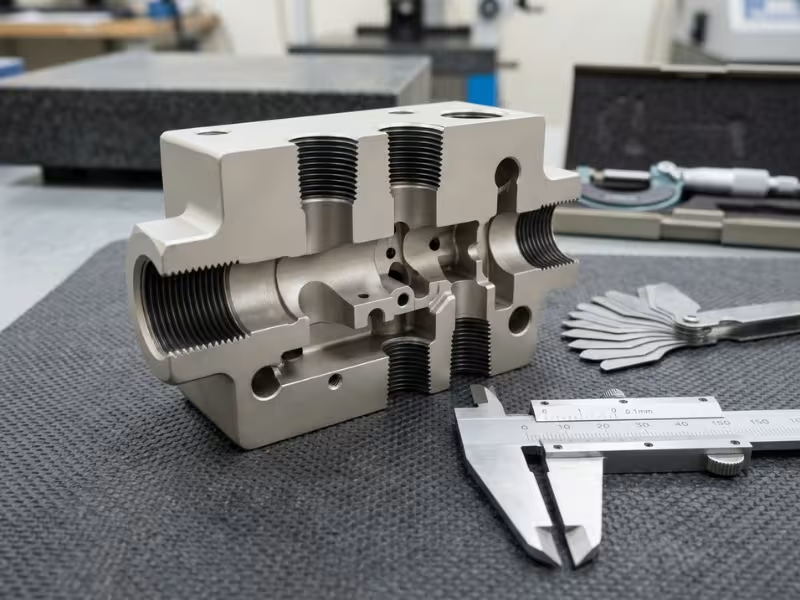
That matters on tight-tolerance work. Picture a valve body with cross-drilled ports and threaded connections. Chrome would leave thin or bare passages, then demand grinding where no wheel can reach. EN coats every port evenly. You simply machine the part slightly undersize to allow for the buildup.
For complex structural parts, that predictability cuts out guesswork, scrap, and rework.
Finishing and Process Burden: Price the Finished Part
A chrome quote rarely tells the whole story. Most chrome jobs need masking before plating and grinding afterward. Some need a strip-and-replate cycle when the buildup misses spec. Each step adds labor, lead time, and scrap risk.
EN usually leaves the tank close to final size, and many parts need no grinding at all.
So don’t compare plating prices alone. Compare the cost to deliver a finished, inspected, in-tolerance part. On precision components, EN often wins that math even when its coating price runs higher.
When Hard Chrome Is Still the Right Call
On paper, electroless nickel often looks like the safer bet. It coats evenly, resists corrosion well, and needs less grinding. Still, I steer plenty of clients toward hard chrome. Here’s when it earns the job.
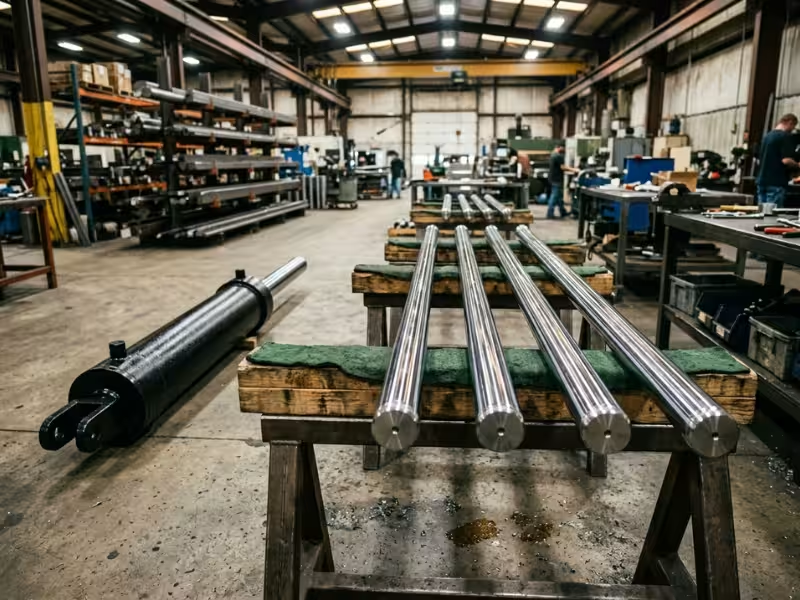
Hydraulic rods and cylinder shafts. A rod spends its whole life sliding through seals under pressure. Seals wear out fast against a soft or rough surface. Chrome gives them a hard, slick partner, which protects both the rod and the seal kit. If the rod works outdoors, I add a nickel underlayer instead of switching coatings.
Rollers and long shafts. These parts have plain outside diameters, which suit chrome well. Current spreads well across a simple cylinder, so chrome’s uneven buildup barely shows up. You get its strengths without its usual drawback.
Heavy sliding wear and low-friction contact. When metal rubs metal under load all day, friction turns into heat, and heat turns into failure. Chrome keeps friction low right out of the tank. Heat-treated EN can get close, but you give up some corrosion protection to get there.
Parts that can go back to the grinder. Chrome works best when your process already includes grinding. It also shines in repair work. You can build up a worn shaft with thick chrome, grind it to size, and send it back into service. When it wears again, you strip it and repeat.
My quick test has three questions. Is the shape simple? Does the part face sliding loads? Can you grind it afterward? If you answer yes to all three, hard chrome usually wins. If any answer is no, take a hard look at EN.
When Electroless Nickel Is the Smarter Pick
This is where I see the most costly mix-ups. A buyer specs chrome out of habit, and the part fails in places nobody checked. EN prevents that in a few clear situations.
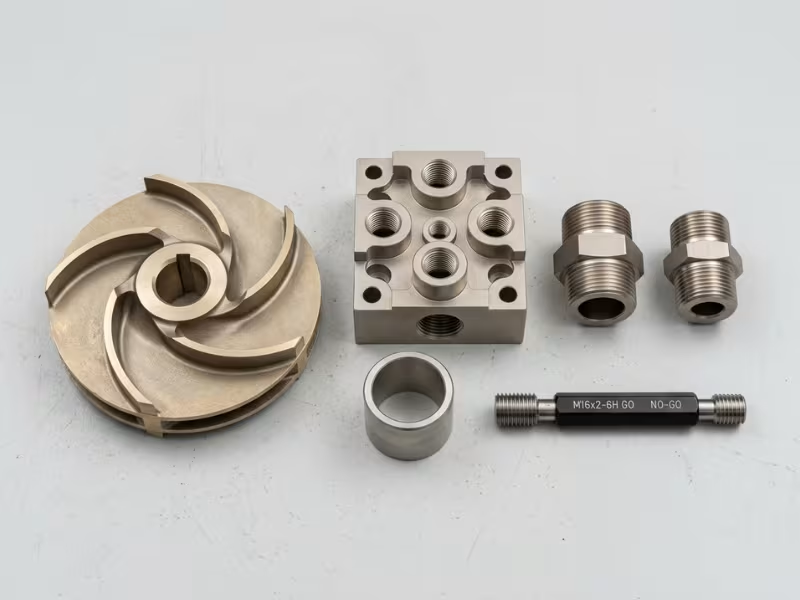
Internal bores and threads. If the critical surface sits inside the part, put EN at the top of your list. It coats a thread root as evenly as an outside face, so threads still gauge after plating.
Valves and pump parts. These parts mix ports, seats, and cavities with fluids that may attack the metal. EN protects every wetted surface, not just the ones you can see. For seawater, sour gas, or chemical service, I specify high-phosphorus EN. Its dense structure holds up far better than chrome’s cracked layer.
Tight-tolerance machined components. When a drawing calls for ±0.0005 in. or tighter, EN lets you plan the buildup. Machine diameters undersize by twice the coating thickness, plate the part, and it lands on size. No grinding, no guessing.
Aluminum parts. EN bonds well to aluminum when the shop uses the right zincate pretreatment. It gives a soft base metal real hardness and wear resistance. Ask your plater how they prep aluminum, because bond failures almost always start there.
Humid or corrosive service. Parts in food plants, marine gear, and outdoor equipment face constant moisture. High-phosphorus EN gives them a continuous barrier. Low- or mid-phosphorus EN suits jobs where hardness matters more than corrosion, especially after heat treatment.
Parts that should ship close to final size. If your process has no grinding step, or the part has features no wheel can reach, EN keeps you out of trouble. You skip rework, extra masking, and scrap.
My rule is simple. If the part has hidden surfaces, tight fits, or wet service, start with EN. Then check whether heavy wear loads push you back toward chrome.
How to Choose for a Real Part
Coating comparisons are useful, but your part has its own load, shape, and service environment. When a drawing lands on my desk, I run it through the same short check every time. Use the table to get a first read. Then work through the four steps below to confirm it.
|
If your main priority is… |
Usually the stronger option |
Why |
|---|---|---|
|
High-load sliding wear |
Hard chrome |
Higher hardness and lower friction |
|
Corrosion on complex parts |
Electroless nickel |
A more continuous, more uniform barrier |
|
Tight dimensional control |
Electroless nickel |
Predictable thickness, less post-machining |
|
Thick build-up for worn parts |
Hard chrome |
Handles heavy build and regrind cycles |
|
Internal bores or threads |
Electroless nickel |
Better coverage in recessed geometry |
|
Lowest lifecycle cost on a precision part |
Often electroless nickel |
Fewer secondary operations |
|
Compliance-sensitive programs |
Often electroless nickel |
Fewer hexavalent chromium concerns |
Start with how the part fails. Pull a worn part or read the field reports before you open a coating catalog. Scoring and galling on a sliding face point toward chrome. Pitting, rust creeping under seals, or a fit that loosens over time points toward EN. Chemical attack usually calls for high-phosphorus EN. If you can’t name the dominant failure, you’re still guessing.
Then study the shape. A plain outside diameter, like a rod or roller, plates cleanly in chrome. Bores, blind holes, cross-drilled ports, and threads favor EN. Many parts mix both. In that case, ask which surface actually carries the job. Let that surface drive the choice.
Check your tolerance and finishing limits. Two questions settle this step. Can a grinding wheel reach every critical surface? Does your schedule and budget allow grinding after plating? If both answers are yes, chrome stays in play. If either answer is no, EN usually wins. Machine the part slightly undersize and let the coating bring it to size.
Price the finished part, not the plating. A low coating quote can hide masking labor, grinding, strip-and-replate cycles, scrap, and extra inspection. Add the environmental side too. Hexavalent chromium rules keep tightening in the U.S. and Europe, and some customers now restrict it outright. Those rules raise supplier costs and supply risk over a program’s life.
When all four steps point the same way, you have your answer. When they split, the failure mode and the critical surface usually break the tie.
Common Selection Mistakes That Cost Real Money
Most coating failures I investigate don’t start in the plating tank. They start at the spec stage, when someone picks a finish for the wrong reason. These five mistakes show up again and again.
Choosing by hardness alone. A hardness number looks decisive on a datasheet, but it only predicts one kind of wear. A very hard chrome layer won’t stop rust from creeping through its microcracks. Match the coating to the failure mode, not to the biggest number.
Treating corrosion resistance as a yes/no property. No coating simply “resists corrosion.” Performance depends on deposit structure, thickness, phosphorus content, and the service environment. Thin chrome in salt spray behaves nothing like high-phosphorus EN in the same spot. Always ask, “Resistant to what, and for how long?”
Ignoring geometry and thickness buildup. Engineers often call out a coating thickness without asking where that thickness will actually land. Chrome may leave a bore nearly bare while nearby edges grow thick. If you skip the buildup math, threads stop gauging and fits start to bind.
Comparing coating cost instead of finished-part cost. The cheaper quote can become the expensive part once you add masking, grinding, rework, and scrap. One field failure can wipe out years of plating savings.
Expecting a coating to fix poor design. Plating can’t rescue sharp internal corners, rough machining marks, or an undersized shaft carrying too much load. A good coating makes a sound design last longer. It rarely saves a weak one. Fix the part first, then choose the finish.
FAQ
What is the main difference between hard chrome and electroless nickel?
Hard chrome uses electric current to build a thick, very hard, low-friction layer. It works best on simple shapes. Electroless nickel uses a chemical reaction instead, so it coats evenly across bores, threads, and corners. Pick chrome for heavy sliding wear. Pick EN for uniform coverage and tight tolerances.
Which coating is better for corrosion resistance?
In most cases, electroless nickel. It forms a dense, continuous layer. Hard chrome carries a network of microcracks that can let moisture reach the base metal. For salt, humidity, or chemical exposure, I usually specify high-phosphorus EN. Keep in mind that heat-treating EN for extra hardness can lower its corrosion performance.
Does hard chrome usually require grinding after plating?
Yes, on most precision parts. Chrome builds up unevenly, so shops plate it oversize and grind it back to final size. Include that step in your quote and lead time from the start. If no grinding wheel can reach a critical surface, chrome is probably the wrong choice.
Can electroless nickel be used on aluminum or complex internal features?
Yes to both. EN bonds well to aluminum when the shop uses a proper zincate pretreatment, so ask your plater how they prep the part. Because EN needs no current, it also coats deep bores, blind holes, and thread roots almost as evenly as outside faces.
Which coating is better for hydraulic rods or sliding wear?
Hard chrome usually wins here. Its high hardness and low friction protect both the rod and its seals over millions of strokes. For rods in wet or outdoor service, I add a nickel underlayer instead of switching coatings. Heat-treated EN can come close, but it rarely matches chrome under heavy sliding loads.
Is hard chrome still restricted by environmental regulations?
Yes, and the pressure keeps growing. Traditional hard chrome uses hexavalent chromium, a known carcinogen. In the U.S., EPA and OSHA rules set strict limits on emissions and worker exposure. In Europe, REACH requires authorization, and broader restrictions continue to advance. Some OEMs now ban it outright. EN still creates a regulated waste stream, but it carries far less compliance risk.
Conclusion
Hard chrome and electroless nickel both protect parts well. The better choice comes from how your part fails, how it’s shaped, and how tightly it must hold size. Hardness numbers and familiar names don’t settle it.
When I review a new part, I start with the failure mode. Is it sliding wear, corrosion, galling, or a fit that drifts loose? Next, I look at the geometry. Plain outside diameters suit chrome, while bores, threads, and hidden cavities lean toward EN. Then I check tolerance and finishing limits, including whether a grinder can reach every critical surface.
Treat this framework as a starting point. Confirm the choice against your actual part, its service environment, and its dimensional requirements. Share your drawing and operating conditions with your plater early, and the right coating usually becomes clear.