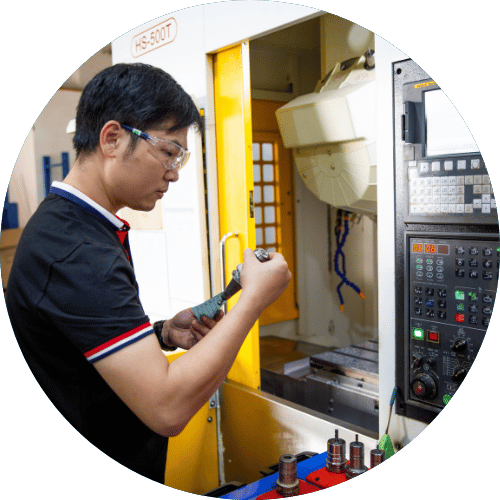
Gear machining plays a crucial role in modern industries, driving the efficiency and precision of countless mechanical systems. From automotive to aerospace, gears power the machinery that keeps the world moving. This article breaks down the complexities of gear machining, offering a clear and simplified explanation to help readers grasp its significance and processes with ease.
Understanding Gear Machining: A Simplified Guide
What is Gear Machining?
Gear machining refers to the process of shaping and manufacturing gears, which are essential components in mechanical systems. Gears transfer motion and power between machine parts, ensuring smooth and efficient operation. Industries like automotive, aerospace, and manufacturing rely heavily on gears to drive machinery, making gear machining a cornerstone of modern engineering. By utilizing specialized tools and techniques, manufacturers produce gears with precise dimensions and tooth profiles that meet specific performance requirements.
Traditional vs. Modern Gear Machining Techniques
Gear machining has undergone significant evolution over time, transitioning from traditional methods to advanced, technology-driven approaches. Understanding the key differences between these techniques helps highlight the progress in efficiency and precision:
- Traditional Gear Machining
Traditional methods, such as hobbing, shaping, and broaching, rely on manual or semi-automated processes. These techniques often require skilled operators to handle the machinery and ensure accuracy. While effective, traditional methods can be time-consuming and less adaptable to complex designs. They are best suited for simpler gear profiles and smaller production runs. - Modern Gear Machining
Modern techniques utilize advanced technologies, including computer numerical control (CNC) machines and additive manufacturing. CNC machining automates the process, delivering unparalleled precision and consistency. Additive manufacturing, also known as 3D printing, enables the creation of intricate gear designs that were previously impossible with traditional methods. These innovations reduce production time, minimize material waste, and allow mass production of high-quality gears.

Modern advances have completely transformed gear manufacturing, making it faster, more accurate, and capable of meeting the demands of today’s industry.
Essential Gear Machining Processes: Methods and Comparisons
Popular Gear Machining Methods
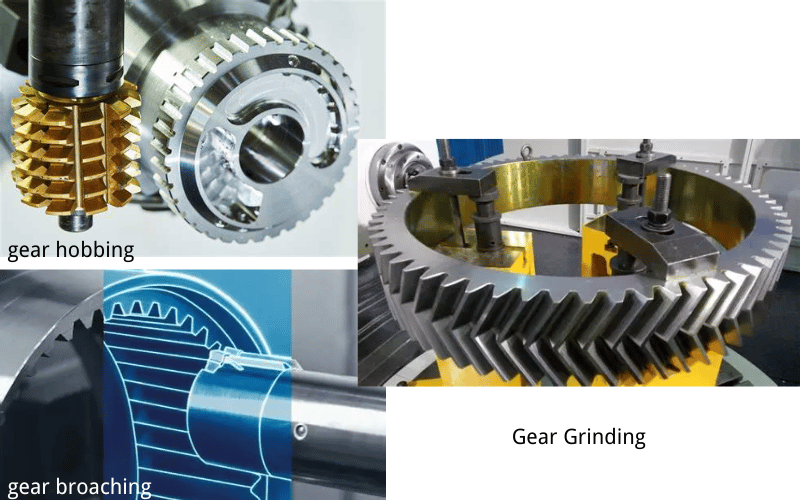
Gear manufacturing involves several specialized processes, each designed to create gears with specific shapes, sizes, and performance characteristics. Among the most widely used methods are hobbing, broaching, and grinding, each offering unique advantages for different applications.
- Hobbing
Hobbing stands out as one of the most efficient and versatile methods for gear production. Manufacturers use a hob, a specialized cutting tool, to progressively cut gear teeth into a blank. This process works well for creating spur gears, helical gears, and splines. Hobbing delivers high-speed production and is ideal for medium to large-scale manufacturing. However, it may not achieve the ultra-fine precision required for specific high-performance applications. - Broaching
Broaching involves using a toothed tool, called a broach, to cut gear teeth in a single pass. This method excels in producing internal gears and splines with consistently accurate results. Broaching is most effective for high-volume production runs, as the initial setup costs can be substantial. While it offers excellent precision, broaching is less flexible than other methods and is limited to specific gear profiles. - Grinding
Grinding refines gear surfaces and ensures precise tooth profiles, making it essential for high-performance gears. This process uses abrasive wheels to remove material and achieve tight tolerances. Grinding is slower and more expensive than hobbing or broaching, but it delivers unmatched accuracy and surface finish. Industries such as aerospace and automotive often rely on grinding for gears that require exceptional performance and durability.
Comparing Gear Machining Processes
Each gear machining method offers distinct benefits and trade-offs, making it essential to select the most suitable process based on specific production requirements. Here’s a comparison of these methods across key factors:
- Speed: Hobbing leads in production speed, making it suitable for large-scale manufacturing. Broaching follows closely, especially for internal gears, while grinding is the slowest due to its meticulous nature.
- Precision: Grinding outperforms other methods in achieving tight tolerances and smooth finishes. Broaching provides consistent accuracy, while hobbing offers good precision for most standard applications.
- Cost: Hobbing is the most cost-effective for medium to large production runs. Broaching requires a higher initial investment, but it becomes economical for high-volume production. Grinding, although expensive, justifies its cost for gears that require superior quality and performance.
By understanding these processes and their strengths, manufacturers can select the most suitable method to meet their specific gear production requirements.
Choosing the Right Materials for Gears: A Comprehensive Guide
Key Factors to Consider When Selecting Gear Materials
Selecting the right material for gears plays a critical role in ensuring their performance, durability, and cost-effectiveness. Engineers must evaluate several factors to make the best choice for specific applications:
- Strength
Gears must withstand significant forces during operation, particularly in high-load systems such as automotive transmissions or industrial machinery. Materials with high tensile and compressive strength, such as steel, ensure that gears can handle these stresses without deforming or failing. - Wear Resistance
Continuous contact between gear teeth generates friction, which can lead to wear over time. Materials with excellent wear resistance, such as bronze or specific polymers, help extend the lifespan of gears and reduce the need for maintenance. - Cost
Budget constraints often influence material selection. While high-performance materials, such as alloy steels, offer superior properties, they come at a higher cost. For less demanding applications, more affordable options such as standard steel or polymers may provide a practical balance between performance and price. - Application-Specific Needs
Some applications require additional considerations, such as corrosion resistance, weight, or noise reduction. For example, marine environments require materials that resist rust, while lightweight polymers are suitable for applications where reducing overall system weight is a priority.
Pros and Cons of Common Gear Materials
Different materials bring unique advantages and limitations to gear manufacturing. Understanding these trade-offs helps in selecting the most suitable option for specific use cases.

- Steel
Steel remains the most popular choice for gears due to its exceptional strength, durability, and versatility. Carbon steel and alloy steel offer high load-bearing capacity and wear resistance, making them ideal for heavy-duty applications. However, steel gears can be heavy and may require surface treatments, such as carburizing or nitriding, to further enhance their performance. Additionally, steel tends to be more expensive than some alternatives. - Bronze
Bronze gears excel in applications requiring low friction and high wear resistance. Their self-lubricating properties make them suitable for systems with limited lubrication, such as worm gears. Bronze also resists corrosion, making it a good choice for marine or outdoor environments. On the downside, bronze is softer than steel, which limits its use in high-load applications. It is also more expensive than many other materials. - Polymers
Polymers, such as nylon or acetal, offer lightweight and cost-effective solutions for low to medium-load applications. These materials reduce noise and vibration, making them ideal for consumer products or precision instruments. Polymers also resist corrosion and require minimal maintenance. However, they lack the strength and wear resistance of metals, which restricts their use in heavy-duty or high-temperature environments.
By carefully weighing these factors and material properties, manufacturers can optimize gear performance while meeting budget and application requirements.
Types of Gears and Their Applications: Simplified Insights
Spur Gears: The Basics of Straight-Teeth Design
Spur gears feature straight teeth that run parallel to the gear’s axis, making them one of the simplest and most commonly used gear types. Their straightforward design ensures efficient power transmission between parallel shafts, minimizing energy loss. Spur gears excel in applications requiring high-speed and high-torque performance, such as conveyor systems, electric drills, and washing machines. However, their design can generate significant noise and vibration, especially at higher speeds, which limits their use in noise-sensitive environments.
Helical Gears: Smoother and Quieter Operation
Helical gears improve upon spur gears by incorporating angled teeth, which engage gradually rather than all at once. This design reduces noise and vibration, making helical gears an ideal choice for applications that require smooth and quiet operation. They also handle higher loads and speeds more effectively due to their increased tooth contact area. Industries use helical gears in automotive transmissions, elevators, and printing presses, where precision and reduced noise are critical. However, the angled teeth create axial thrust, which requires additional components to manage, slightly increasing system complexity and cost.
Bevel Gears: Power Transmission at Angles
Bevel gears transmit power between shafts that intersect at an angle, typically 90 degrees. Their conical shape and angled teeth enable efficient torque transfer in applications that require directional changes. Straight bevel gears are well-suited for low-speed systems, while spiral bevel gears excel at handling higher speeds and loads with reduced noise. Bevel gears find use in automotive differentials, power tools, and marine propulsion systems. While versatile, bevel gears require precise alignment during installation to ensure optimal performance and longevity.
Worm Gears: Compact and Self-Locking Solutions
Worm gears consist of a worm (a screw-like component) and a gear, enabling power transmission between non-parallel, non-intersecting shafts. This setup offers high gear reduction ratios in a compact design, making worm gears an ideal choice for applications with limited space. Additionally, their self-locking feature prevents back-driving, thereby enhancing safety in systems such as elevators and conveyor belts. Worm gears also appear in tuning instruments and gate openers. However, they tend to generate more heat and experience higher friction losses, which can reduce efficiency compared to other gear types.

Real-World Applications of Gear Types
- Spur Gears: Found in simple machinery like clocks, wind-up toys, and basic conveyor systems.
- Helical Gears: Used in automotive gearboxes, escalators, and industrial mixers.
- Bevel Gears: Essential in car differentials, hand drills, and power plants.
- Worm Gears: Common in hoists, rotary tables, and security gates.
By understanding the unique characteristics and applications of each gear type, engineers can select the most suitable option to meet specific mechanical and operational requirements.
Design Tips for High-Performance Gears: Practical Insights
Optimizing Gear Geometry for Maximum Efficiency
Gear geometry plays a critical role in determining the performance, durability, and efficiency of a gear system. Engineers must carefully design the tooth profile, pitch, and module to ensure smooth power transmission and minimize energy loss. Involute tooth profiles, for example, provide consistent contact and reduce the risk of slippage, making them a popular choice for most applications. Adjusting the pressure angle can also influence load distribution and wear resistance. A higher pressure angle increases strength but may lead to more noise, while a lower angle reduces noise but sacrifices some load capacity. Balancing these factors ensures the gear operates efficiently under its intended conditions.
Additionally, engineers should consider the gear ratio and its impact on torque and speed. A higher gear ratio increases torque but reduces speed, while a lower ratio does the opposite. Matching the gear ratio to the application’s requirements ensures optimal performance. For example, automotive transmissions often employ a range of gear ratios to strike a balance between acceleration and fuel efficiency.

Selecting the Right Materials for Performance and Longevity
Material selection has a direct impact on a gear’s strength, wear resistance, and overall lifespan. High-performance gears often utilize alloy steels, which offer excellent strength and toughness, as well as the ability to undergo surface treatments such as carburizing or nitriding. These treatments harden the gear’s surface, improving wear resistance while maintaining a tough core to absorb shocks. For applications requiring lightweight components, engineers may opt for advanced polymers or composites, which reduce weight and noise but may not handle heavy loads as effectively as metals.
In environments prone to corrosion, such as those in the marine or chemical industries, materials like stainless steel or bronze offer better resistance to rust and chemical damage. By aligning material properties with the operating environment, designers can enhance gear reliability and reduce the need for maintenance.
Precision and Surface Finish: The Cornerstones of Gear Performance
Precision in manufacturing ensures that gears mesh correctly, reducing friction, noise, and wear. Even minor deviations in tooth alignment or spacing can lead to uneven load distribution, accelerating wear and reducing efficiency. Advanced manufacturing techniques, such as CNC machining and grinding, enable the achievement of tight tolerances necessary for high-performance gears. These methods ensure consistent tooth profiles and accurate dimensions, which are essential for smooth operation.
Surface finish also plays a significant role in gear performance. A smoother surface reduces friction between meshing teeth, improving efficiency and minimizing heat generation. Processes such as grinding, honing, or lapping can achieve the desired surface quality, particularly for gears used in high-speed or high-load applications. For example, aerospace and automotive industries often demand gears with superior surface finishes to meet stringent performance and durability standards.
By focusing on gear geometry, material selection, and manufacturing precision, designers can create high-performance gears that meet the demands of modern mechanical systems while ensuring long-term reliability.
Common Challenges in Gear Machining: Issues and Solutions
Understanding Defects in Gear Machining
Gear machining, while essential for producing high-quality components, often encounters challenges that can compromise performance and durability. Among the most common issues are tooth runout and surface roughness, both of which can significantly impact the efficiency and lifespan of gears.
- Tooth Runout
Tooth runout occurs when the gear teeth deviate from their intended position, leading to uneven spacing or misalignment. This defect causes uneven load distribution, increased vibration, and excessive wear during operation. Tooth runout often results from inaccuracies in the machining process, improper tool alignment, or thermal expansion during production. If left unaddressed, it can lead to premature gear failure and costly downtime. - Surface Roughness
Surface roughness refers to the uneven texture on the gear’s tooth surface, which increases friction and reduces efficiency. Rough surfaces can also accelerate wear and generate excessive heat, further degrading the gear’s performance. This issue typically arises from inadequate finishing processes, worn-out cutting tools, or improper lubrication during the machining process.
Solutions and Preventive Measures for Gear Machining Challenges
Addressing these challenges requires a combination of advanced techniques, regular maintenance, and careful planning. Implementing the following solutions can help minimize defects and improve gear quality:
- Enhancing Machining Precision
To reduce tooth runout, manufacturers should prioritize precision in the machining process. Using CNC machines ensures consistent accuracy and minimizes human error. Regularly calibrating equipment and maintaining proper tool alignment also play a crucial role in preventing misalignment. Additionally, monitoring thermal expansion during production and using materials with low thermal sensitivity can help maintain dimensional stability. - Improving Surface Finishing Techniques
Achieving a smooth surface finish requires the use of advanced finishing processes, such as grinding, honing, or lapping. These methods remove imperfections and create a polished surface that reduces friction and wear. Replacing worn-out cutting tools and ensuring proper lubrication during machining further enhances surface quality. For high-performance applications, manufacturers can apply surface treatments, such as coating or nitriding, to improve wear resistance and reduce surface roughness. - Implementing Quality Control Measures
Regular inspections and quality control checks help identify defects early in the production process, allowing for timely corrections and improved product quality. Using tools such as coordinate measuring machines (CMMs) and laser scanners enables manufacturers to detect tooth runout and surface irregularities with high precision. By addressing these issues promptly, manufacturers can prevent defective gears from reaching the assembly line. - Optimizing Tool Maintenance and Selection
Proper tool maintenance ensures consistent performance and reduces the risk of defects. Sharpening or replacing cutting tools at regular intervals prevents inaccuracies caused by tool wear. Selecting the right tool material and geometry for the specific gear type and material also enhances machining efficiency and minimizes errors.
By understanding these common challenges and implementing practical solutions, manufacturers can produce gears that meet the highest standards of quality and performance, ensuring reliability in demanding applications.
Future Trends in Gear Manufacturing: Innovations Shaping the Industry
Emerging Technologies Revolutionizing Gear Production
The gear manufacturing industry continues to evolve with the integration of cutting-edge technologies, driving improvements in efficiency, precision, and design flexibility. Among the most transformative advancements are additive manufacturing and laser cutting, both of which are reshaping traditional production methods.
- Additive Manufacturing (3D Printing)
Additive manufacturing has introduced unprecedented design freedom to gear production. Unlike traditional subtractive methods, 3D printing builds components layer by layer, enabling the creation of complex geometries that were previously impossible to achieve. This technology enables manufacturers to produce lightweight gears with optimized strength-to-weight ratios, making it particularly suitable for industries such as aerospace and automotive. Additionally, additive manufacturing reduces material waste and shortens production lead times, offering a more sustainable and cost-effective solution. While still in its early stages for large-scale gear production, advancements in metal 3D printing are rapidly expanding its potential. - Laser Cutting and Machining
Laser cutting has emerged as a game-changer in gear manufacturing, offering unparalleled precision and speed. This technology uses high-powered lasers to cut or engrave materials with extreme accuracy, ensuring consistent tooth profiles and tight tolerances. Laser machining also minimizes thermal distortion, preserving the material’s structural integrity. Its ability to handle a wide range of materials, from metals to composites, makes it a versatile tool for modern gear production. As laser technology continues to advance, manufacturers can expect even greater efficiency and cost savings.
How Innovations Are Shaping the Gear Industry
These emerging technologies are not only enhancing production capabilities but also redefining the possibilities for gear design and application. Additive manufacturing, for instance, enables the integration of multiple components into a single part, reducing assembly complexity and improving overall system reliability. This approach also supports rapid prototyping, allowing engineers to test and refine designs more quickly.
Laser cutting, on the other hand, is driving advancements in micro-gear production, where precision is critical. Industries like robotics and medical devices benefit from the ability to produce miniature gears with intricate details and high accuracy. Furthermore, the combination of laser technology with automation and AI-driven systems is streamlining production workflows, reducing human error, and increasing scalability.
As these technologies mature, they are expected to lower production costs, improve gear performance, and open new opportunities for customization. Manufacturers who adopt these innovations early will gain a competitive edge, meeting the growing demand for high-quality, efficient, and sustainable gear solutions.
Conclusion
Gear manufacturing is entering an exciting era of innovation, driven by technologies like additive manufacturing and laser cutting. These advancements are transforming traditional processes, enabling greater precision, efficiency, and design flexibility. To stay ahead in this evolving landscape, explore advanced gear machining solutions and embrace the future of manufacturing.