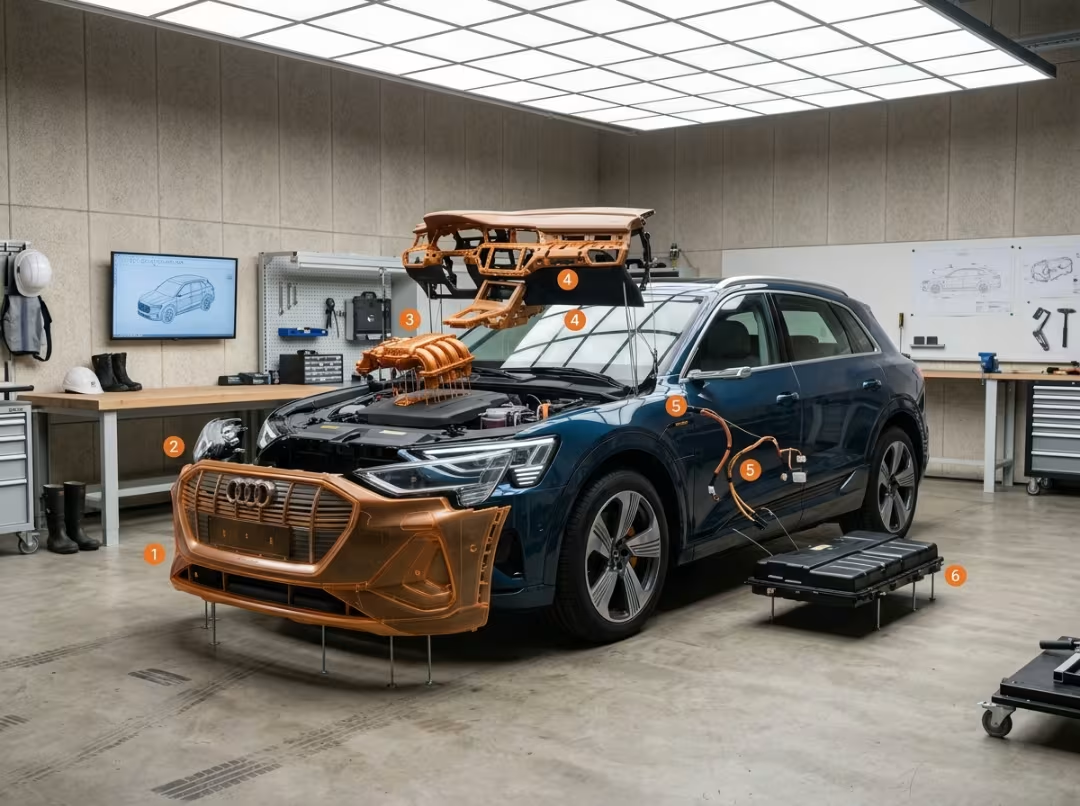
A modern car is roughly 15 to 20 percent plastic by weight and close to 50 percent by volume—and that ratio keeps shifting upward. None of it is there by accident. Each polymer earns its place by solving a specific engineering problem: shedding mass, surviving heat, sealing a joint, isolating voltage. Usually it does the job better than the metal it replaced, and at lower cost.
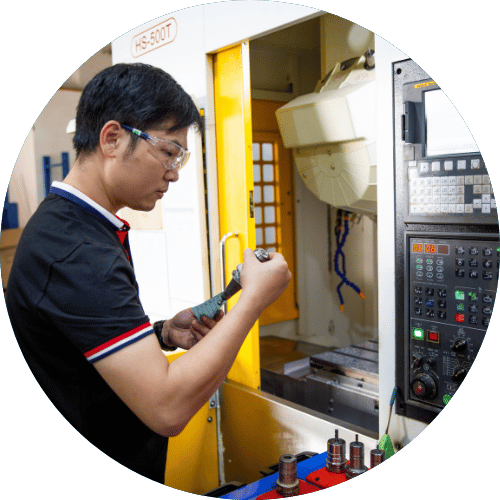
This guide skips the polymer glossary. It covers which plastics actually run a modern vehicle and where they live, why an engineer picks nylon over aluminum or PEEK over a cheaper grade, how material selection really works in practice, and why electric vehicles are pulling high-performance plastics out of niche applications and into high-volume production. For those sourcing precision components, CNC plastic machining services can translate these material choices directly into finished parts.
Why Automakers Reach for Plastic Over Metal
Three forces keep pushing plastic further into the vehicle.
Weight is the most obvious. Every kilogram removed from a combustion car improves fuel economy; in an EV, it extends range or lets engineers shrink the battery. Plastic delivers real structural capability at a fraction of steel’s mass. Cost per part runs a close second. An injection-molded bumper fascia comes off the tool in seconds—fully formed, with mounting features built in, no welding or secondary finishing required. And then there’s geometric freedom: molding lets you consolidate what used to be eight or ten stamped-and-fastened pieces into a single part, with ribs, clips, and compound curves that sheet metal can’t achieve.
The trade-off is that plastic doesn’t absorb abuse the way metal does. Heat softens it, sustained load causes it to creep, and improper chemical exposure degrades it over years of service. Picking a plastic for a vehicle part isn’t about grabbing the cheapest resin that fits the shape. It’s about matching the polymer to the exact thermal, mechanical, chemical, and electrical demands of that specific location.
One mental model holds all of this together: every plastic in a car is an answer to a specific requirement. Nothing is there by default.
The Plastic Families That Actually Run the Vehicle
Dozens of polymers are used throughout a modern vehicle, but four families carry most of the load. For each one, three things matter: where it lives, what property earns it that job, and the trade-off you accept in return. Get those three straight, and the rest of the material landscape becomes much easier to navigate.
Polypropylene (PP) — The Volume King
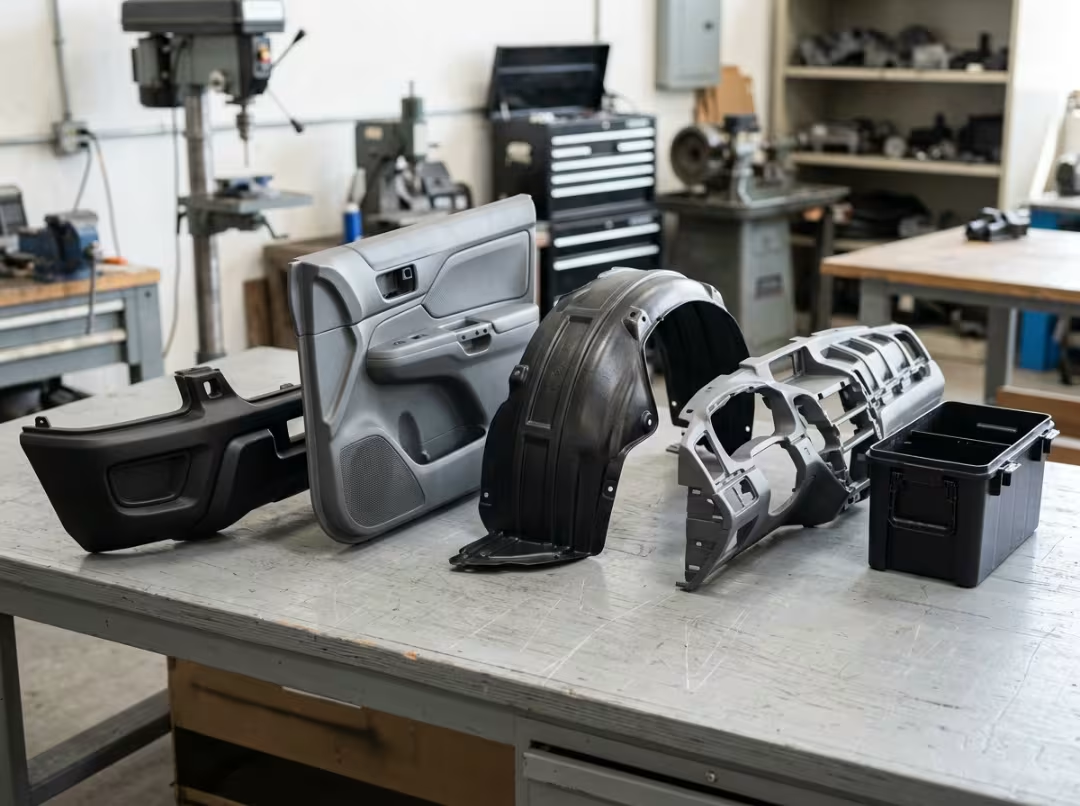
Polypropylene is the single most-used plastic in automotive production, and once you know where to look, it’s everywhere: bumpers, dashboard carriers, door panels, wheel-well liners, battery cases, and a long tail of clips, brackets, and housings.
What earns PP that dominance is a balance of properties that’s hard to beat at the price. It’s inexpensive, molds cleanly in very large parts, resists moisture and most automotive fluids, and handles repeated flexing without fatiguing—exactly what a bumper or door panel needs over years of impact and vibration. Its limitation is stiffness. Unfilled PP is relatively soft, so when a part needs to hold precise geometry under load, engineers reinforce it. Talc adds dimensional stability for interior structures; glass fiber pushes it toward semi-structural duty.
The working rule on most programs: start with PP, and only move to something more expensive when PP demonstrably can’t do the job. That default position explains why it tops the parts count.
Nylon (PA) — The Underhood Standard
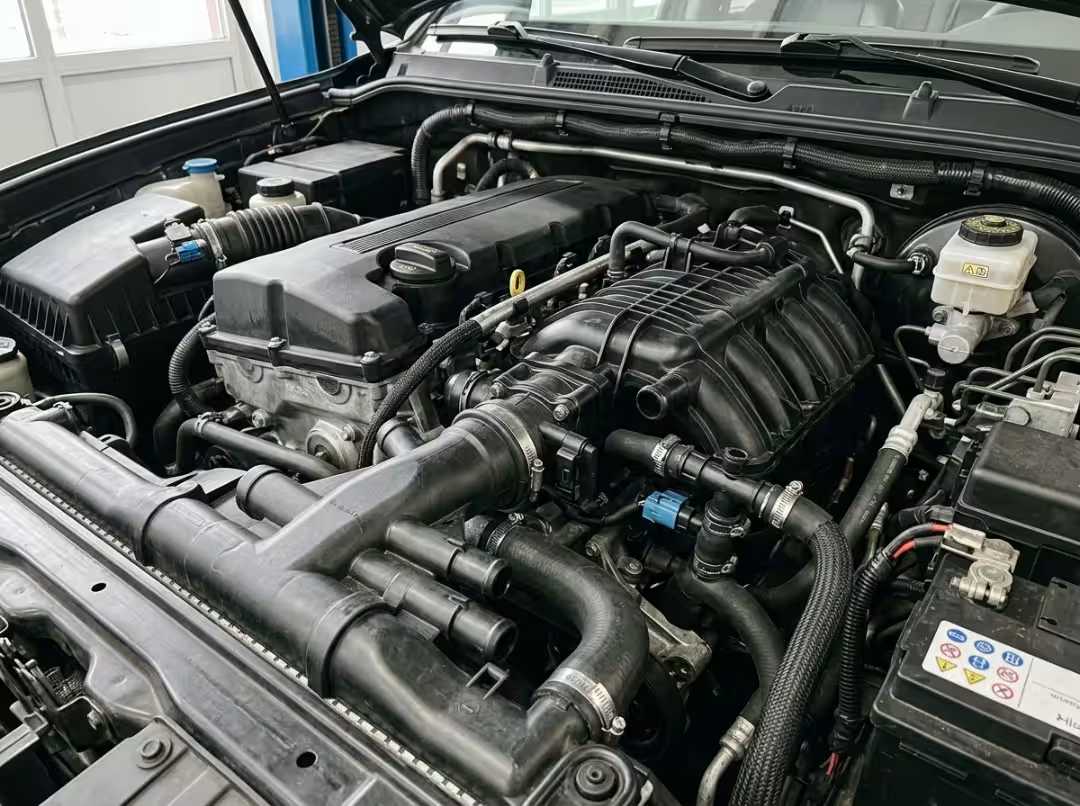
Nylon—polyamide in technical shorthand—is what engineers reach for when a part lives in heat and around aggressive fluids: intake manifolds, engine covers, coolant connectors, radiator end tanks, gears, bushings, cam sprockets.
The property that earns nylon those assignments is sustained toughness under conditions that quickly humble cheaper plastics. It holds strength through engine oil, coolant, and the mechanical punishment of an operating engine bay. Glass-reinforced grades achieve stiffness levels that rival those of cast aluminum at a fraction of the weight.
The intake manifold tells the story cleanly. For decades it was cast aluminum. Then glass-reinforced nylon grades arrived that could run continuously at 150°C and above. The switch made sense on every front: lighter, cheaper to produce, smoother internal geometry, easier integration of mounting bosses and sensor ports. A glass-filled nylon manifold is now the baseline.
The downside is moisture absorption—nylon picks up humidity, which can cause dimensional changes and altered properties in service. High-temperature grades also cost more than commodity resins. Engineers manage both by specifying the right fill level for the actual thermal load rather than over-buying performance the part doesn’t need.
Polycarbonate (PC) — Impact Plus Clarity
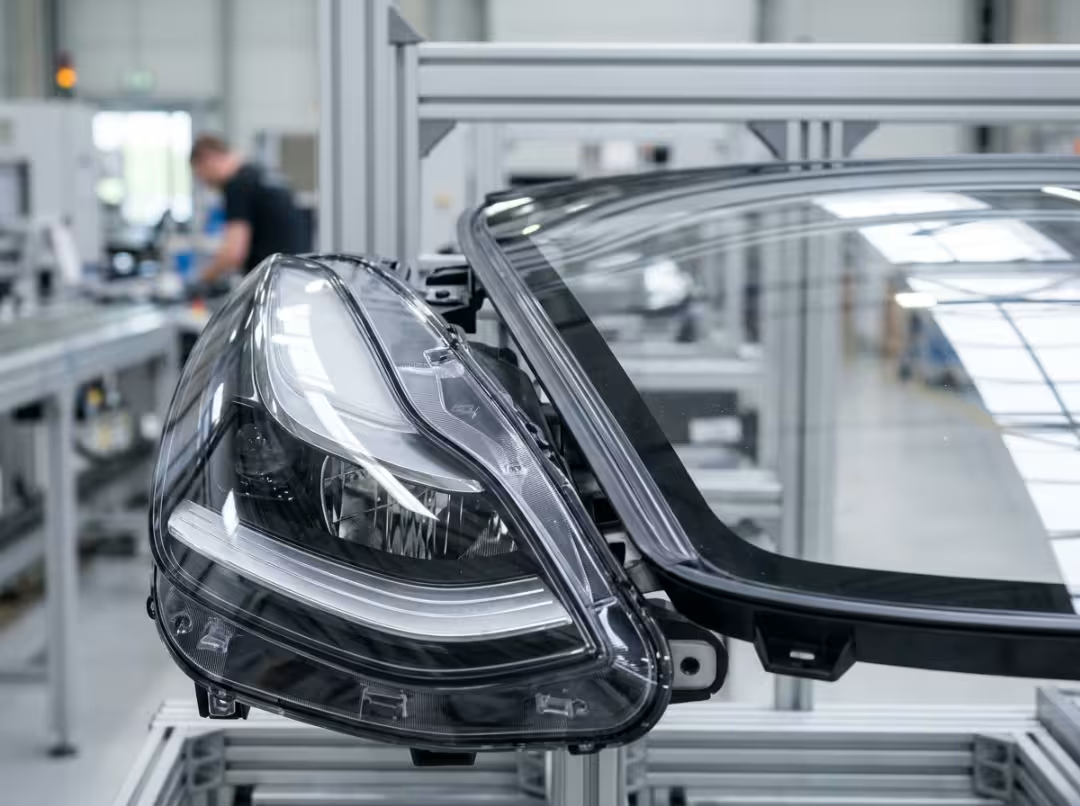
Polycarbonate earns its place in parts that must be both optically clear and highly impact-resistant: headlamp lenses, taillight housings, panoramic roof panels, interior trim under impact loads, and, increasingly, EV battery covers.
Its advantage is a combination of properties almost nothing else matches—clarity approaching glass, paired with serious toughness. A polycarbonate headlamp lens shrugs off stone strikes that would shatter glass, weighs considerably less, and molds into complex aerodynamic shapes. Where maximum toughness can be traded for easier processing, a PC/ABS blend is the standard answer: it molds more forgivingly and finishes well for interior parts.
The move into EV enclosures is worth noting. A battery cover must protect cells from road debris and impacts while also providing electrical insulation. One molded PC component does both. The trade-off: bare polycarbonate scratches easily and yellows under UV, so exterior lenses get a hard, UV-stable coating as standard practice—an added process step that comes with the territory.
PEEK and PPS — When Nothing Else Survives
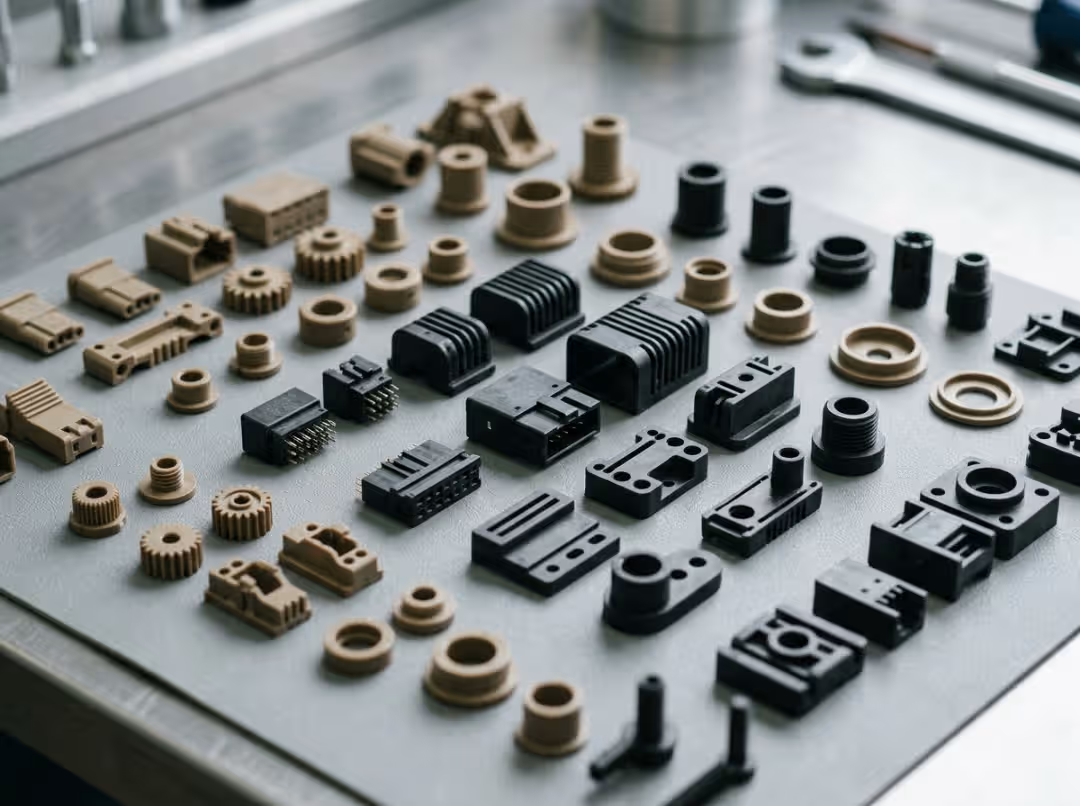
PEEK (polyether ether ketone) and PPS (polyphenylene sulfide) sit at the top of the automotive plastics performance ladder. They’re the specialists brought in when standard engineering plastics would soften, swell, or fail outright: transmission thrust washers, turbocharger bushings, motor insulation systems, fuel-system components, thermostat housings, EV busbar connectors.
What earns them those assignments is straightforward: they survive where other plastics don’t. PEEK holds its properties in continuous service well above 250°C and resists virtually every automotive fluid. PPS delivers similar chemical immunity, maintains stiffness at high temperatures, and molds readily into tight-tolerance small geometry.
Cost is the gatekeeper. Both resins can price many times higher than nylon, so they appear only where failure is genuinely unacceptable—a motor insulation film that can’t short, a connector that must not soften, a bearing surface under relentless heat. Engineers don’t specify PEEK because it looks best on a data sheet. They specify it because nothing less expensive survives the actual duty cycle. That calculation is what’s moving PEEK and PPS into EV battery and high-voltage systems at production scale.
The Rest, Grouped by Job
The four families above cover most of the reasoning. The remaining polymers are easier to understand in terms of what they do.
- Fluid handling and interiors: ABS gives instrument panels, consoles, and interior bezels a rigid, paintable surface. HDPE is used for fuel tanks and washer reservoirs, where low permeability and chemical resistance matter most. PVC covers wire harnesses and flexible interior skins, formulated soft or rigid depending on the application.
- Precision motion and electrical: Acetal (POM) offers low friction and wear resistance in window regulators, seat-belt mechanisms, and latches. PET and PBT polyesters resist heat and creep in connectors and sensor housings. PMMA provides the scratch-resistant light guides and lenses that modern LED systems need.
- Structure and sealing: PU foam builds seat cushions, headrests, and acoustic insulation. SMC and BMC—glass-reinforced polyester thermosets—press into stiff body panels and structural battery trays. Epoxy bonds assemblies and insulates ECU boards. EPDM, TPO, and TPV handle weatherstripping, hoses, seals, and soft exterior skins.
Fiber-Reinforced Composites: When Plastic Replaces Structural Steel
Composites pair a polymer matrix with reinforcing fibers to produce materials that compete with steel on strength at dramatically lower weight. The fiber choice almost always comes down to budget.
Glass fiber is the practical upgrade. It reinforces SMC body panels, leaf springs, and structural brackets—adding stiffness and impact absorption at costs compatible with mainstream production. It also doesn’t corrode, which matters in salt-belt markets where steel loses ground winter after winter. For parts that need to outperform plain plastic without exotic pricing, glass fiber is usually the answer.
Carbon fiber is a different conversation. It can cut mass by 50 to 60 percent relative to equivalent steel structures, and it shows up in roof panels, driveshafts, aerodynamic bodywork, and full monocoque chassis. The engineering case is strong. The economics are not—at least not for mainstream production. Material cost and labor-intensive lay-up keep carbon fiber in supercars, premium EVs, and motorsport. The gating factor has never been the fiber’s properties. It’s always been the price, and the business case determines where carbon actually appears in a production program.
How Automakers Actually Choose a Material
Material selection is an elimination process, not a preference exercise. Each requirement in the specification knocks candidates off the list until one material satisfies all constraints and still meets the cost target. Following that sequence explains why vehicles are built the way they are.
The filters, roughly in the order they tend to decide things:
- Thermal environment. Where does the part sit, and what temperature does it see in service? Engine bays regularly exceed 150°C; dashboards are exposed to prolonged direct sunlight. Temperature alone rules out most commodity plastics from underhood use before any other factor is considered.
- Mechanical load. Does the part absorb impact, carry sustained load, or need to resist creep over a decade? This separates materials that are genuinely tough from those that are merely rigid.
- Chemical exposure. Fuel, oil, coolant, brake fluid, and road salt degrade certain polymers quickly. A material that passes every other test is useless if the fluid next to it attacks it over time.
- Electrical properties. For EV components, dielectric strength and flame retardancy are often the first filter applied, not the last. Failure here means fire risk or loss of vehicle control—not just a broken bracket.
- Cost and cycle time. Whatever clears the technical hurdles still has to be manufacturable at production volume for a price the program can absorb. Thermoplastics mold in seconds. Thermosets cure more slowly and cost more per cycle, which eliminates them even when their material properties would otherwise qualify.
A worked example makes this concrete. Consider the engine intake manifold. Thermal filter first: continuous underhood temperatures above 150°C immediately eliminate PP, ABS, and most commodity resins. Chemical exposure next—sustained contact with hot oil vapor and coolant—narrows the field to engineering-grade plastics. Mechanical load: the manifold maintains precise geometry under pressure pulses and engine vibration, indicating a reinforced grade. Then, cost: PEEK easily survives every filter, but it’s overpriced for a manifold when glass-reinforced nylon meets every requirement and molds economically at volume. One material comes through intact. That’s why the manifold is nylon, not aluminum or PEEK.
How EVs Are Rewriting the Material Mix
Electric vehicles are changing the automotive plastics landscape faster than any shift in recent memory—and the reasons are structural, not cosmetic. EVs introduce thermal and electrical challenges that combustion platforms never had, and they assign a concrete dollar value to every kilogram saved.
Battery enclosures show the change plainly. A pack generates heat during operation, must resist thermal runaway, and must protect hundreds of cells from impacts and road debris. That demands flame-retardant, thermally stable materials that hold their properties under sustained load. Polycarbonate, PPS, and specialty flame-retardant PP grades are landing in battery cover and housing applications for exactly that reason. A single injection-molded component can deliver impact protection and electrical insulation in a single component—replacing what might otherwise be a heavier, more complex metal assembly.
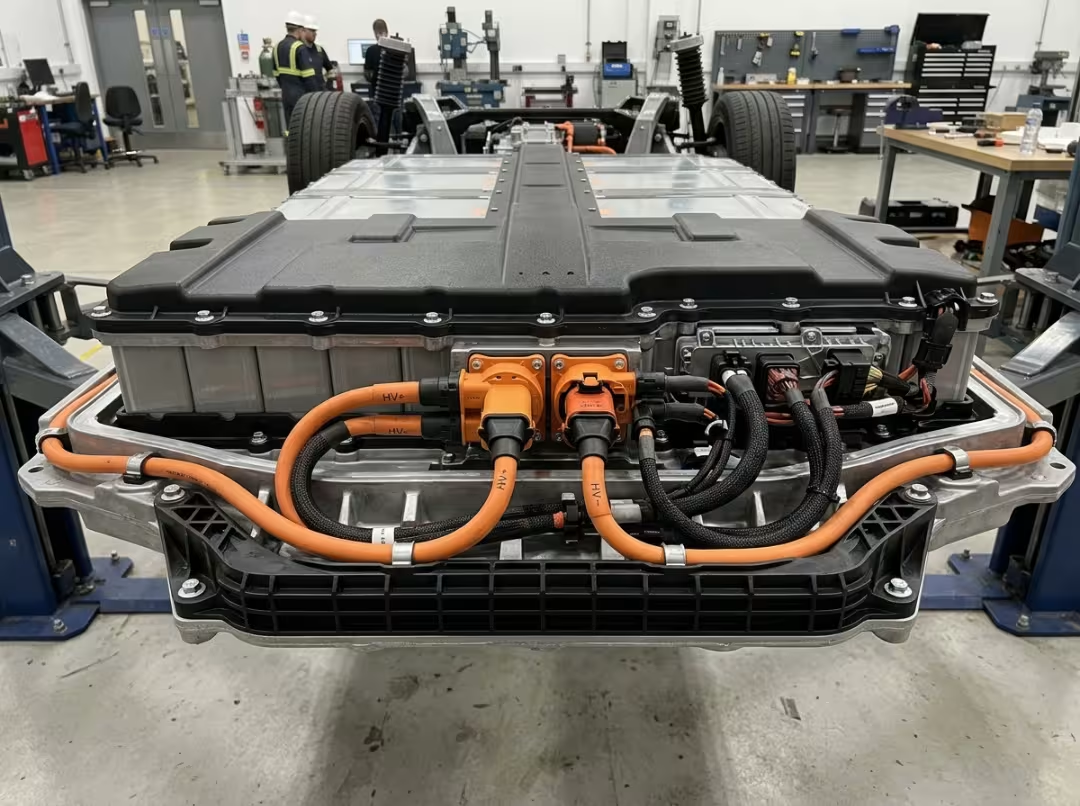
High-voltage systems raise the stakes further. Cell housings, cooling-line fittings, and HV connectors operate at voltages and temperatures that ordinary engineering plastics can’t reliably handle. PEEK, PPS, and PEI maintain their mechanical and dielectric properties under sustained load and resist the tracking and arc-through risks associated with high voltage. A busbar connector or cell-level insulator that softens or conducts current is a safety failure, not a performance shortfall. The cost premium is a design requirement. This is why PEEK and PPS have moved from specialty equipment into EV production hardware at scale.
Lightweighting ties both threads together. In a combustion car, reducing mass improves efficiency at the margins. In an EV, every kilogram saved either extends range or enables a smaller, cheaper battery to meet the same range target. That arithmetic changes the cost justification for advanced materials. Composites and reinforced grades that couldn’t previously pencil out begin to make financial sense when the alternative is more battery cells. The cumulative result: electrification is pulling high-performance and flame-retardant plastics from low-volume specialty use into mainstream production, and the migration is still underway.
Quick-Reference Comparison
The table below is a scan tool, not a substitute for the selection reasoning above. The right material always depends on the part’s specific requirements and its location in the vehicle.
|
Material |
Relative Cost |
Heat Resistance |
Where It Fits Best |
|---|---|---|---|
|
Polypropylene (PP) |
Low |
Moderate |
Bumpers, interior trim, wheel-well liners, battery cases |
|
ABS |
Low |
Moderate |
Instrument panels, console trim, interior bezels |
|
Nylon (PA) |
Moderate |
High |
Intake manifolds, engine covers, gears, coolant connectors |
|
Polycarbonate (PC) |
Moderate |
Moderate |
Headlamp lenses, roof glazing, EV battery covers |
|
PEEK |
Very high |
Very high |
Transmission parts, motor insulation, HV components |
|
PPS |
High |
Very high |
Fuel-system parts, EV connectors, thermostat housings |
|
Polyurethane (PU) |
Moderate |
Moderate |
Seat foam, acoustic insulation, coatings |
|
SMC/BMC |
Moderate |
High |
Body panels, structural battery trays |
|
Carbon fiber composite |
Very high |
High |
Supercar bodywork, driveshafts, racing structures |
|
EPDM |
Low |
Moderate |
Weatherstripping, radiator hoses, seals |
When two materials score similarly here, return to the selection filters in the previous section. The decision almost always breaks on thermal environment, chemical exposure, or cost at production volume.
Frequently Asked Questions
Which plastic is most commonly used in cars?
Polypropylene, by a wide margin. It’s inexpensive, molds well in large parts, and holds up against fatigue and chemical exposure—the combination that makes it the default for bumpers, interior trim, door panels, and fluid-handling components. Engineers start with PP and escalate only when it can’t meet the requirement.
What’s the practical difference between a thermoplastic and a thermoset?
A thermoplastic softens when heated and hardens when cooled—it molds quickly, can be remelted, and is generally recyclable. Polypropylene and nylon are typical examples. A thermoset cures through a permanent chemical reaction, remains hard when reheated, and is well-suited to high-temperature structural applications such as SMC body panels. It processes more slowly and is much harder to recycle.
Why do EVs use more high-performance plastics than combustion vehicles?
Because the failure modes are more severe. Battery packs generate heat and demand flame resistance. High-voltage systems require materials with strong dielectric properties that withstand sustained thermal loads. PEEK, PPS, and PEI meet those requirements, whereas standard engineering plastics would soften or pose a short-circuit risk. The mass sensitivity of EV range also makes the cost of advanced materials easier to justify than it is in a combustion program.
Are carbon fiber parts worth the cost for everyday drivers?
At current pricing, rarely. The 50-to-60-percent mass savings over steel is transformative in motorsport and premium EVs, where performance or range targets justify the spend. In mainstream vehicles, glass-reinforced composites provide most of the stiffness and corrosion resistance at a fraction of the cost.
Are automotive plastics recyclable at the end of a vehicle’s life?
Most thermoplastics are. PP, ABS, and nylon can be reclaimed and reprocessed, and automakers increasingly design for this by specifying single-material assemblies that simplify sorting. Thermosets and multi-material composites are harder to recycle, which is why mono-material design strategies and recycled-content targets are becoming standard program requirements across the industry.
Conclusion
The plastics in a vehicle aren’t interchangeable filler. Polypropylene and nylon handle the everyday load. Polycarbonate, PEEK, and PPS take on the harder problems—impact, extreme heat, high voltage. Composites and elastomers close the structural and sealing gaps. Each material is there because it’s the best available answer to a defined requirement, selected through a process that filters on heat, mechanical load, chemical exposure, electrical demands, and cost.
That mix won’t stay fixed. Electrification and the sustained push to cut vehicle mass are drawing high-performance and flame-retardant plastics from specialty niches into mainstream production volumes. The material under the hood today is not the same one that will be there in five years. When specifying a part, start from the requirement, run it through the filters, and let the constraints do the selecting.