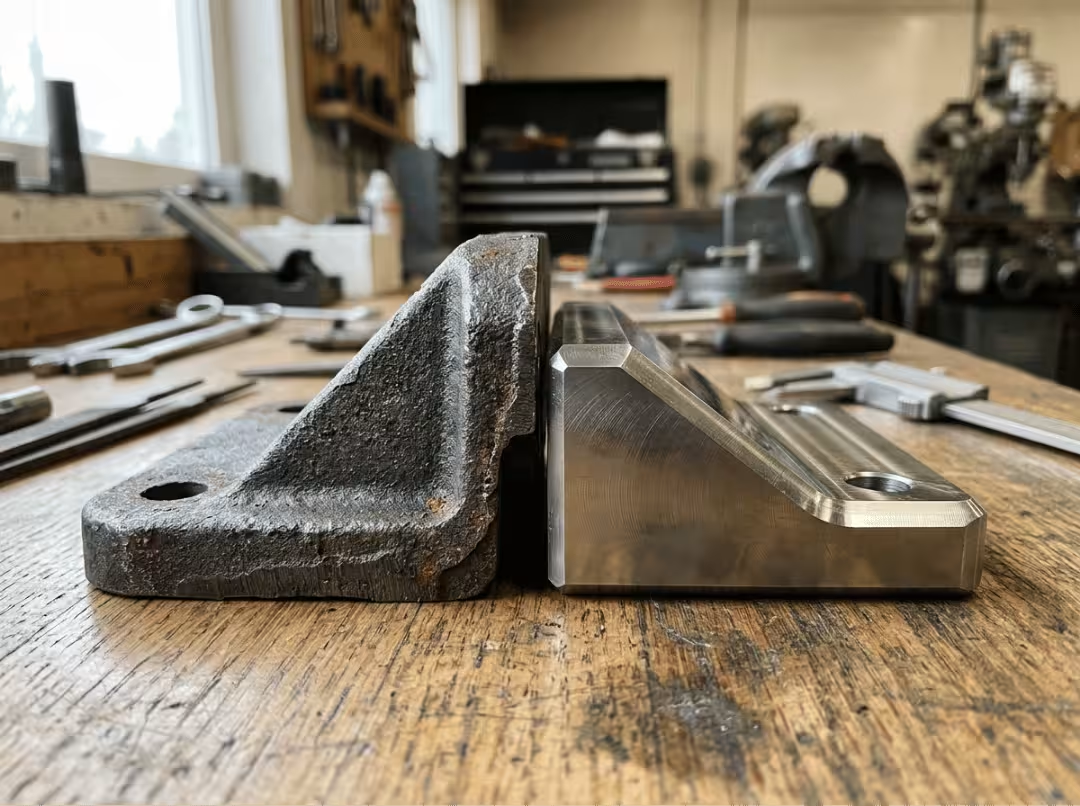
Cast iron vs steel is one of those comparisons that looks straightforward until you’re actually specifying a part — and then the wrong call is easy to make. On a data sheet, both metals look capable. In practice, they fail in completely different ways, suit different manufacturing methods, and carry very different long-term costs.
Getting it wrong isn’t a small performance penalty. It can mean a part cracks without warning rather than bending first. It can mean a repair that requires a specialist shop instead of a field weld. Over a product’s life, the choice of material shapes maintenance schedules, replacement cycles, and total spend in ways that never show up in the upfront price.
This guide cuts through the property lists and focuses on how to actually decide: which differences matter, where people most often make poor choices, and how to apply a reliable decision-making method to your specific situation.
The Short Answer: Cast Iron vs Steel at a Glance
Both metals are iron-carbon alloys. Carbon content is what separates them: cast iron contains roughly 2–4% carbon, while steel contains about 2% or less. That gap drives nearly every downstream difference — brittleness, ductility, weldability, castability, and how each metal behaves under load.
The second thing to get straight: neither “cast iron” nor “steel” is one material. Each is a family. On the cast iron side, gray iron is the common, easy-to-cast workhorse; ductile iron adds meaningful toughness. In steel, carbon steel handles most structural and tool applications, while stainless steel’s chromium content brings corrosion resistance the others can’t match. Comparing “cast iron vs steel” without naming the grade is how decisions go sideways.
Once you know the grade, the logic usually becomes clear. Most selection decisions trace back to this:
Lean toward steel when a part must resist impact, tension, bending, or fatigue — or needs welding. Lean toward cast iron when a part mainly carries compression, needs to dampen vibration, must hold heat, or requires a complex cast shape at volume.
The rest of this guide shows you how to apply that rule to your case.
What Actually Matters When You Choose
The wrong first question is “which metal is stronger?” Stronger in what way, under what load, in what environment? Selection really comes down to four factors, and each one points toward a material faster than any single spec-sheet figure.
Load Type: Compression, Tension, or Impact?
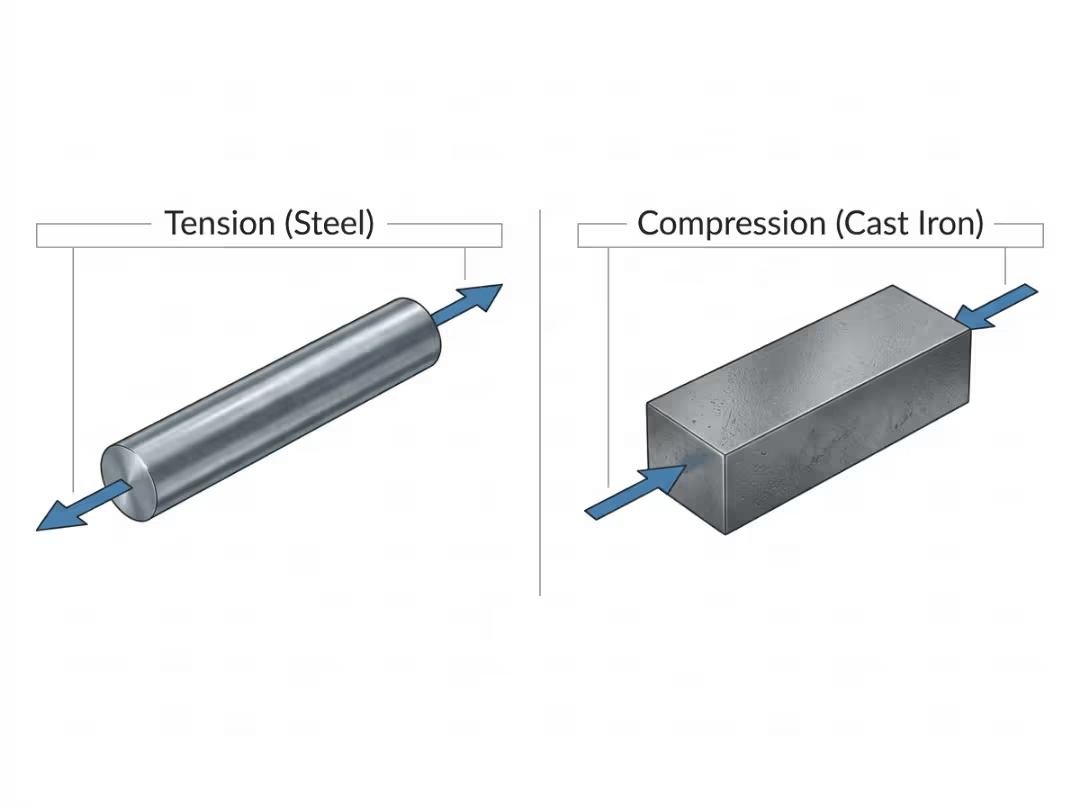
This is where to start, because it resolves more choices than anything else. Steel handles tension, bending, impact, and repeated fatigue loads far better. Cast iron performs well under steady compression in stationary parts that don’t face sudden shock.
The common mistake is that people compare “how strong” or “how hard” before defining how a part actually fails. A material excellent in compression can be a liability in tension. Define the load path first, and the field narrows fast.
How the Part Gets Made: Cast or Fabricated?
Manufacturing route often settles the material choice before performance enters the conversation at all. Cast iron wins on complex shapes, heavy cross-sections, and high-volume poured production. Steel wins when you need to weld, machine, bend, field-assemble, or repair on-site.
If machining a shape from steel billet would be expensive and slow, casting it in iron is frequently the obvious call — and the right one.
Service Environment: Moisture, Corrosion, Heat, Chemicals
Bare and unprotected, both metals rust. Stainless steel is the major exception inside the steel family — its chromium layer resists corrosion well enough to change the whole equation in wet, salty, or food-contact applications.
Cast iron holds up well in specific conditions too. A well-seasoned piece builds a stable patina that can last decades. The right question isn’t “which family rusts less” — it’s “which material is easier to maintain in this specific environment?” Isolate the service conditions and judge them directly.
Functional Behavior: Heat Retention, Damping, Wear, Weight
Think about what the part needs to do, not just what loads it carries. Cast iron retains and stabilizes heat, damps vibration, and holds up in compressive, low-shock environments. Steel offers better strength-to-weight ratio, higher toughness, and faster thermal response where dynamic performance matters.
A single tensile strength number won’t tell you which material suits your application. Functional behavior will.
Cast Iron vs Steel: The Differences That Change Your Decision
Below is the property comparison — only the differences that actually affect the selection. Each property closes with a practical conclusion, not a definition.
“Stronger” Is Not One Number
Steel usually leads on tensile strength and toughness. Cast iron typically ranks highest in compressive strength. “Steel is stronger” is an incomplete statement — it’s stronger in tension. Under a crushing load, cast iron often performs better. When you see a strength claim, ask which mode it describes.
Ductility and How Each Metal Fails
This distinction matters most for safety. Steel tends to deform before it fractures, giving visible warning. Cast iron tends to crack suddenly, with almost no prior indication.
Drop a cast iron skillet on a hard floor, and it can chip or crack outright. Drop a steel pan, and you get a dent. In a load-bearing component, the same difference separates a part that sags and signals replacement from one that fails without notice. For anything safety-critical, that warning margin is significant.
Corrosion Resistance Depends on Grade, Not Family
Plain carbon steel, stainless steel, and cast iron each behave differently in corrosive environments. Plain carbon steel needs paint, oil, or galvanizing outdoors — and the right surface finish makes a significant difference in how long it lasts. Stainless resists corrosion on its own. Cast iron relies on seasoning or coatings. Grouping them as “steel corrodes like this” or “cast iron corrodes like that” leads to bad choices. Ask which option is actually maintainable in your environment.
Heat Performance
Cast iron holds and distributes heat evenly once it’s up to temperature — that’s why it suits searing, slow cooking, and thermally stable industrial applications. Steel heats and cools faster, offering quicker temperature control where responsiveness matters. One isn’t better than the other; the right answer depends on whether your application needs thermal stability or thermal agility.
Machinability, Weldability, and Repairability
Steel machines and welds cleanly. Field repair is straightforward. Cast iron is more difficult — welding typically requires preheating, specialized filler metal, and controlled cooling, which is often best handled by a professional welding and fabrication service. For procurement teams and maintenance operations, that difference directly affects downtime and repair cost when something fails.
|
Property |
Cast Iron |
Steel |
|---|---|---|
|
Tensile strength |
Lower |
Higher |
|
Compressive strength |
Excellent |
Good |
|
Ductility/failure warning |
Brittle, fractures suddenly |
Deforms first, warns you |
|
Corrosion resistance |
Grade-dependent; needs coating or seasoning |
Grade-dependent; stainless resists on its own |
|
Heat retention |
High and even |
Lower; faster response |
|
Weldability/repairability |
Difficult; often shop-only |
Straightforward; field-friendly |
Application-by-Application: How the Right Choice Changes
In practice, the cast iron vs steel question rarely comes down to which metal is better. It comes down to which is better suited — and that changes by application.
Cookware: Heat Retention vs Responsiveness
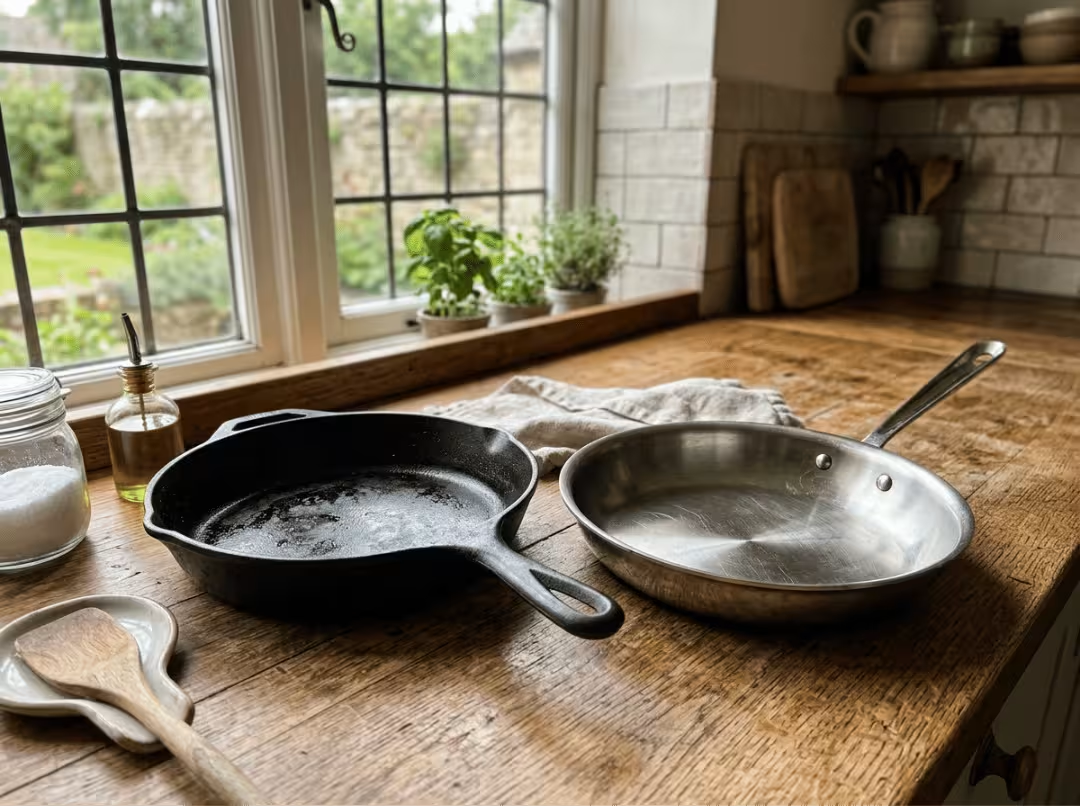
There’s no universal winner between a cast-iron skillet and a stainless-steel pan. Cast iron retains heat well for searing and slow cooking, but it’s heavy and requires maintenance. Stainless heats faster, handles acidic foods without reacting, and tolerates the dishwasher — but it can’t replicate cast iron’s thermal mass.
What you’re actually choosing between is cooking style, food type, weight tolerance, and willingness to maintain. And carbon steel pans and woks are worth considering: lighter than cast iron but still capable of building a seasoned surface, they occupy a middle ground that many cooks overlook entirely.
Construction and Structural Parts
Modern load-bearing structures default to steel for clear reasons — strength-to-weight ratio, weldability, and established fabrication practices. Cast iron played a significant role in 19th-century columns and facades, but its brittleness under tension made it unsuitable for the skeleton of modern structures. Today, cast iron appears in compression-heavy or ornamental roles, not primary frames.
Machinery, Engines, and Industrial Equipment
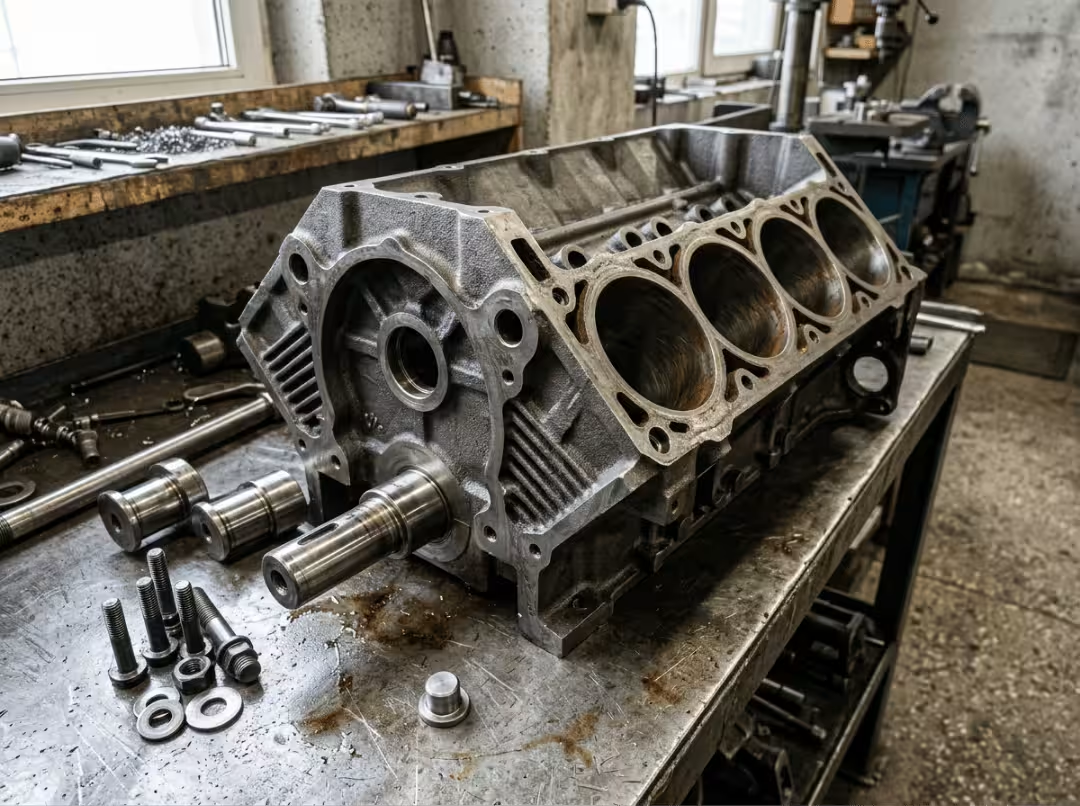
This is where the two metals often work side by side rather than competing. Cast iron suits machine tool bases, engine blocks, and brake rotors — places where vibration damping and compressive stability are the primary requirements. Steel handles shafts, fasteners, springs, and any component facing cyclic fatigue loads — and when those steel parts require tight tolerances or complex geometries, CNC metal machining is typically how they get made.
Most well-engineered machines don’t use a single metal for everything. They use cast iron where damping and compression matter and steel where dynamic loads and precise forming do.
Pipes and Heavy-Duty Municipal Systems
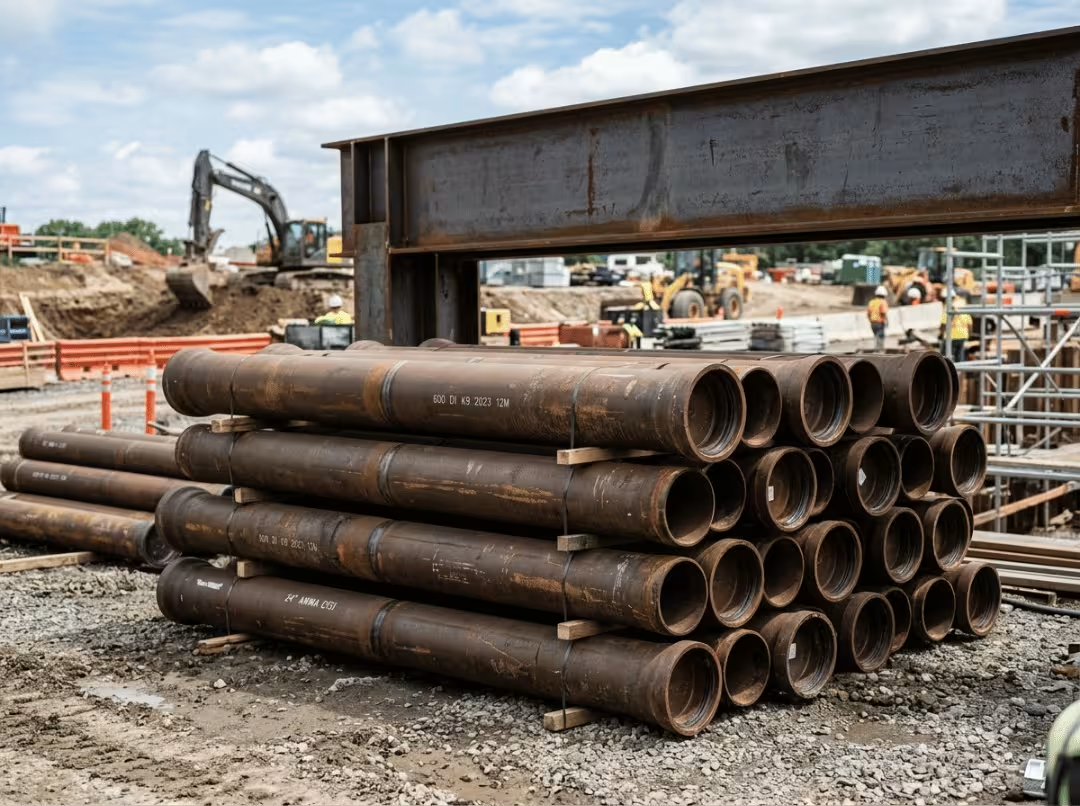
Ductile iron dominates water and sewer mains because it resists internal pressure, performs reliably in buried environments, and has a long service history at scale. Steel earns its place in high-strength welded systems where joint integrity under load is the priority.
Both choices trace back to the same logic: the material follows the failure mode and the maintenance path, rather than a blanket preference.
Cost in 2026: The Cheaper Metal Isn’t Always the Lower-Cost Choice
Purchase price tells you what you spend on day one. Total cost tells you what you spend over the part’s life. Those are rarely the same number.
Material vs Fabrication Cost
Cast iron often has an advantage in raw material cost and in high-volume casting, where a single mold can produce thousands of identical parts with minimal labor per unit. Steel tends to be more economical for custom, small-batch, or fabricated work where casting tooling setup never pays off. Scrap market swings affect both metals — don’t anchor a long-term material decision to today’s spot price.
Maintenance and Repair Cost
Cast iron can have an exceptionally long service life in the right application. But when it fails, repair is harder and often means replacement rather than restoration. Steel may cost more upfront in some grades, but its repair and rework paths are well-established and field-executable — which typically means faster turnaround and lower downtime cost.
Total Cost of Ownership
A fabricated steel bracket used outdoors without proper surface protection can rust through in two years, triggering removal, refabrication, and reinstallation costs that repeat across the part’s service life. A quality cast component in a compression-dominated role might run twenty years without intervention. The cast part costs more on day one and less every year after. Before comparing sticker prices, map out the full maintenance and replacement picture for your specific application.
A Simple Framework to Choose Between Cast Iron and Steel
Run any part through these four steps. Most decisions resolve quickly.
- Define the failure mode first. What is this part most likely to fail from — cracking, permanent deformation, impact fracture, corrosion, surface wear, or heat cycling? Name the failure mode before anything else.
- Establish how the part will be made. Cast, welded, or machined? Will it need on-site installation or field repair down the line? The manufacturing process often determines the material before performance enters the picture.
- Assess the service environment. Indoor or outdoor? Wet, salty, or acidic? Food-contact or chemical exposure? Sustained heat or thermal cycling? Handle these conditions as hard requirements, not background context.
- Apply the selection rule. Choose steel if toughness, dynamic loads, weldability, or structural efficiency are primary. Choose cast iron if compression, damping, thermal stability, or complex cast geometry at volume lead the requirements.
When it’s still close, stop comparing families. Compare specific grades — gray iron versus ductile iron, or carbon steel versus stainless steel — and the answer will be much clearer.
FAQs: Cast Iron vs Steel
Is cast iron stronger than steel?
It depends on the load type. Cast iron typically outperforms steel in compression. Steel outperforms cast iron in tension, bending, and impact. “Stronger” is only meaningful once you specify the loading condition.
Does cast iron rust faster than steel?
Bare and unprotected, both corrode at broadly similar rates. Properly seasoned or coated cast iron holds up well over time. Stainless steel resists corrosion without any surface treatment. Plain carbon steel, by contrast, requires paint, oil, or galvanizing to withstand outdoor exposure.
Can cast iron be welded like steel?
Not with the same ease. Cast iron can be welded, but it requires controlled preheating, appropriate filler rod, and slow, managed cooling — typically in a shop setting. Steel welds cleanly and is forgiving enough for most field repairs.
Which is better for cooking, cast iron or steel?
Neither is universally better. Cast iron suits searing, slow cooking, and high-heat retention applications. Stainless steel handles acidic foods and is lower maintenance. Carbon steel pans perform similarly to cast iron for cooking and offer lighter weight — they’re worth considering if you haven’t already.
Why are some engine blocks still made of cast iron if steel is stronger?
Because tensile strength isn’t the primary requirement. Engine blocks need vibration damping, compressive stability, and complex internal geometry produced cheaply at volume. Cast iron handles all three well, which is why it remains competitive in that application even as aluminum gains ground.
How can you tell cast iron and steel apart at a glance?
Cast iron parts tend to be heavier, thicker-walled, and have a slightly rough, granular cast surface texture. Steel parts are usually thinner, smoother, and may show weld seams or machined faces. When dropped on a hard surface, cast iron produces a dull thud and may chip; steel rings, dents, and holds together.
Which metal lasts longer in real use?
Service life depends more on application, load, and environment than on the metal itself. Cast iron infrastructure from the 19th century is still in service. So are steel bridges from the early 20th century. Match the metal to the application, and either can last for generations.
Is carbon steel more similar to cast iron or to stainless steel in behavior?
Closer to stainless. Both carbon steel and stainless steel are ductile, weldable, and tougher than cast iron. The main practical gap between them is corrosion resistance — stainless has it; plain carbon steel needs a protective coating or treatment to achieve it.
Conclusion
Cast iron is not an outdated fallback, and steel is not the universal upgrade. Cast iron handles compression, heat retention, vibration damping, and complex high-volume cast geometries better than steel does in most cases. Steel handles tension, impact, weldability, and structural efficiency better than cast iron does in most cases. Each material wins somewhere specific.
The real decision comes down to four things: how the part will fail, how it will be made, what environment it will live in, and what it will cost across its full service life — not just at purchase. Get those four right, and the material usually selects itself.
Before committing to a design or placing an order, first define the failure mode. Then confirm the specific grade. That habit alone eliminates most of the bad calls.