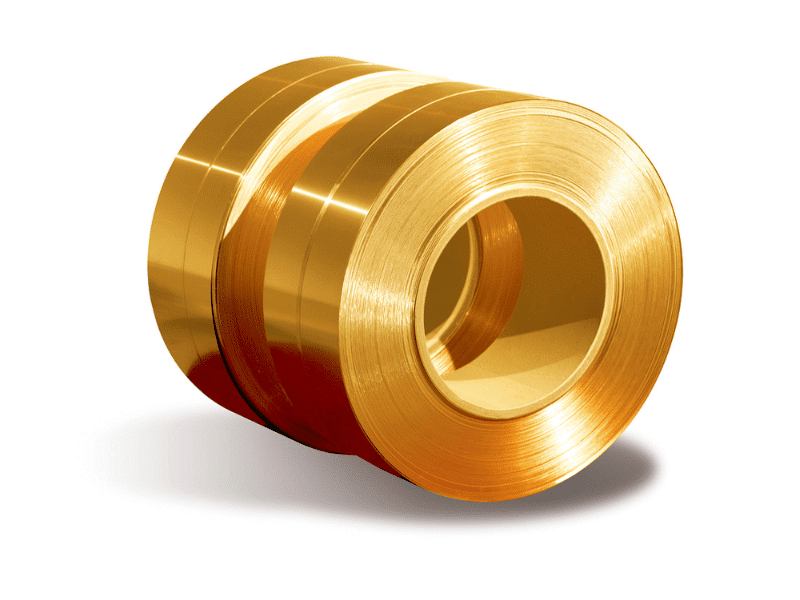
Copper has been worked, drawn, and bent by people for thousands of years, and one property explains why it stayed so useful: its ductility. The metal stretches instead of snapping, which makes it the natural choice for everything from electrical wire to plumbing. This guide explains what ductility means, why copper has so much of it, and how that single property shapes the way the metal gets used.
Understanding Ductility in Metallurgy
Ductility is the ability of a material to stretch into a thin wire without breaking. Pull on a ductile metal and it deforms, drawing out longer and thinner rather than cracking apart.
People often confuse ductility with malleability, but they describe two different kinds of deformation. Ductility is about stretching under tension, the kind of force that pulls a rod into wire. Malleability is about flattening under compression, the kind of force that hammers or rolls metal into sheet. Copper happens to be excellent at both, but they are not the same thing.
A ductile material shows a few telltale signs before it fails:
- Permanent deformation that stays even after the load is removed
- Necking, where the sample thins out in one spot as it stretches
- High elongation before the final fracture occurs
When you see a metal stretch and neck down before it breaks, you’re watching ductility at work.
Is Copper Ductile?
Yes. Copper is one of the most ductile metals in industrial use, and it can be drawn into extremely fine wire without snapping. Some copper wire ends up thinner than a human hair.
What makes this especially handy is that copper stays ductile at room temperature. You don’t need to heat it to work it, which keeps fabrication simple and cheap. The reason behind all this comes down to how copper’s atoms are arranged and how they move when the metal is stressed.
The Science Behind Copper’s High Ductility
Copper’s behavior starts at the atomic level. Its atoms pack into a face-centered cubic (FCC) crystal structure, an arrangement with atoms at each corner of a cube plus one in the center of every face.
That structure matters because of something metallurgists call slip systems. The FCC lattice has many closely packed planes where atoms can slide over one another, and it offers numerous directions for that sliding to happen. More slip systems mean more available paths for deformation, so the metal can change shape in many directions without tearing.
This sliding happens through dislocation motion. A dislocation is a small defect in the crystal lattice, and when stress is applied, these dislocations move through the structure with relatively little resistance. Instead of bonds snapping all at once and causing a fracture, the atoms shift gradually, one plane gliding past the next. That steady, controlled movement is what lets copper deform plastically rather than break.
Holding everything together is metallic bonding. Copper atoms share a common pool of electrons, often described as a “sea of electrons.” These free electrons keep the atoms bound even as whole layers slide past each other, so the metal stretches without losing its integrity.
Temperature plays a role too. As copper heats up, its atoms vibrate more and move more freely, which makes dislocations even easier to shift. The result is that copper becomes more ductile and easier to work the warmer it gets.
How Copper’s Ductility Is Measured
Ductility isn’t just a quality you describe; it’s a number you can measure. The standard method is the tensile test, where a copper sample is clamped at both ends and pulled apart at a steady rate until it fails. Sensors record how far it stretches and how much force it takes.
Two key figures come out of that test:
- Elongation at break measures how much the sample lengthened, given as a percentage of its original length. A high percentage signals a very ductile material, and for manufacturers, that means the metal can be drawn or formed aggressively without failing.
- Reduction in area looks at how much the cross-section shrank at the point of fracture. The more the sample necks down before breaking, the more ductile it is.
Processing changes these numbers dramatically. Annealed copper, which has been softened by heat, shows high elongation and stretches readily. Hard-drawn copper, which has been work-hardened during drawing, is stronger but stretches far less before it breaks. Testing the same metal in two different tempers makes that tradeoff obvious.
Factors That Change Copper’s Ductility
Copper’s ductility isn’t fixed. Several factors push it up or down, and most of them are under a manufacturer’s control.
- Cold working is the big one. Every time you bend, draw, or roll copper at room temperature, you pack more dislocations into the lattice. Those dislocations start to tangle and block each other, so the metal gets harder and stronger but loses ductility. Bend a copper wire back and forth enough times and it eventually grows brittle and snaps.
- Annealing reverses that. Heating cold-worked copper to the right temperature lets the crystal structure recrystallize, forming fresh grains and clearing out the dislocation tangles. The metal softens and its ductility returns. Manufacturers lean on this cycle constantly: work the copper, anneal it, then work it again.
- Impurities matter as well. Trace elements like oxygen or phosphorus can change the internal structure and affect how freely the metal deforms. This is why high-purity copper grades are specified when maximum ductility is needed.
- Grain structure has a subtle effect. Fine grains generally raise strength because grain boundaries impede dislocation movement, but that same resistance can lower ductility. Coarser grains often allow greater elongation. Picking a grain size becomes a balancing act between strength and stretch.
- Temperature rounds out the list. Warmer copper deforms more easily, which is why some forming operations are done with heat to take advantage of the added workability.
Pure Copper vs. Copper Alloys: The Strength-Ductility Tradeoff
Pure copper offers the highest ductility, but it isn’t especially strong. That combination is fine for wire, but it falls short when a part has to carry real mechanical loads.
The general rule across metallurgy holds true here: anything you do to make copper stronger usually costs some ductility. Cold working raises strength but reduces stretch. Adding alloying elements does the same, while often improving other traits like hardness or corrosion resistance.
Engineers accept this tradeoff on purpose. A connector or structural fitting may need to resist higher loads more than it needs to bend, so a stronger, less ductile alloy makes sense. A fine wire needs to draw down and flex without breaking, so high-purity, ductile copper wins.
The right choice always comes back to the job. Decide whether the part’s priority is bending without breaking or carrying load without deforming, and the material grade follows from there.
How Industry Puts Copper’s Ductility to Work
Copper’s ductility isn’t an academic curiosity. It’s the reason whole industries rely on the metal.
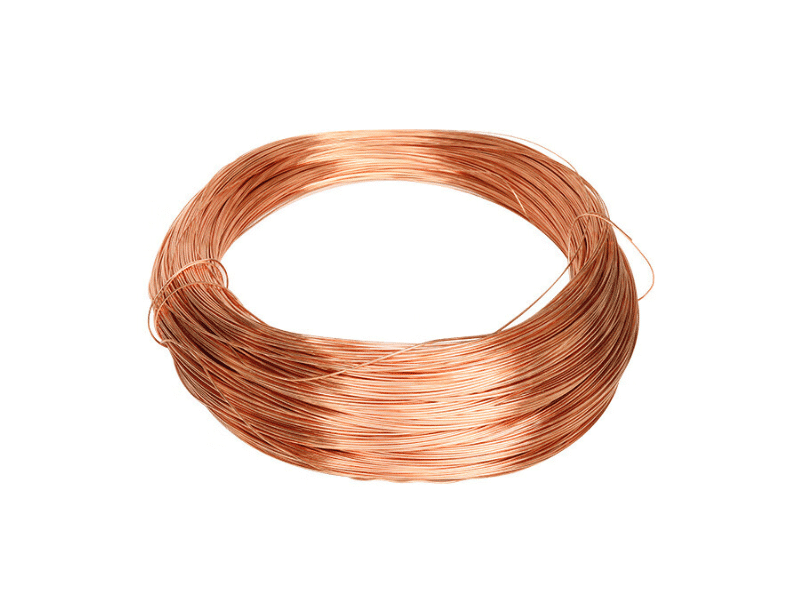
The clearest example is wire drawing. A thick copper rod is pulled through a series of dies, each one slightly smaller than the last, until the wire reaches its target diameter. Without copper’s ductility, the rod would fracture long before it got that thin. To keep the metal workable, manufacturers run anneal cycles between drawing stages. The annealing resets the dislocation buildup so the wire can keep shrinking without snapping, which is how we end up with ultra-fine conductors.
The same property makes copper a favorite for tubing and plumbing. Copper pipe can be bent around corners and formed to fit tight spaces without cracking, which saves fittings and joints. In data and telecom cables, copper’s ductility allows extremely fine strands to be bundled into flexible conductors. And in jewelry and artisan metalwork, the metal’s willingness to bend and shape by hand has made it a craft material for centuries.
How Copper Compares to Other Metals
Putting copper next to familiar metals shows where it stands.
- Gold and silver are the main metals that beat copper in ductility. Gold is the most ductile of all, but its cost keeps it out of everyday structural and electrical work.
- Cast iron and tungsten sit at the opposite end. They’re brittle and tend to snap under stress rather than stretch, which makes them poor choices anywhere bending is involved.
- Aluminum competes with copper in wiring. Aluminum is lighter and cheaper, but copper is more ductile and conducts better, so it’s preferred where reliability and flexibility matter most.
- Steel is far stronger than copper, but it won’t tolerate the same extreme bending. For applications that demand tight bends without cracking, copper usually comes out ahead.
Frequently Asked Questions
Is copper the most ductile metal?
No. Gold holds that title, with silver also ranking very high. Copper sits just behind them and is the most ductile of the common, affordable engineering metals, which is why it dominates wiring and tubing.
Does heating copper make it more ductile?
Yes. Higher temperatures increase atomic movement and make dislocations easier to shift, so copper becomes more ductile and easier to form as it warms. Annealing uses this effect deliberately to soften work-hardened copper.
What is the difference between copper ductility and malleability?
Ductility is the ability to stretch under tension into wire. Malleability is the ability to flatten under compression into sheet. Copper does both well, but they describe different responses to different forces.
Can copper lose its ductility over time?
It can lose ductility through cold working. Repeated bending or drawing builds up internal strain and makes the metal harder and more brittle. Annealing restores it. Copper sitting unused doesn’t lose ductility on its own.
Why is ductility important for electrical wiring?
Wire has to be drawn down to fine diameters and then routed through walls, conduit, and tight corners without breaking. Copper’s ductility lets it survive both the manufacturing and the installation without snapping, while still carrying current reliably.
Does the purity of copper affect how well it stretches?
Yes. Trace impurities like oxygen or phosphorus can interfere with the crystal structure and reduce ductility. High-purity copper grades are specified when maximum stretch and the finest wire diameters are required.
Quick Recap: What Makes Copper So Ductile
Copper’s exceptional ductility traces back to its face-centered cubic structure and the easy dislocation motion it allows, letting the metal deform rather than break. Cold working hardens copper and lowers that ductility, while annealing brings it back, so manufacturers cycle between the two to hit the properties they need.
Pure copper bends best, and alloys or cold work trade some of that flexibility for added strength. For any project, the smart move is to check the grade and temper of your copper so its flexibility matches the demands of the task at hand.