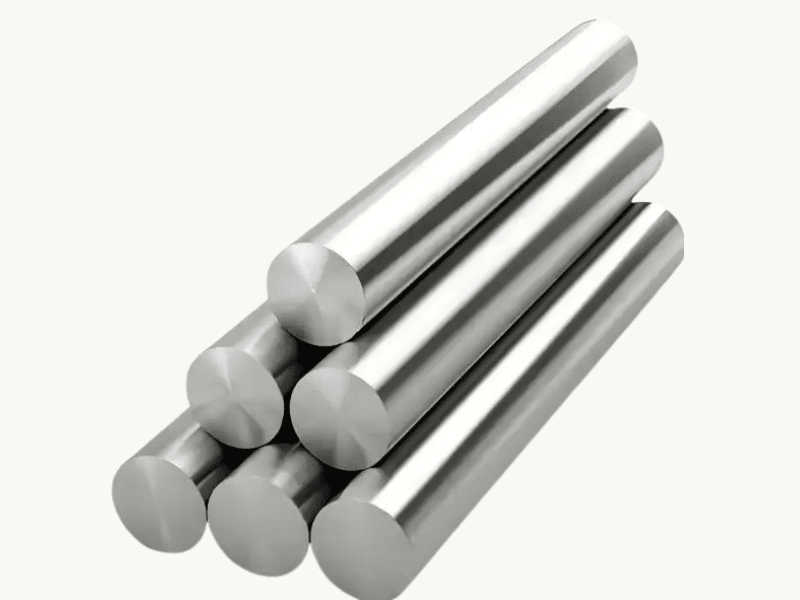
If you machine parts for a living, you already know the metal grade isn’t the only thing that drives cost. The form you start from—bar or plate—often decides your scrap rate, cycle time, and final part price before a single chip flies. Pick the wrong one, and you pay for it twice: once at the loading dock and again at the spindle.
This guide gives you a fast, practical answer. You’ll see exactly when bar stock wins, when plate stock wins, and how to make the call in five quick steps. We’ll also dig into the part most articles skip: the real cost and material-waste math that buyers and engineers actually care about.
Here’s what you’ll walk away with:
- A one-line answer and a scannable comparison table
- Clear, geometry-based rules of thumb for each form
- A 5-step selection framework built for CNC work
- Cost, waste, and common-mistake guidance you can use on your next job
Quick answer: Use bar stock for round, profile, and turned parts machined on a lathe. Use plate stock for flat, wide, or load-bearing parts machined by milling or other cutting methods. The part’s dominant geometry makes the call.
Bar Stock vs Plate Stock: The Short Version
The whole decision comes down to shape. Bar stock is a solid length of metal with a fixed cross-section—round, square, hex, or flat—so it shines for parts you turn, or that share a single profile end to end. Plate stock is a flat, thick slab, so it shines on wide, flat parts and anything that needs to carry a load.
Here’s the rule worth tattooing on the shop wall: match the stock to the part’s dominant geometry. Round or profile-driven part? Reach for the bar. Flat and wide part? Reach for the plate. That one choice controls your scrap rate and setup time more than the alloy ever will.
| Factor | Bar Stock | Plate Stock |
|---|---|---|
| Shape | Round, square, hex, flat, rectangular | Flat rectangular slab |
| Thickness range | Small, fixed cross-sections | ¼” (6 mm) up to several inches |
| Best for | Shafts, pins, bushings, and turned parts | Base plates, gussets, structural parts |
| Primary process | Turning, multi-axis lathe, Swiss | Milling, waterjet, laser, plasma |
| Material waste | Low on cylindrical parts | Low on flat, wide parts |
| Cost efficiency | Strong on profile and long parts | Strong on sheet-like parts |
| Handling | Lighter, easy to load and feed | Heavier, bulkier to move, and fixture |
What Is Bar Stock?
Bar stock is a long, solid metal bar supplied with a consistent cross-section. Shops lean on it because its predictable shape makes bar feeding, workholding, and setup straightforward—especially when you’re running quantity.
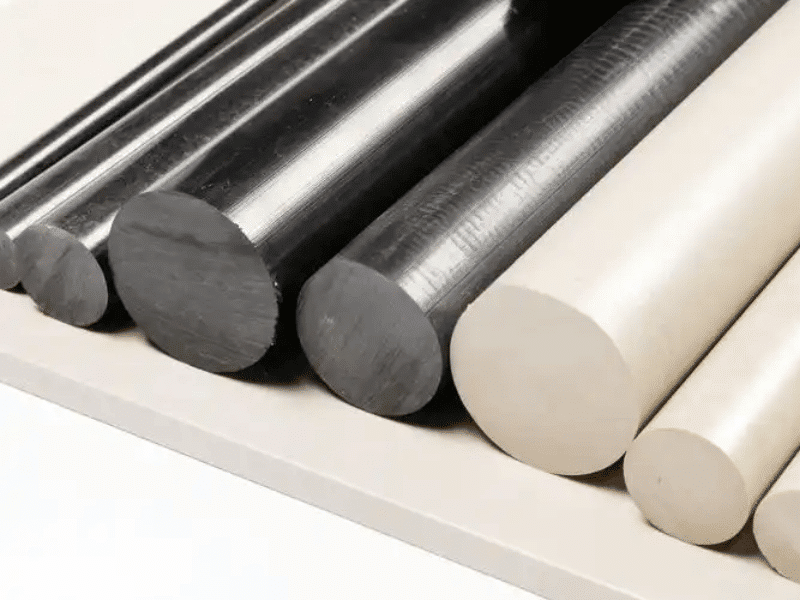
Common bar profiles and where they fit
Each profile has a natural home:
- Round bar: shafts, pins, rollers, bushings, and anything that spins
- Square and rectangular bar: brackets, supports, frames, and machine fixtures
- Hex bar: fasteners, fittings, and parts that need flats for a wrench or tool
- Flat bar: straps, thin brackets, and small plate-like parts
How bar stock is typically machined
The bar is built for the lathe. The stock rotates against the tool, which makes turning, facing, boring, and threading fast and clean. It also drills and mills well for secondary features. On a Swiss or multi-axis lathe with a bar feeder, bar stock will churn out high volumes of small, repeatable parts with very little operator involvement.
Best-fit parts
Reach for the bar when you’re making shafts, pins, bushings, threaded fasteners, spacers, and compact profile brackets. In short, bar stock is the default for cylindrical and small-profile parts.
What Is Plate Stock?
Plate stock is a flat, thick slab of metal—generally ¼” (6 mm) or thicker. Anything thinner usually counts as a sheet. That extra thickness gives you a broad, stable surface and the strength that structural and load-bearing parts demand.
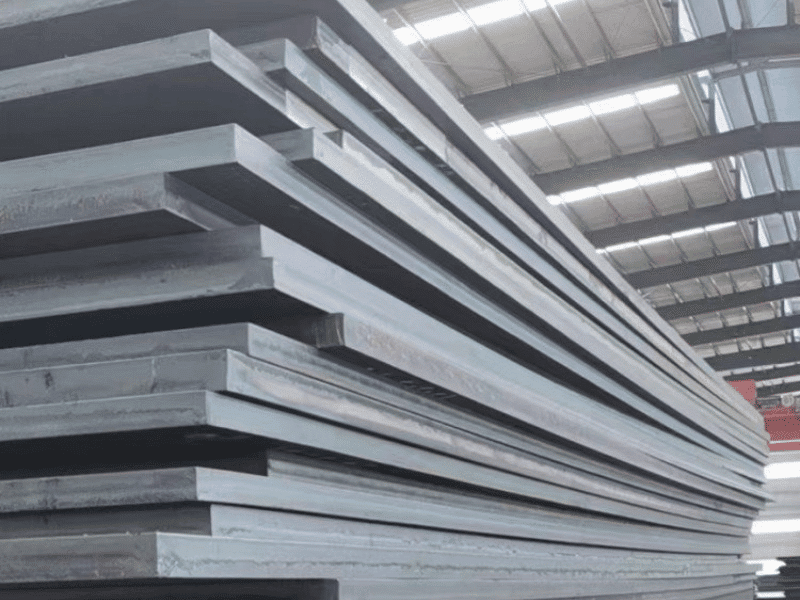
Thickness and supply form
Plates range from a quarter inch to several inches thick and arrive in flat, rectangular sizes that you cut down into blanks. Because thickness confers real strength, the plate is the backbone of structural fabrication and heavy-machined components.
How plate stock is typically machined
The plate is made for milling and cutting. Waterjet, laser, and plasma cut blanks from larger sheets; milling then adds pockets, holes, and finished faces. It’s the obvious choice for 2.5D parts, where most of the work happens on a single face.
Best-fit parts
Choose plate for base plates, mounting plates, gussets, flat brackets, and structural members. In short, plate stock is the choice for flat, wide, load-bearing parts.
Key Differences That Actually Affect Your Job
Both forms come in the same alloys, so material grade rarely settles the debate. The real differences sit in geometry, process fit, and waste. Here’s how they stack up where it counts.
Shape and geometry
Bar holds one profile along its full length, which suits parts with a consistent cross-section. A plate provides a wide, flat field, which suits parts defined by length and width rather than by profile.
Dimensions and thickness
Bar lives in compact cross-sections that favor precision components. Plate offers greater thickness and surface area, so it provides the strength that larger assemblies need.
Machining fit
Bar pairs naturally with the lathe. Plate pairs naturally with the mill and cutting table. Force a part onto the wrong machine, and you’ll feel it in setup time, fixturing headaches, and tool wear.
Material waste and scrap rate
This is the cost driver most teams underestimate. Cut a round shaft from a plate, and you throw away the corners. Mill a wide flat part from an oversized bar, and you grind away pounds of stock. Match form to shape, and your scrap rate drops on its own.
Cost and strength
Bar usually wins on cost-per-part for profile and long components because you buy close to the final shape. Plate wins on flat parts and delivers the load-bearing strength structural work requires. Bottom line: the right choice usually comes down to geometry and scrap rate, not the alloy.
When to Use Bar Stock
Lean toward bar whenever the part has a consistent profile or a round footprint.
- Round and cylindrical parts: shafts, pins, and rollers come straight from the round bar with almost no waste.
- Turned components: anything made mostly on a lathe runs faster and cleaner from a bar.
- Long or profile-based parts: rails, struts, and extruded-style shapes love a fixed cross-section.
Rule of thumb: if it’s round or profile-driven, start with a bar.
When to Use Plate Stock
Lean toward the plate when the part is defined by a flat footprint or has to carry a load.
- Flat, wide parts: mounting plates and panels nest efficiently across a single plate.
- 2.5D milled parts: features cut into one face make the plate the obvious blank.
- Structural parts: gussets, base plates, and supports rely on the plate’s thickness for strength.
Rule of thumb: if it’s flat and wide, start with a plate.
How to Choose for CNC Machining: A 5-Step Check
Run this quick sequence before you place a stock order. It keeps you from over-buying and from designing in rework.
Step 1 — Read the part’s dominant geometry
Ask one question first: is this part fundamentally round or fundamentally flat? The answer points you toward the bar or plate before you consider anything else.
Step 2 — Match the main machining process
If most of the cutting happens on a lathe, a lean bar. If most of it happens on a mill or cutting table, a lean plate. Put the stock on the machine that does the heavy lifting.
Step 3 — Estimate the material waste
Picture the finished part nested inside the raw stock. Whichever form leaves the least excess almost always wins on total cost.
Step 4 — Compare total cost, not just stock price
Add up the stock price, machining time, and recoverable scrap value together. The cheapest blank is often not the cheapest finished part once cycle time is factored in.
Step 5 — Confirm availability, tolerance, and lead time
Make sure the size, grade, and tolerance you need are actually in stock. A flawless choice on paper still fails if the lead time wrecks your schedule. Bottom line: a five-factor check stops over-ordering and rework before they start.
Cost and Material-Waste Comparison
Choosing the right form often saves more money than switching alloys, so this section deserves a closer look.
What drives the raw material cost
Bar tends to cost less on long, round, or profile parts because you’re buying close to net shape. The plate gets more efficient the flatter and wider the part becomes.
Machining time and setup
A part matched to the right form needs fewer operations and simpler workholding. A mismatch leads to more roughing passes, refixturing, and faster tool wear—all of which show up on the invoice.
Scrap rate by part type
Round parts cut from a plate leave big offcuts you can’t always reuse. Flat parts hogged out of oversized bar burn machine hours. In short, form selection often beats alloy selection on cost.
Common Materials for Bar and Plate Stock
Most engineering metals come in both forms, so pick the metal for performance, then pick the form for geometry:
- Mild steel: affordable and weldable—the dependable default for general parts.
- Stainless steel: corrosion-resistant; common in food, medical, and marine jobs.
- Aluminum: light and highly machinable; a favorite in aerospace and automotive.
- Brass: machines easily with good corrosion resistance; ideal for fittings and fixtures.
- Titanium: high strength-to-weight ratio; reserved for aerospace, medical, and demanding applications.
Common Mistakes That Quietly Raise Your Costs
A handful of habits inflate scrap and cycle time. Watch for these.
Mistake 1 — Buying a plate for round parts
Cutting a shaft from plate wastes the corners and adds machining time. Fix: start round parts from a round bar sized near the final diameter.
Mistake 2 — Forcing long shafts out of the plate
Plate can’t deliver a clean, straight shaft without heavy stock removal. Fix: Use a bar close to the finished diameter.
Mistake 3 — Ignoring tolerance and availability
A theoretically perfect form is useless if it isn’t stocked to spec or won’t arrive on time. Fix: confirm grade, tolerance, and lead time before you commit.
FAQs About Bar Stock vs Plate Stock
What is the difference between bar stock and plate stock?
Bar stock is a solid profile shape—round, square, or hex—that is best for turned and cylindrical parts. Plate stock is a flat slab ¼” (6 mm) or thicker, best for flat and structural parts. The form decides which processes and parts each one suits.
Is a flat bar considered bar stock?
Yes. Flat bar is simply a bar profile with a thin rectangular cross-section, used for straps, small brackets, and thin plate-like parts.
What thickness qualifies as plate stock?
Metal at ¼” (6 mm) or thicker is generally classed as plate. Anything below that is usually called a sheet.
Is bar stock cheaper than plate stock?
For round and profile parts, the bar is usually cheaper because you buy close to the final shape. For flat, wide parts, a plate is often the more economical choice.
Which is better for CNC machining—bar or plate stock?
Neither wins across the board. Bar suits turned and round parts; plate suits milled and flat parts. Geometry decides.
Can plate stock be used for turned parts?
It can, but it’s inefficient. Turning a round part from a plate wastes corner material and adds machining time.
Does bar stock or plate stock produce less material waste?
Bar wastes less on cylindrical parts; plate wastes less on flat, wide parts. Match the form to the shape and scrap drops.
How do I decide between aluminum bar and aluminum plate?
Use a bar for round or profile parts and a plate for flat or structural parts, then weigh cost, waste, and lead time before ordering.
Conclusion
The decision is rarely about the metal—it’s about the shape. Bar stock wins on round and profile parts, where it trims waste and pairs cleanly with lathe work. Plate stock wins for flat, wide, load-bearing parts, where it nests efficiently and delivers real strength. Run the five-step check—geometry, process, waste, cost, and availability—and the right form usually becomes obvious.
Get this call right, and you cut scrap, shorten cycle time, and protect your margin on every batch.
Working on a specific part and not sure which form fits best? Send us your drawing for a quick quote or DFM review. We’ll confirm the right stock form before you commit to a single cut.