Casting turns molten metal into finished parts by pouring it into a mold and letting it solidify. That single idea covers everything from a two-gram zinc connector to a turbine housing weighing several tons. The hard part isn’t understanding the concept — it’s picking the right casting method for a specific part, then knowing when a casting still needs machining to meet its final spec.
This guide walks through how casting works, the methods worth knowing, the materials involved, and the defects that quietly raise scrap rates. Most of the space, though, goes to selection: matching a process to your volume, material, tolerance, finish, and budget. That’s where the wrong call costs the most.
What Is Casting?
Casting is a manufacturing process in which molten metal is poured into a mold cavity, where it cools and solidifies into a part that mirrors the shape of that cavity.
The principle is straightforward. Liquid metal fills every corner of a pre-shaped cavity, captures the geometry, and hardens. Once solid, the part is removed and finished.
What sets casting apart from other processes is how the shape forms:
- Casting builds shape by solidifying liquid metal in a mold.
- Machining removes material from a solid block.
- Forging deforms solid metal under pressure.
Metalworkers have cast parts for over 5,000 years, starting with copper tools in ancient Mesopotamia and China. The fundamentals haven’t changed much. What has changed is the control we now have over temperature, filling, and cooling — and that control is what separates a sound part from a porous one.
A few terms show up throughout this guide:
- Pattern: A full-size replica of the part, used to form the mold cavity.
- Cavity: The hollow space that shapes the part’s exterior.
- Core: An insert that forms internal features such as holes and channels.
- Gating system: The sprue, runners, and gates that guide metal into the cavity.
- Riser: A reservoir that feeds extra metal to the part to offset shrinkage as it solidifies.
How Casting Works
Every method follows the same four steps. The equipment and pressures change, but the logic holds.
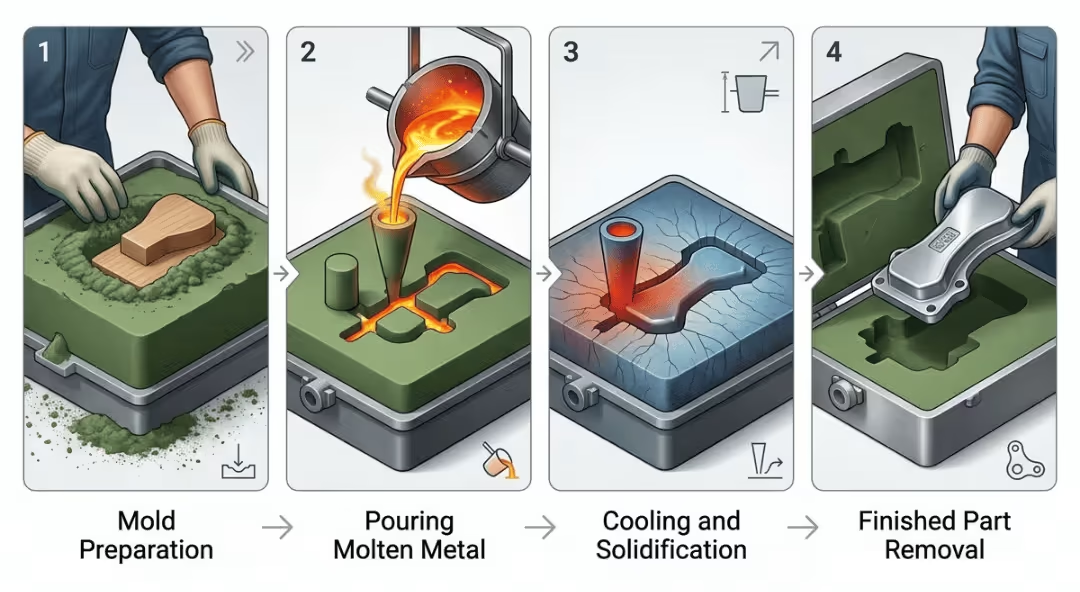
1. Form the mold cavity. A pattern defines the shape. It can be wood, plastic, wax, or metal, depending on the process. Sound pattern design accounts for shrinkage as the metal cools, draft angles so the part releases cleanly, and core prints to locate internal features. For permanent molds, the cavity is machined directly into hardened steel. The cavity fixes dimensional accuracy and surface finish before any metal is poured, so this step carries more weight than it first appears.
2. Melt and pour. Metal is melted in an electric arc, induction, or crucible furnace based on the alloy and batch size. Pouring can be manual, gravity-fed, pressurized, or automated on a continuous line. Temperature matters here: stainless steel pours around 1,450–1,510°C, while aluminum pours near 700°C. Pour too cold, and the metal freezes before it fills; pour too hot, and you invite gas and shrinkage. The gating system then steers the flow into the cavity with as little turbulence as possible.
3. Cool and solidify. As the metal cools, tiny nuclei form and grow into the grain structure that defines the part’s mechanical properties. Faster cooling generally yields finer grains and higher strength. Uneven cooling does the opposite — it leaves internal stress and warping.
4. Eject and finish. Expendable molds (sand, investment) get broken away; permanent molds use ejector pins. Then comes the work most buyers underestimate: trimming gates and risers, cleaning, heat treatment, machining critical features, and surface finishing. In practice, very few cast parts leave the foundry ready to install.
How to Choose the Right Casting Method
Most people come to casting with a part in mind, not a process. So before the individual methods, here’s the logic that narrows the field fast. Run your part through six filters:
- Volume. Prototypes and low runs favor sand, investment, or vacuum casting. High volume favors die casting or continuous casting, where tooling cost spreads across many parts.
- Material. Low-melting non-ferrous alloys suit die, permanent mold, and low-pressure casting. High-melting ferrous alloys push you toward sand, investment, or centrifugal casting.
- Tolerance. Tight tolerances point to die, investment, or squeeze casting. Looser tolerances open up sand and lost foam.
- Surface finish. Cosmetic or smooth surfaces call for investment, die, or vacuum casting. If finish isn’t critical, sand casting is cheaper.
- Cost. A low tooling budget favors sand or vacuum casting. A low per-part cost at volume favors die or continuous casting.
- Complexity. Undercuts, thin walls, and internal channels are best served by investment, vacuum, or lost foam casting.
Five questions that usually settle it
- How many parts do you need — one-off, hundreds, or millions?
- What material, and what’s its melting point?
- How tight are the tolerances — ±0.1 mm or ±1 mm?
- Does the surface need to look good, or just function?
- What’s the tooling budget and timeline?
Answer those honestly and the method tends to reveal itself. The scenarios below show how that plays out.
Real parts, real decisions
A thin-wall aluminum housing for high-volume production. Die casting is almost always the answer. It fills thin sections cleanly, holds tight tolerances, and drives per-part cost down once the tool is paid off. The trade-off is the tooling bill up front, which only makes sense at volume.
A large pump housing in low quantities. Sand casting wins here, even though the finish is rougher. Tooling stays cheap, and for a handful of big parts, paying for a hardened steel die would never pay back. You accept some post-machining on the sealing faces and move on.
A small, high-precision part for a medical or aerospace assembly. Investment casting earns its higher cost. It captures fine detail and holds tight tolerances in stainless steel, titanium, or cobalt-chrome, with a finish clean enough that machining is limited to critical features.
A hollow cylindrical liner or sleeve. Centrifugal casting produces a dense, low-porosity wall because the spinning mold packs the metal outward. For rotationally symmetric parts, nothing else matches its structural integrity at the same cost.
The Main Casting Methods
The three methods below cover most industrial work, so they get the most attention. The remaining seven follow in shorter form.
Sand Casting
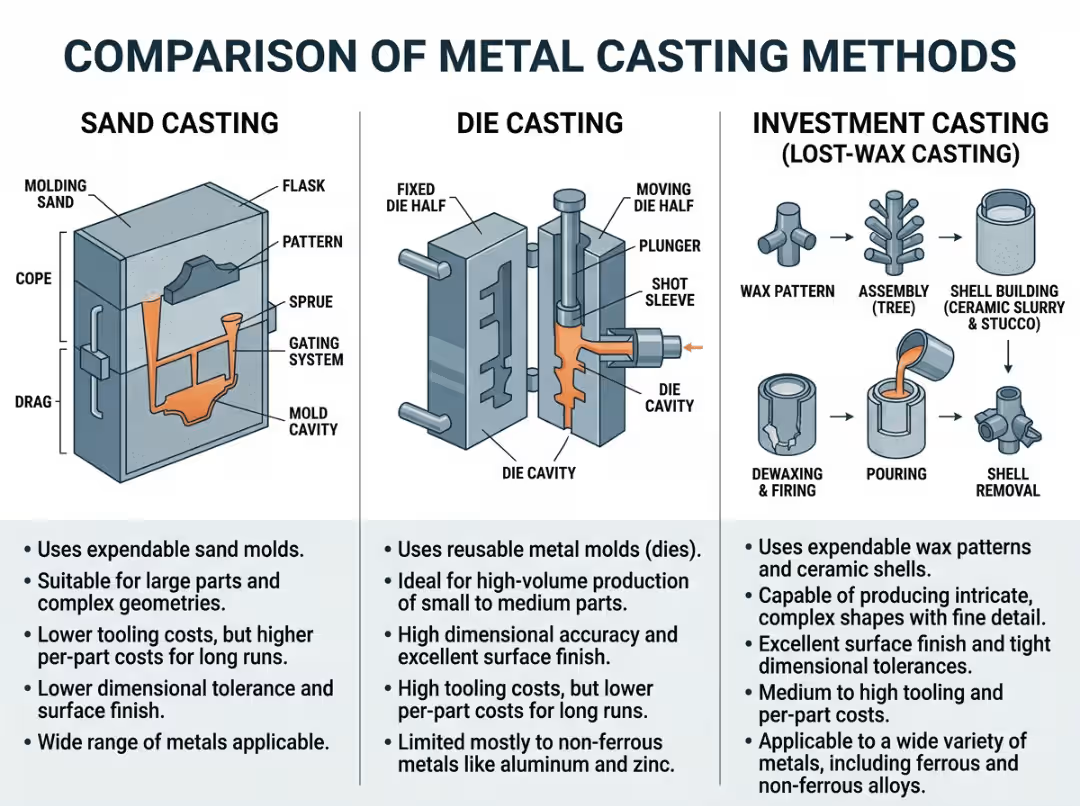
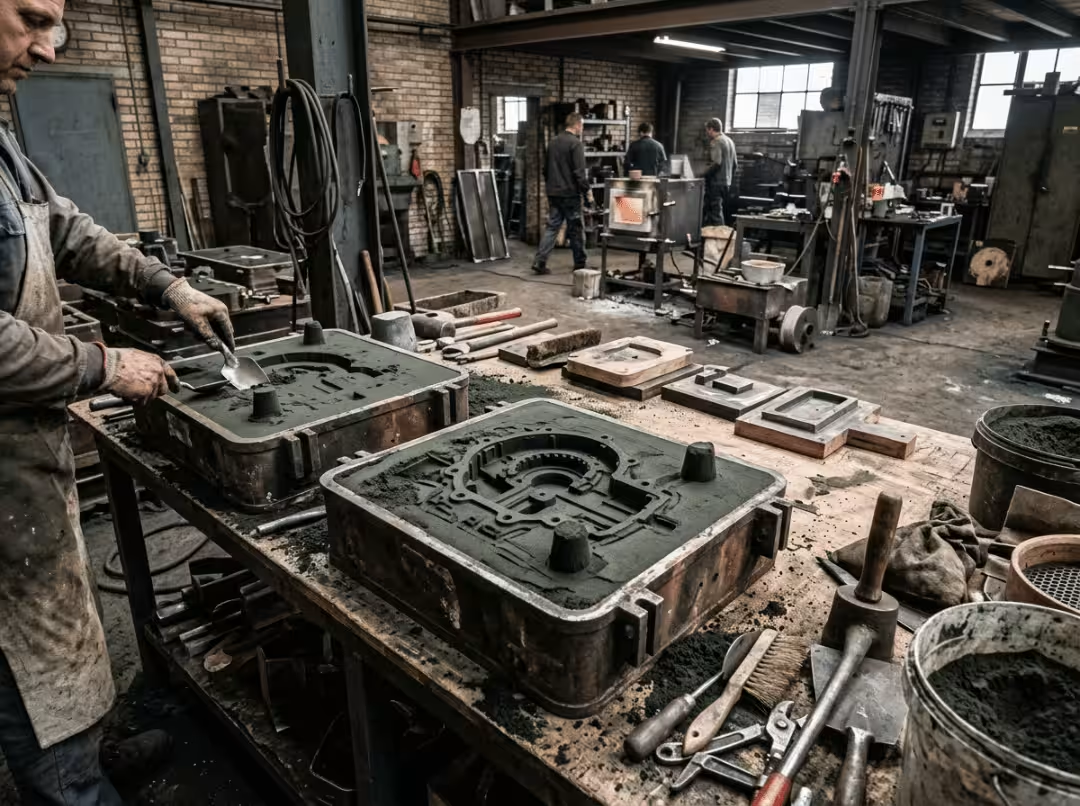
A pattern is packed in fine silica sand to form a two-part mold (the cope and drag). Metal is poured into the cavity, and the sand is broken away afterward — which is why each mold is single-use.
Sand casting is the workhorse of the industry for good reason. Tooling is cheap, it handles almost any alloy, and it scales up to parts weighing well over 200 tons. The limiting factor is finish and precision: expect roughly ±0.8–1.5 mm and a surface around 6.3–25 µm Ra. Critical faces, bores, and mating surfaces will need machining afterward, which is worth budgeting for from the start rather than discovering later.
It’s the natural choice for engine blocks, pump housings, valve bodies, and machine bases — anything large, structural, or produced in modest quantities. Common materials include iron, steel, aluminum, bronze, and magnesium.
Die Casting
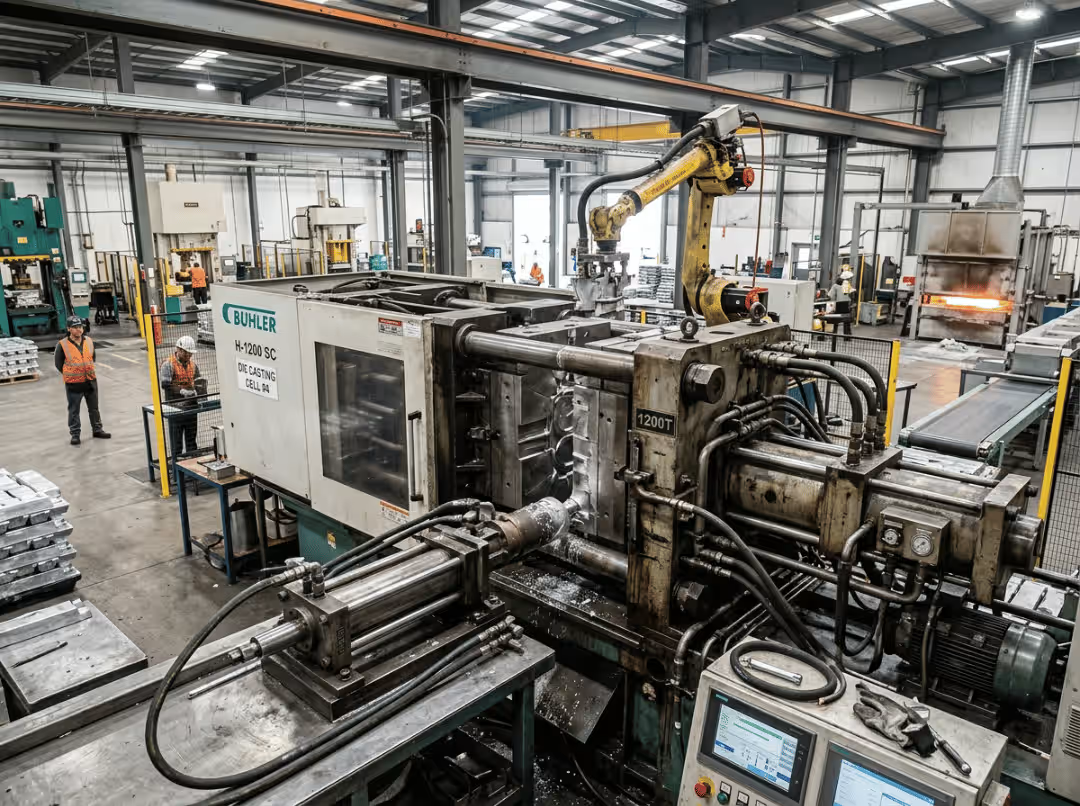
Molten metal is injected into a hardened steel die under high pressure, sometimes reaching 25,000 psi, then solidifies fast. That pressure is what gives die casting its signature qualities: tight tolerances (±0.1–0.4 mm), smooth finishes (0.8–3.2 µm Ra), and excellent repeatability across long runs.
The economics are the whole story. The die is expensive and takes time to build, so short runs don’t justify it. But once you’re producing tens of thousands of parts, the per-part cost drops below almost anything else, and secondary work is minimal. Die casting is limited to lower-melting non-ferrous metals — aluminum, zinc, magnesium, and copper alloys — because ferrous metals would destroy the tooling.
You’ll find it in automotive housings, electronics enclosures, appliance parts, and hardware. For an aluminum part, it also pairs naturally with light finish machining on sealing or mounting faces; our aluminum machining service handles that kind of post-cast work.
Investment Casting
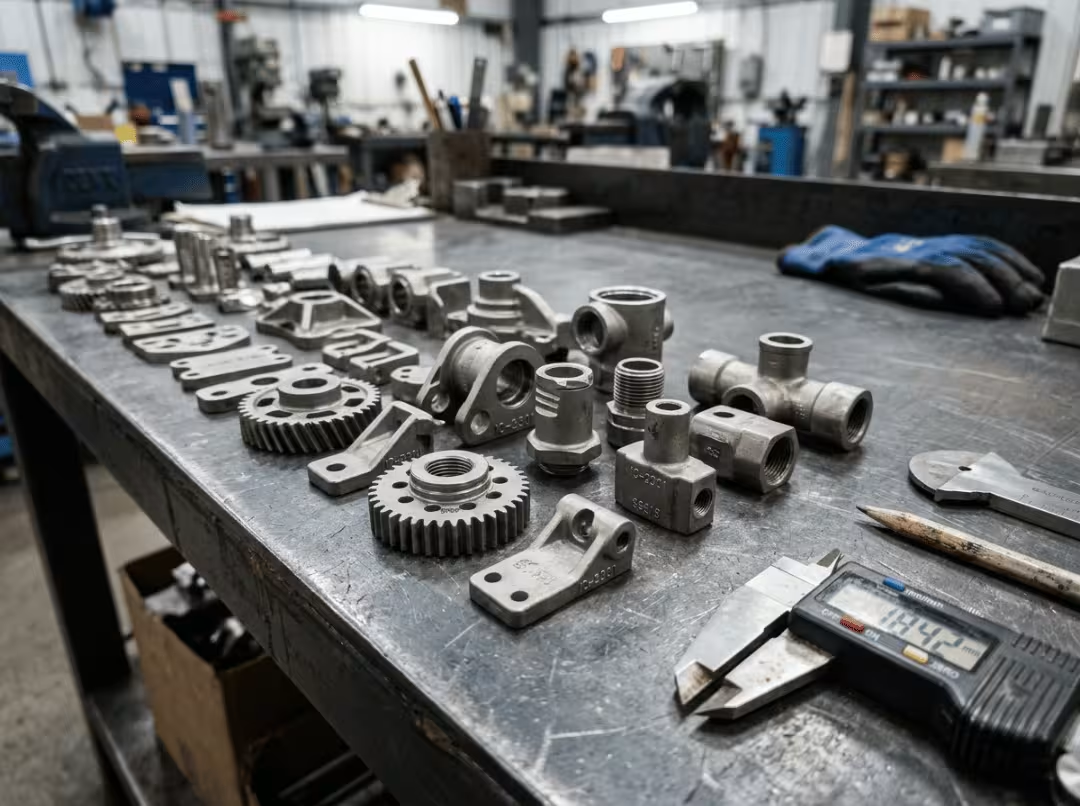
Wax patterns are assembled on a central sprue, coated in ceramic, then melted out — the “lost wax” step that gives the process its other name. Metal is poured into the resulting shell, which is broken away once the part solidifies.
This method buys you geometry and finish that the others struggle to match. Undercuts, thin walls, and internal channels come out without extra cores, tolerances hold around ±0.1 mm, and the surface (1.6–3.2 µm Ra) often needs little more than cleanup. The trade-off is cost and lead time: each pattern is consumed, so the process runs slower and pricier per part, and very large parts aren’t practical.
It’s the standard for turbine blades, medical implants, aerospace brackets, and firearm components — parts where complexity and finish justify the premium. Typical materials include stainless steel, carbon steel, aluminum, superalloys, and titanium.
The Other Seven Methods
Centrifugal casting. Metal is poured into a rotating cylindrical mold, and centrifugal force packs it against the walls. The result is a dense, low-porosity structure with no riser needed. It’s limited to symmetrical, hollow shapes, and the inner diameter usually needs machining. Best for pipes, cylinder liners, bushings, and pressure vessel rings.
Permanent mold (gravity die) casting. Metal fills a reusable metal mold by gravity alone. You get a finer grain structure and better finish than sand casting, with simpler tooling than pressure die casting. It suits medium-volume non-ferrous parts like pistons, gears, and wheels, and works best on simpler shapes.
Low-pressure casting. A pressurized furnace below the mold pushes metal up through a riser tube into the cavity, then holds it during solidification. The filling is smooth and turbulence-free, which keeps porosity low and handles thin walls and sharp corners well. It’s slower than high-pressure die casting and mostly limited to aluminum and magnesium. Common for wheel hubs, cylinder heads, and structural automotive parts.
Vacuum casting. Air is drawn out of the mold as metal or resin is pulled in, which eliminates trapped gas. It gives excellent detail and thin-wall capability, especially with 3D-printed molds, and is a strong fit for prototypes and low-volume detailed parts. Throughput is low, and silicone molds wear quickly. Used for functional prototypes, medical devices, and small precision housings.
Squeeze casting. Metal is poured into an open die that closes and applies high pressure as the part solidifies — effectively liquid-metal forging. Porosity is nearly eliminated and mechanical properties are excellent, at the cost of higher tooling and a limited geometry range. Reserved for high-strength chassis parts, engine brackets, and aerospace structural components.
Lost foam casting. A polystyrene foam pattern is buried in sand; the poured metal vaporizes the foam and takes its place. It produces complex shapes with no parting lines and minimal machining, though the process needs tight control. Good for cylinder heads, manifolds, pump bodies, and valve fittings.
Continuous casting. Metal is poured into a water-cooled mold and pulled out as a solidified profile in one uninterrupted line. Yield approaches 100% with no sprue or riser waste, but it only produces uniform profiles — billets, slabs, rods, tubes, bars, and strips. Not for discrete parts.
Quick Reference
|
Method |
Best for |
Tooling cost |
Unit cost |
Tolerance |
Finish |
Volume |
|---|---|---|---|---|---|---|
|
Sand |
Large parts, low budget |
Low |
Moderate |
Loose |
Rough |
Low–medium |
|
Die |
Non-ferrous, high volume |
High |
Low |
Tight |
Excellent |
High |
|
Investment |
Complex, detailed parts |
Medium–high |
Medium–high |
Tight |
Excellent |
Low–medium |
|
Centrifugal |
Symmetrical/hollow |
Medium |
Moderate |
Moderate |
Good |
Low–medium |
|
Permanent mold |
Non-ferrous, mid volume |
Medium |
Moderate |
Good |
Good |
Medium |
|
Low-pressure |
Thin-wall non-ferrous |
Medium–high |
Moderate |
High |
Good |
Medium |
|
Vacuum |
Prototypes, fine detail |
Low–medium |
Higher |
High |
Excellent |
Low |
|
Squeeze |
High-strength parts |
High |
Moderate |
High |
Good |
Medium |
|
Lost foam |
Complex, no parting line |
Medium |
Moderate |
Moderate |
Good |
Medium |
|
Continuous |
Uniform profiles |
High |
Very low |
N/A |
Good |
Very high |
Common Casting Materials
Material choice drives strength, corrosion resistance, cost, and which methods are even available to you.
|
Metal/Alloy |
Common grades |
Tensile strength |
Corrosion resistance |
Hardness |
Typical applications |
|---|---|---|---|---|---|
|
Aluminum |
A356, 6061, 7075 |
Moderate |
Excellent |
Moderate |
Automotive housings, aerospace brackets |
|
Zinc |
Zamak 3, Zamak 5, ZA-8 |
Moderate |
Good |
Moderate |
Hardware, connectors, decorative parts |
|
Iron |
Gray G3000, Ductile 65-45-12 |
High |
Low–moderate |
High |
Engine blocks, pipes, machine bases |
|
Steel |
AISI 1020, SS 304/316 |
Excellent |
Moderate–excellent |
Excellent |
Structural parts, valves, tooling |
|
Magnesium |
AZ91D, AM60, AM50 |
Moderate |
Moderate |
Moderate |
Lightweight housings, electronics |
|
Copper alloys |
Brass C36000, Bronze C95400 |
High |
Excellent |
Moderate |
Bushings, marine fittings, bearings |
As a rough guide: aluminum for lightweight, corrosion-resistant parts; iron and steel for strength and wear; zinc for detailed, tight-tolerance small parts; copper alloys where conductivity or marine corrosion resistance matters. When a cast part needs to hold a critical tolerance in stainless steel, the finish work often lands on a stainless steel machining line after the pour.
Where Casting Helps — and Where It Doesn’t
Casting’s strengths are real, and so are its limits. Both should inform the decision.
It handles complex geometry because liquid metal flows into thin walls, undercuts, and internal channels that a cutting tool can’t reach. It’s flexible on material across nearly all ferrous and non-ferrous alloys. It scales economically — a permanent mold can produce millions of parts, spreading tooling cost thin. And it spans an enormous size range, from grams to hundreds of tons, using the same basic physics.
The limits are equally practical. Tooling costs money and time up front, which hurts small batches, especially with permanent molds. Surface finish and precision fall short on sand and ceramic molds, so critical features usually need machining. Defects are a live risk — trapped gas, uneven cooling, and turbulence lead to porosity, shrinkage, and inclusions. And process control is demanding, because temperature, flow rate, pressure, and cooling all interact.
Casting Defects and How to Prevent Them
Most defects trace back to one of four causes: gas, shrinkage, temperature, or flow. Catch them at the design and process stage and scrap rates stay low.
|
Defect |
Cause |
Prevention |
|---|---|---|
|
Porosity |
Trapped or dissolved gas escaping during solidification |
Degas the melt, add venting, use vacuum assist, control pour speed |
|
Shrinkage |
Insufficient feed metal as the part solidifies |
Design proper risers, optimize gating, control cooling gradients |
|
Cold shut |
Two metal streams meet but fail to fuse |
Raise pour temperature, improve gating, increase fill speed |
|
Misrun |
Metal freezes before filling the cavity |
Increase pour temperature, enlarge gates, preheat the mold |
|
Inclusions |
Oxides, slag, or refractory particles enter the melt |
Filter the metal, keep the melt clean, control skimming |
|
Warping |
Uneven cooling creating internal stress |
Balance wall thickness, cool uniformly, apply stress-relief heat treatment |
The theme across all six: disciplined melt handling, sound gating, and controlled cooling. Designing for casting early is far cheaper than chasing defects on the shop floor.
Casting vs. Other Processes
Casting isn’t always the right call. Here’s how it compares to the processes it competes with most often.
|
Factor |
Casting |
Machining |
Forging |
Injection molding |
3D printing |
|---|---|---|---|---|---|
|
Material shaping |
Solidify liquid |
Remove solid |
Deform solid |
Solidify polymer/metal |
Add layer by layer |
|
Complexity |
Very high |
Moderate |
Low–moderate |
Very high |
Extremely high |
|
Tooling cost |
Medium–high |
Low |
High |
High |
None |
|
Best volume |
Low–very high |
Low–medium |
High |
High |
1–low volume |
|
Material range |
Most metals |
Most metals |
Most metals |
Mostly polymers |
Metals & polymers |
|
Strength |
High |
High |
Highest |
Moderate |
Moderate–high |
|
Waste |
Low (remelt) |
High (chips) |
Low |
Low |
Very low |
Casting vs. machining. Machining delivers tighter tolerances and better finishes but wastes material and grows expensive as geometry gets complex. Cast when the shape is intricate or volumes are high; machine when you need precision on simpler parts or very low quantities. In practice the two work together — many cast parts get finished on a mill or lathe afterward, which is why our CNC machining service often picks up where casting leaves off.
Casting vs. forging. Forging produces the strongest parts by aligning grain flow, but it struggles with complex shapes and internal features. Cast for geometry; forge when maximum strength and fatigue resistance are non-negotiable.
Casting vs. injection molding. Both solidify molten material in a mold, but injection molding is built for polymers at high volume. Cast when you need metal strength and larger parts; injection mold when the part is plastic and the run is long.
Casting vs. 3D printing. Printing needs no tooling and excels at prototypes and geometry casting can’t reach, but it’s slow and costly per part at volume. Cast for quantities; print for speed, one-offs, or shapes no mold can form.
Industry Applications
|
Industry |
Typical parts |
Common methods |
Common materials |
|---|---|---|---|
|
Automotive |
Engine blocks, wheels, brackets |
Die, low-pressure, sand |
Aluminum, iron, magnesium |
|
Aerospace |
Turbine blades, landing gear parts |
Investment, squeeze |
Superalloys, titanium, aluminum |
|
Medical |
Implants, surgical instruments |
Investment, vacuum |
Titanium, stainless steel, cobalt-chrome |
|
Industrial equipment |
Pumps, valves, gearboxes |
Sand, die |
Stainless steel, iron, aluminum |
|
Energy |
Turbine housings, reactor components |
Investment, sand |
Stainless steel, nickel alloys |
|
Consumer goods |
Cookware, hardware, fixtures |
Die, investment, lost foam |
Aluminum, zinc, brass |
Frequently Asked Questions
When should you machine a cast part instead of using it as-cast?
Whenever a feature carries a tolerance tighter than the casting process can hold, or a surface has to seal, mate, or bear a load. Sealing faces, bores, threaded holes, and bearing surfaces almost always get machined. The casting brings the part close to net shape; machining brings the critical features to spec. A cylindrical cast part with a precision bore, for instance, typically moves to a CNC turning operation after the pour.
Is casting cheaper than machining for production parts?
For complex shapes or higher volumes, usually yes — casting spreads tooling cost across many parts and wastes little material. For simple parts in very low quantities, machining is often cheaper because it needs no tooling at all. The crossover point depends on part complexity and run size.
How do I choose between die casting and investment casting?
Choose die casting for high-volume non-ferrous parts where per-part cost is the priority. Choose investment casting for complex, detailed parts, ferrous alloys, or lower volumes where finish and tolerance matter more than unit cost.
Which casting process gives the best surface finish?
Investment and die casting lead here, both landing well under 3.2 µm Ra. Vacuum casting also produces excellent detail. Sand casting is the roughest and typically needs finish machining on visible or functional surfaces.
What metals are most common in casting?
Aluminum, zinc, iron, steel, magnesium, and copper alloys. Aluminum dominates where light weight and corrosion resistance matter; iron and steel carry the load where strength and wear resistance come first.
What causes porosity in cast parts, and does it matter?
Porosity comes from gas trapped or dissolved during solidification. It matters because it weakens the part and can leak under pressure. Degassing the melt, venting the mold, and vacuum assist all reduce it. For pressure-tight parts, it’s worth specifying acceptance limits up front.
Can casting hold tight tolerances on its own?
Investment and die casting reach roughly ±0.1 mm, which is enough for many features. Anything tighter, or any feature with a specific fit, is best cast oversized and then machined. Planning that machining stock into the casting design avoids surprises later — often on a CNC milling operation.
Which process fits a low-volume prototype run?
Sand, vacuum, or investment casting, depending on the material and finish you need. All three avoid the heavy tooling investment that makes die casting impractical for small quantities. Vacuum casting is especially useful when the geometry is intricate and you only need a handful of parts.
Choosing the Right Path for Your Part
Casting remains one of the most flexible ways to produce strong, complex metal parts at almost any size or volume. The skill isn’t memorizing every process — it’s matching the method to your material, tolerances, finish, volume, and budget, then planning the machining that brings the part to final spec.
If you’re weighing options for a specific part, it helps to talk it through with people who cast and machine every day. Send us your drawing or 3D model and we’ll review the geometry, suggest a sensible process and material, flag any features that will need machining, and come back with a quote. No obligation — just a straight answer on the best way to make your part.