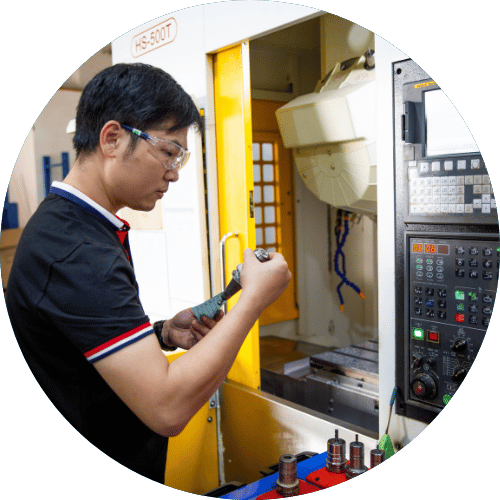
Slot milling is a fundamental machining process in manufacturing, used to create precise slots, grooves, and channels in a variety of materials. Its importance lies in its ability to produce accurate and repeatable cuts, making it essential for creating components with tight tolerances. Known for its versatility, slot milling is widely applied across industries such as automotive, aerospace, construction, and electronics, where it is used to produce everything from keyways and machine parts to intricate components for advanced technologies.
Understanding Slot Milling
What is Slot Milling?
Slot milling is a machining process used to create slots, grooves, or channels in a workpiece by removing material with a rotating cutting tool. This process is typically performed on a milling machine, where the cutter moves along a defined path to produce precise and uniform slots. Slot milling is essential for manufacturing components that require accurate dimensions and tight tolerances, making it a cornerstone of modern machining. The process is versatile, accommodating a wide range of materials such as metals, plastics, and composites, and is suitable for both simple and complex designs. Its precision and adaptability make it indispensable in producing parts for various industries.
Applications of Slot Milling
Slot milling is widely used across industries due to its ability to create functional and structural features in components. Some of its most common applications include:
- Keyways: Slot milling is frequently used to produce keyways, which are slots machined into shafts or hubs to accommodate keys. These keys ensure the secure transmission of torque between rotating parts, making keyways critical in mechanical systems like gears, pulleys, and couplings.
- T-Slots: T-slots are another common application, often found in machine tool tables. These slots allow for the secure mounting of workpieces, fixtures, or clamps, providing flexibility and stability during machining or assembly processes.
- Industrial Grooves: Slot milling is also used to create grooves for seals, O-rings, or other components that require precise channels for proper functionality. These grooves are essential in industries like automotive and aerospace, where sealing and alignment are critical.
- Custom Features: Beyond standard applications, slot milling is employed to produce custom slots and channels in components for specialized machinery, electronics, and construction equipment.
The versatility of slot milling ensures its relevance in a wide range of manufacturing scenarios, from mass production to custom fabrication.
Slot Milling vs. Groove Milling: Differences and Overlaps
While slot milling and groove milling share similarities, they differ in their specific purposes and techniques. Slot milling focuses on creating slots or channels that typically have a defined width and depth, often used for structural or functional purposes like keyways or T-slots. The process usually involves straight cuts along a linear path.
Groove milling, on the other hand, is more specialized and often involves creating grooves with specific profiles, such as rounded or angled edges. These grooves are commonly used for applications like seals, decorative features, or complex geometries. Groove milling may require specialized cutters, such as form tools, to achieve the desired profile.
Despite these differences, the two processes overlap in certain applications. For instance, both can be used to create channels for wiring or fluid flow in industrial components. The choice between slot milling and groove milling depends on the design requirements, material properties, and intended function of the final product.
Types of Slot Milling Techniques

End Milling: Ideal for Closed Slots and Variable Depths
End milling is one of the most versatile slot milling techniques, commonly used for creating closed slots with precise dimensions and variable depths. This method employs an end mill cutter, which has cutting edges on both its tip and sides, allowing it to plunge into the material and cut along a defined path. End milling is particularly effective for applications requiring intricate slot designs, such as those found in molds, dies, and machine components. Its ability to handle varying depths makes it suitable for creating slots with stepped or tapered profiles. Additionally, end milling is widely used for materials ranging from metals to plastics, making it a go-to technique for both general-purpose and specialized machining tasks.
Side Milling: Best for Stable, Deep Slots
Side milling is a technique designed for machining deep and stable slots with consistent width and depth. In this method, the cutting tool engages the material from the side, allowing for efficient material removal along the length of the slot. This approach is ideal for applications where the slot needs to maintain uniformity over a long distance, such as in structural components or guide rails. Side milling is particularly effective for harder materials, as the tool’s engagement with the side of the workpiece provides greater stability and reduces the risk of tool deflection. By using side milling, manufacturers can achieve high precision and smooth finishes, even in demanding machining conditions.
T-Slot Milling: Specialized for T-Shaped Profiles
T-slot milling is a specialized technique used to create T-shaped slots, which are commonly found in machine tool tables and fixtures. This process involves two steps: first, a straight slot is milled using an end mill or side mill, and then a T-slot cutter is used to create the undercut portion of the slot. T-slot milling requires precision to ensure that the slot dimensions match the specifications for clamps or fasteners that will be used. This technique is essential in applications where secure mounting and adjustability are required, such as in jigs, fixtures, and assembly setups. The ability to produce strong and functional T-slots makes this method indispensable in industrial machining.
Woodruff Key Slotting: Used for Keyways in Shafts
Woodruff key slotting is a technique specifically designed for machining keyways in shafts. This method uses a Woodruff key cutter, a specialized tool with a semicircular profile, to create slots that accommodate Woodruff keys. These keys are used to secure rotating components, such as gears or pulleys, to a shaft, ensuring proper torque transmission. Woodruff key slotting is highly precise, as the slot must fit the key snugly to prevent slippage or misalignment. This technique is widely used in industries like automotive and aerospace, where reliable mechanical connections are critical for performance and safety.
Gang Milling: Efficient for Parallel Slots
Gang milling is an efficient technique for machining multiple parallel slots in a single operation. This method involves mounting multiple cutters on the same arbor, allowing them to work simultaneously on the workpiece. Gang milling is particularly useful for high-volume production, as it significantly reduces machining time while maintaining consistent slot dimensions. This technique is commonly used in applications like manufacturing gear racks, heat sinks, or components with repetitive slot patterns. By enabling simultaneous cutting, gang milling improves productivity and ensures uniformity across all slots, making it a cost-effective solution for large-scale machining projects.
Types of Slot Milling Cutters

Overview of Slot Milling Cutters
Slot milling cutters are essential tools designed to create precise slots, grooves, and channels in various materials. These cutters come in different shapes, sizes, and configurations to suit specific machining needs, from simple straight slots to complex profiles like T-slots or keyways. The choice of cutter depends on factors such as the material being machined, the slot’s dimensions, and the desired finish. With their ability to deliver accuracy and efficiency, slot milling cutters are indispensable in industries like automotive, aerospace, and manufacturing, where precision components are critical.
End Mills vs. Slot Milling Cutters: Key Differences and Applications
While end mills and slot milling cutters are often used interchangeably, they serve distinct purposes and excel in different applications. End mills are versatile tools with cutting edges on both the tip and sides, making them suitable for a wide range of operations, including slotting, contouring, and plunging. They are ideal for creating closed slots or intricate designs with variable depths.
Slot milling cutters, on the other hand, are specifically designed for slotting operations. These cutters often have a more robust design and are optimized for removing material efficiently along a linear path. Unlike end mills, slot milling cutters are better suited for creating wide or deep slots, as well as specialized profiles like T-slots or keyways. Understanding the differences between these tools helps machinists select the right cutter for their specific requirements, ensuring optimal performance and precision.
Specialized Cutters
T-Slot Cutters
T-slot cutters are specialized tools designed to create T-shaped slots commonly found in machine tool tables and fixtures. These cutters feature a unique design with a narrow neck and a wider cutting head, allowing them to create the undercut portion of the slot. T-slot cutters are typically used after an initial straight slot has been milled, ensuring precise dimensions for secure mounting of clamps or fasteners. Their ability to produce strong and functional T-slots makes them essential in industrial machining and assembly setups.
Woodruff Key Cutters
Woodruff key cutters are designed specifically for machining semicircular keyways in shafts. These cutters have a distinctive rounded profile that matches the shape of Woodruff keys, ensuring a snug and secure fit. Woodruff keyways are critical for transmitting torque between rotating components like gears and pulleys. The precision of these cutters ensures reliable mechanical connections, making them indispensable in industries such as automotive, aerospace, and heavy machinery.
Gang Milling Cutters
Gang milling cutters are used for machining multiple parallel slots in a single operation. These cutters are mounted on a shared arbor, allowing them to work simultaneously on the workpiece. Gang milling cutters are highly efficient for high-volume production, as they significantly reduce machining time while maintaining consistent slot dimensions. This type of cutter is commonly used in applications like gear rack manufacturing, heat sink production, and other components requiring repetitive slot patterns. By enabling simultaneous cutting, gang milling cutters enhance productivity and ensure uniformity across all slots.
Milling Techniques and Toolpath Strategies
Conventional Milling vs. Gang Milling: Pros and Cons of Each
Conventional milling and gang milling are two widely used machining techniques, each with its own advantages and limitations. Conventional milling involves using a single cutter to remove material along a defined path. This method is highly versatile and suitable for a wide range of applications, from creating simple slots to intricate profiles. One of its key advantages is the ability to achieve high precision and control, making it ideal for custom or low-volume production. However, conventional milling can be time-consuming for repetitive tasks, as each slot or feature must be machined individually.
Gang milling, on the other hand, is designed for efficiency in high-volume production. This technique utilizes multiple cutters mounted on a single arbor, enabling the simultaneous machining of several slots or features. Gang milling significantly reduces machining time and ensures uniformity across all slots, making it a cost-effective solution for repetitive tasks. However, it requires careful setup and alignment to avoid errors, and it is less flexible than conventional milling for custom or complex designs. Choosing between these methods depends on the specific requirements of the project, such as production volume, precision, and complexity.
Advanced Toolpath Techniques
Trochoidal Milling for Hard-to-Cut Materials
Trochoidal milling is an advanced toolpath strategy designed to improve efficiency and tool life when machining hard-to-cut materials like stainless steel, titanium, or hardened alloys. This technique involves a circular or looping toolpath that minimizes the cutter’s engagement with the material, thereby reducing heat buildup and tool wear. By using smaller radial cuts and higher feed rates, trochoidal milling allows for faster material removal while maintaining precision and surface quality.
One of the key benefits of trochoidal milling is its ability to reduce cutting forces, which is particularly important when working with materials that are prone to work hardening or require high cutting power. This technique also helps prevent tool deflection, ensuring consistent slot dimensions and a smoother finish. Trochoidal milling is especially useful for deep slots or narrow channels, where traditional methods may struggle to maintain accuracy and efficiency.
Plunging for Deep Slots with Minimal Deflection
Plunging, also known as plunge milling, is a specialized machining technique used to create deep slots or cavities with minimal tool deflection. Instead of cutting along a horizontal path, the tool moves vertically into the material, removing material layer by layer. This approach is particularly practical for deep or narrow slots, where conventional milling may result in tool deflection or uneven cuts.
One of the main advantages of plunging is its ability to maintain stability and accuracy, even in challenging machining conditions. By reducing lateral forces on the tool, plunging minimizes the risk of vibration and ensures consistent slot dimensions. This technique is also highly efficient for roughing operations, as it allows for rapid material removal without compromising precision. Plunging is commonly used in applications such as mold and die making, where deep and precise slots are essential for the final product.
Improving Milling Performance
Best Practices for Slot Milling
Ramp-Down Entry to Reduce Tool Stress
One of the most effective ways to improve slot milling performance is by using a ramp-down entry technique. Instead of plunging the cutter directly into the material, ramping involves gradually lowering the tool into the workpiece at an angle. This method reduces the initial stress on the tool, minimizes heat buildup, and prevents chipping or breakage. Ramp-down entry is particularly beneficial when working with hard or brittle materials, as it ensures a smoother start to the milling process and extends the tool’s lifespan.
Effective Chip Evacuation Methods
Efficient chip evacuation is critical for maintaining performance and preventing tool damage during slot milling. Accumulated chips can cause overheating, tool wear, and poor surface finishes. To address this, use tools with optimized flute designs that facilitate chip removal, and ensure adequate coolant flow to flush chips away from the cutting zone. For deep slots, consider using air blasts or high-pressure coolant systems to keep the area clear and maintain consistent cutting conditions.
Maintaining Spindle Engagement for Better Surface Finish
Consistent spindle engagement is essential for achieving a high-quality surface finish in slot milling. Uneven engagement can lead to vibration, chatter, and irregular slot dimensions. To maintain stability, use tools with appropriate cutting geometries and ensure the workpiece is securely clamped. Additionally, avoid sudden changes in feed rate or depth of cut, as these can disrupt the milling process and compromise the final result.
Tips for Optimal Slot Milling
Balancing Feed Rates and Spindle Speeds
Achieving the right balance between feed rates and spindle speeds is crucial for optimal slot milling performance. A feed rate that is too high can cause excessive tool wear and poor surface quality, while a rate that is too low may lead to heat buildup and inefficient material removal. Similarly, spindle speeds should be adjusted based on the material and cutter type to ensure smooth and efficient cutting. Use manufacturer recommendations as a starting point and fine-tune the settings based on real-time performance.
Choosing the Right Cutter Diameter for Deep Slots
Selecting the appropriate cutter diameter is vital for machining deep slots effectively. A cutter that is too large may struggle to reach the required depth, while one that is too small may lack the rigidity needed for stable cutting. For deep slots, opt for cutters with extended shanks and reduced diameters that can maintain precision without compromising strength. Additionally, consider using multi-pass strategies to achieve the desired depth while minimizing tool deflection gradually.
Maintaining Tool Life
Regular Maintenance and Proper Cooling Techniques
Extending tool life is essential for reducing costs and maintaining consistent milling performance. Regular maintenance, such as inspecting and sharpening cutting edges, ensures that tools remain in optimal condition. Proper cooling techniques, such as using high-quality coolants or mist systems, help dissipate heat and prevent thermal damage to both the tool and the workpiece. For demanding applications, consider using tools with advanced coatings, such as titanium nitride (TiN) or diamond-like carbon (DLC), which enhance wear resistance and reduce friction. By combining regular upkeep with effective cooling, you can maximize tool longevity and ensure reliable performance in slot milling operations.
Common Mistakes in Slot Milling
Overloading the Tool During Entry
One of the most frequent mistakes in slot milling is overloading the tool during the initial entry into the material. Plunging the cutter directly into the workpiece without a gradual approach can create excessive stress on the tool, leading to premature wear, chipping, or even breakage. This issue is particularly common when working with hard or brittle materials, where sudden force can cause cracks or damage. To avoid this, use techniques like ramp-down entry or helical interpolation, which allow the tool to engage the material gradually, reducing stress and ensuring a smoother start to the milling process.
Poor Chip Management Leading to Tool Wear
Ineffective chip management is another common issue that can significantly impact slot milling performance. Accumulated chips in the cutting zone can cause overheating, increase friction, and lead to rapid tool wear. This problem is especially pronounced in deep slots, where chips can become trapped and obstruct the cutting path. To address this, ensure proper chip evacuation by using tools with optimized flute designs and maintaining adequate coolant flow. For challenging applications, consider using high-pressure coolant systems or air blasts to keep the cutting area clear. Effective chip management not only extends tool life but also improves surface finish and overall machining efficiency.
Incorrect Cutter Selection for the Material or Slot Geometry
Choosing the wrong cutter for the material or slot geometry is a mistake that can compromise both the quality and efficiency of the milling process. For example, using a cutter with an inappropriate diameter or flute design can result in poor slot dimensions, tool deflection, or excessive vibration. Similarly, selecting a cutter that is not suited for the material being machined—such as using a standard tool for hard alloys—can lead to rapid wear and suboptimal performance. To avoid this, carefully match the cutter type, size, and material to the specific requirements of the slot and workpiece. For specialized slots like T-slots or keyways, use dedicated tools such as T-slot cutters or Woodruff key cutters to ensure precision and reliability. Proper cutter selection is critical for achieving accurate results and maintaining consistent performance in slot milling operations.
Frequently Asked Questions
Q: What is Slot Milling?
A: Slot milling is a machining process used to create slots, grooves, or channels in a workpiece by removing material with a rotating cutting tool. It is a fundamental technique in manufacturing, enabling the production of precise and uniform slots for various applications, such as keyways, T-slots, and industrial grooves. This process is highly versatile and can be performed on a wide range of materials, including metals, plastics, and composites, making it essential for industries like automotive, aerospace, and construction.
Q: How Does Slot Milling Differ from Other Milling Types?
A: Slot milling is distinct from other milling techniques due to its focus on creating linear slots or channels with specific dimensions. Unlike contour milling, which is used for shaping complex profiles, or face milling, which is designed for flat surfaces, slot milling is dedicated to producing functional features like grooves and keyways. Additionally, slot milling often requires specialized tools, such as T-slot cutters or Woodruff key cutters, to achieve precise geometries. While other milling types may overlap in certain applications, slot milling is uniquely suited for tasks that demand accuracy and uniformity in slot creation.
Q: What Are the Advantages of Slot Milling?
A: Slot milling offers several advantages that make it a preferred choice in manufacturing:
- Precision: Slot milling ensures accurate dimensions and tight tolerances, which are critical for components like keyways and T-slots.
- Versatility: The process can be adapted to various materials and slot geometries, from simple straight slots to complex profiles.
- Efficiency: With the right tools and techniques, slot milling can achieve high material removal rates while maintaining quality.
- Customization: Slot milling allows for the creation of unique features tailored to specific applications, such as grooves for seals or channels for wiring.
These benefits make slot milling an indispensable process for producing both functional and aesthetic components.
Q: How Can I Ensure Accurate Slot Milling?
A: Achieving accuracy in slot milling requires careful planning and execution. Here are some key tips:
- Select the Right Tool: Use cutters specifically designed for the slot geometry and material, such as T-slot cutters for T-shaped profiles or end mills for closed slots.
- Optimize Cutting Parameters: Adjust feed rates, spindle speeds, and depth of cut based on the material and tool to ensure smooth and precise machining.
- Use Proper Entry Techniques: Employ ramp-down or helical entry methods to reduce tool stress and improve accuracy.
- Secure the Workpiece: Ensure the workpiece is firmly clamped to prevent movement or vibration during machining.
- Maintain Tools and Equipment: Regularly inspect and maintain tools to ensure they remain sharp and in good condition.
By following these practices, you can achieve consistent and accurate results in slot milling operations.
Q: What Are the Best Tools for Slot Milling?
A: The best tools for slot milling depend on the specific application and material. Commonly used tools include:
- End Mills: Ideal for general-purpose slotting and creating closed slots with variable depths.
- T-Slot Cutters: Designed for machining T-shaped slots, commonly used in machine tool tables.
- Woodruff Key Cutters: Specialized for creating semicircular keyways in shafts.
- Side Milling Cutters: Suitable for deep and stable slots with consistent dimensions.
- Gang Milling Cutters: Efficient for machining multiple parallel slots in a single operation.
Selecting the right tool for the job is crucial for achieving precision, efficiency, and durability in slot milling tasks.
Conclusion
Slot milling plays a vital role in modern manufacturing, offering precision, versatility, and efficiency for creating essential features like slots, grooves, and keyways across various industries. By understanding its techniques, tools, and strategies, and applying best practices such as proper tool selection, optimized cutting parameters, and effective chip management, manufacturers can achieve superior results and enhance the quality and reliability of their machining processes.