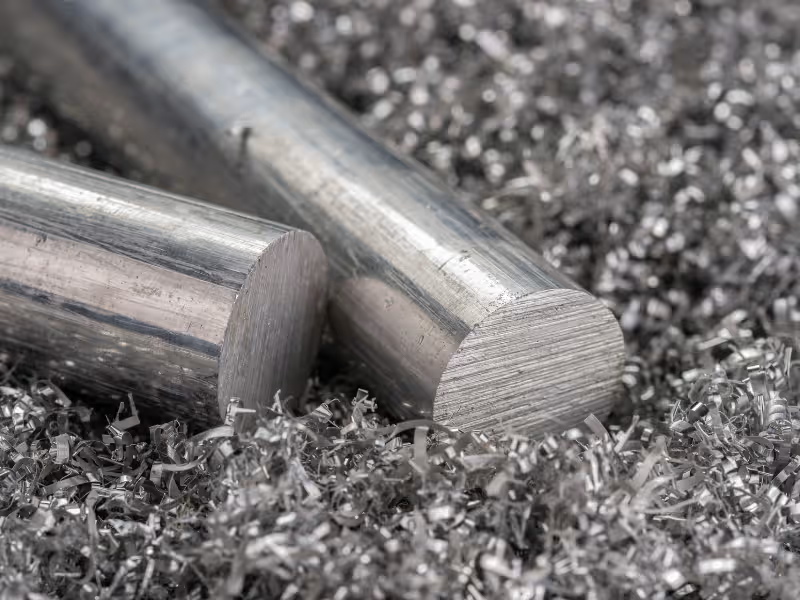
The short answer is no: aluminium is not magnetic in everyday use.
Press a fridge magnet against an aluminium window frame, soda can, or baking tray, and it will slide right off. In everyday terms, a metal is “magnetic” if a magnet sticks to it and stays there. Iron and steel pass that test easily; aluminium does not.
Strictly speaking, aluminium is paramagnetic. That means it responds very weakly to a magnetic field, but the effect is so small that it is unnoticeable without specialized instruments. In ordinary situations, aluminium simply does not behave like a magnetic metal.
The interesting part comes when the magnet moves or the magnetic field changes. Under those conditions, aluminium can generate swirling electric currents called eddy currents. Those currents create their own magnetic effects, which push back against the moving magnet. That is why aluminium can sometimes seem to interact with magnets in surprising ways, even though a magnet will not stick to it.
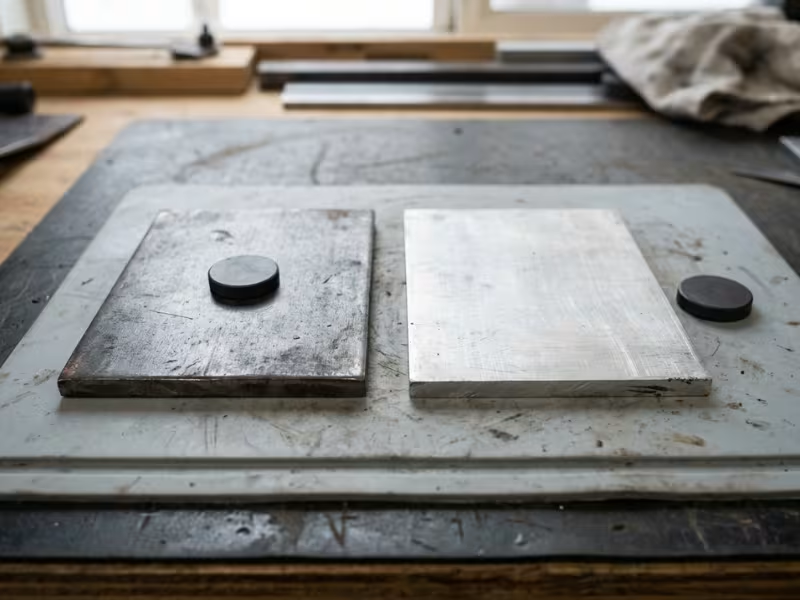
Why Iron Is Magnetic but Aluminium Isn’t
Iron and aluminium sit side by side in kitchens, cars, and toolboxes. Yet a magnet treats them very differently. The reason comes down to tiny particles inside every atom.
It All Starts With Electrons
Electrons explain the whole story, so let’s start there.
Every electron acts like a very small magnet. In most atoms, electrons pair up, and their magnetic effects cancel out. Some atoms have unpaired electrons, so a little magnetism is left over.
Iron has several unpaired electrons. Even more important, neighboring iron atoms “agree” with each other. Their tiny magnets line up in the same direction and form groups called magnetic domains. When you bring a magnet close, those domains swing into line with it. Iron then pulls back hard. That strong, organized response is called ferromagnetism. Iron, most steels, nickel, and cobalt behave this way.
Aluminium works differently. Its electrons do respond to a magnetic field, but only a tiny bit. Aluminium atoms never form domains. Heat keeps them jostling, so any alignment stays weak and disappears once you remove the magnet. Scientists call this paramagnetism. In practice, iron’s pull can be thousands of times stronger, or more.
I often explain it with a crowd. Iron is a marching band. Everyone moves in step, and the effect is powerful. Aluminium is a busy train station. A few people drift the same way, but the crowd never acts as one.
A third group, called diamagnetic metals, includes copper, silver, and gold. These metals push back against a magnet very slightly. Like aluminium, you will never feel it in everyday handling.
A Quick Side-by-Side Comparison
This table sums up the three types in one view.
|
Type |
Example metals |
What a fridge magnet does |
Keeps magnetism afterward? |
|---|---|---|---|
|
Ferromagnetic |
Iron, carbon steel, nickel, cobalt |
Sticks firmly |
Yes, it can |
|
Paramagnetic |
Aluminium, titanium, magnesium |
Nothing you can feel |
No |
|
Diamagnetic |
Copper, silver, gold |
Nothing you can feel |
No |
So the answer to “why” is simple. A magnet grips iron because iron’s domains line up and pull back as a team. Aluminium has no domains to line up. The magnet finds nothing strong enough to hold onto, so it falls away.
Why a Moving Magnet Behaves Differently Around Aluminium
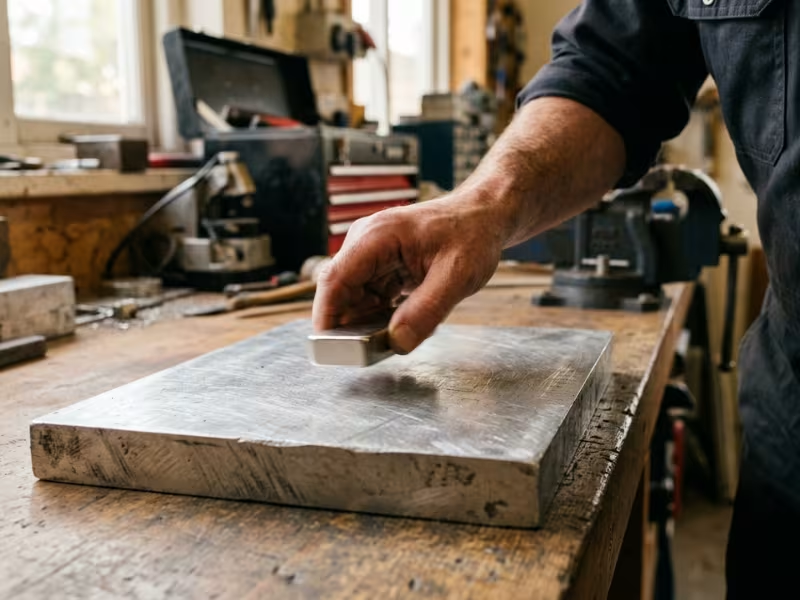
Here’s a quick demo I like to show people. Hold a strong magnet still against a thick aluminium plate, and nothing happens. Now sweep the magnet quickly across the surface. You’ll feel a soft drag, almost like moving your hand through thin syrup.
Same magnet, same metal. Only the motion changed. That drag explains the whole puzzle.
Motion stirs up electric currents. Aluminium carries electricity very well. When a magnetic field moves across it, the changing field pushes the metal’s free electrons into swirling loops. We call these loops eddy currents, after the little whirlpools you see in a stream.
Those currents build their own magnetic field. Any flowing current creates a magnetic field. Eddy currents always create a field that opposes the change that made them. If the magnet moves closer, the metal pushes it away. If the magnet pulls away, the metal tugs it back. Physicists call this Lenz’s law. I think of the aluminium as stubborn. It doesn’t care where the magnet is. It only resists the magnet’s movement.
This clears up the three questions I hear most often:
- Why doesn’t a magnet stick to aluminium? A still magnet creates no change, so no currents form. Aluminium has no domains to grab either, so nothing holds on.
- Why does aluminium seem to push back? Motion creates eddy currents, and their field fights that motion. The faster you move, the harder the metal resists.
- Why does the falling magnet demo work? Gravity keeps the magnet moving, so the currents keep pushing against it.
The effect fades almost instantly once the motion stops. That’s why aluminium can feel magnetic one second and completely indifferent the next.
If you want to feel this yourself, use a neodymium magnet and aluminium at least a few millimeters thick. A weak fridge magnet or thin foil won’t give you much to notice.
The clearest way to see this braking in action is a simple tube experiment. You can set it up at home for a few dollars.
The Falling Magnet in an Aluminium Tube
Take a strong neodymium magnet and drop it through a plastic tube about three feet long. It falls through in a fraction of a second, just like a pebble.
Now drop the same magnet through an aluminium tube of the same length. It drifts down slowly and can take several seconds to come out the bottom. The first time people see this, they often check the tube for something hidden inside.
The aluminium hasn’t turned into a magnet. The magnet doesn’t cling to the walls. After the test, the tube won’t pick up a single paper clip.
Eddy currents do all the work. As the magnet falls, its field sweeps past each ring of metal in the tube. Below the magnet, the field grows stronger, and the currents there push upward. Above the magnet, the field weakens, and the currents there pull upward. Both act like brakes. The magnet soon settles at a steady, slow speed where the braking force matches gravity. The lost energy turns into a tiny amount of heat in the tube.
The plastic tube can’t do any of this. Plastic doesn’t conduct electricity, so no currents form and nothing slows the magnet down.
For the most dramatic result, choose a thick-walled tube with a snug fit around the magnet. A copper tube slows the magnet even more because copper conducts better than aluminium.

How to Tell if a Metal Is Aluminium
People often hand me a mystery bracket or pan and ask, “Is this aluminium?” I rarely need a lab to answer. A few quick checks, done in the right order, usually settle it in under a minute. Start with the easiest test, and only move on if the answer stays unclear.
Start With a Magnet
A magnet is a great first filter because it gives you a clear no faster than any other tool.
If the magnet grabs firmly and stays put, you are almost certainly holding iron or steel. Aluminium never behaves that way, so you can rule it out on the spot.
If the magnet doesn’t stick at all, the metal could be aluminium. But it could also be copper, brass, or a non-magnetic stainless steel such as the 304 grade used in many sinks. So a “no stick” result narrows the list. It doesn’t finish the job.
One tip: test a few spots. Hidden screws, inserts, or steel cores can fool you if you only check one place.
Try a Fast-Sweep Drag Test
Next, grab a strong neodymium magnet. Hold it just above the surface and sweep it quickly back and forth. On aluminium, you should feel a slight, smooth resistance, as if the metal is gently dragging its feet.
This test helps separate good conductors from poor ones. Stainless steel barely reacts, so you’ll feel almost nothing. Copper drags even harder than aluminium, so watch for its reddish color too.
Be realistic with this test. A weak fridge magnet won’t give you much, and thin sheet or foil may feel like nothing at all. Thick plate, bar, or tube gives the clearest result.
Check Weight, Color, and Surface
Now let your hands and eyes finish the job.
- Weight: Aluminium weighs about one-third as much as steel. If a part looks solid but feels surprisingly light, that’s a strong clue.
- Color: Aluminium usually shows a soft, dull silver-gray. Stainless steel looks brighter and slightly darker. Copper looks reddish, and brass looks yellow-gold.
- Corrosion: Aluminium doesn’t rust red. Over time, it forms a chalky white or gray film. Orange-brown rust points to iron or steel.
- Scratch: Aluminium is fairly soft. A steel key can scratch it easily and reveal bright, shiny metal underneath.
When a part fails the stick test, drags lightly, feels light, and shows a dull silver finish, you can call it aluminium with real confidence.
Aluminium vs Other Metals Near a Magnet
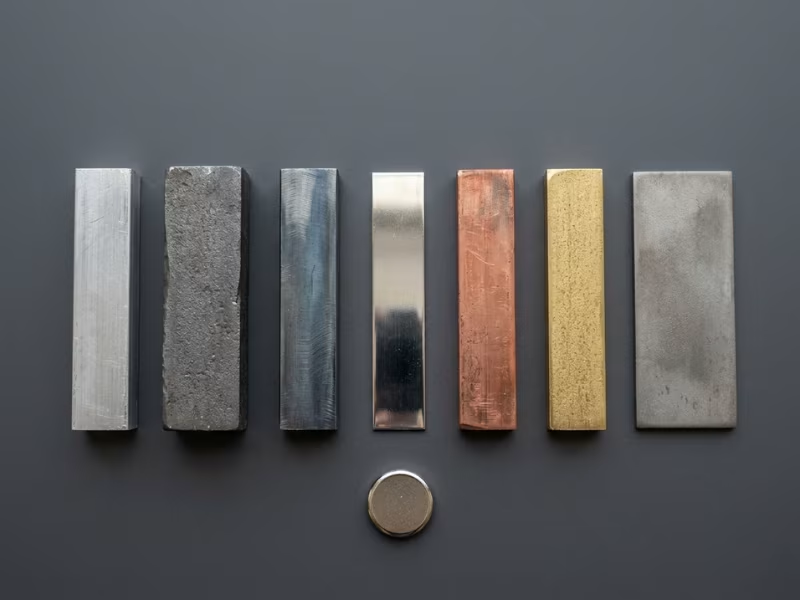
Most mix-ups I see come down to one bad assumption: “If it’s metal, a magnet should grab it.” In reality, only a small group of metals truly sticks. Others ignore a still magnet but react when it moves.
This table shows how seven common metals compare.
|
Material |
Sticks to a magnet? |
Reacts to a moving magnet? |
Can become a permanent magnet? |
|---|---|---|---|
|
Aluminium |
No |
Yes, clear drag |
No |
|
Iron |
Yes, strongly |
Yes, but the pull dominates |
Weakly, and only for a while |
|
Carbon steel |
Yes, strongly |
Yes, but the pull dominates |
Yes, tools often pick it up |
|
Stainless steel |
Depends on grade |
Very faintly |
Some 400-series grades can |
|
Copper |
No |
Yes, strongest drag here |
No |
|
Brass |
No |
Yes, mild drag |
No |
|
Titanium |
No |
Barely noticeable |
No |
A few rows deserve a closer look.
Stainless steel causes the most confusion. Grades like 304 and 316 usually don’t stick, or only stick weakly after bending or cutting. Grades like 430, common in appliance panels and cheaper cutlery, grab a magnet just like regular steel. So “Is stainless steel magnetic?” has no single answer. You have to know the grade.
Copper surprises people too. It won’t hold a magnet. But it conducts electricity so well that a moving magnet slows down near copper even more than near aluminium.
Titanium is the quiet one. Like aluminium, it ignores a still magnet. It conducts poorly, though, so you’ll feel almost no drag. Its weight, between aluminium and steel, often gives it away.
Brass sits in the middle. It doesn’t stick, and its drag feels weaker than copper’s. A magnet that grabs a “brass” part usually means it has steel plating or a steel core.
Read the table across, not just down. The stick test separates iron and steel from everything else. The moving-magnet test then helps you sort the rest.
Common Situations That Confuse People
Even after people learn the basic rule, a few everyday moments still trip them up. These are the four I get asked about most.
Why a Magnet May Stick to Part of a Can
Someone presses a magnet to a can, and it clicks into place. Naturally, they wonder if aluminium is magnetic after all.
In most cases, the magnet has found steel, not aluminium. Many food cans use a steel body with a thin tin coating. Some beverage cans in certain markets also use steel. Other cans combine metals, such as a steel body with an aluminium lid.
So if your magnet sticks, the can probably isn’t all aluminium. Test the side, the top, and the bottom separately. A standard aluminium soda can should ignore the magnet everywhere you check.
Is Aluminium Foil Magnetic?
No. A magnet won’t hold a sheet of foil, and foil won’t cling to your fridge door.
You might notice a faint effect with a strong neodymium magnet. Sweep it quickly over a loose piece of foil, and the foil may twitch or slide a little. That comes from brief eddy currents, not magnetism. Because foil is so thin, the effect stays small and easy to miss.
Why Some Stainless Steel Does Not Act the Way You Expect
Stainless steel causes more “it should stick” moments than any other metal in the house.
The difference comes from the steel’s internal structure:
- 300-series (like 304 and 316): Added nickel changes how the atoms arrange themselves. This blocks the domain alignment that makes iron magnetic, so a magnet barely reacts. Bending or cutting can create small magnetic spots, though.
- 400-series (like 430): These grades keep an iron-like structure, so a magnet grabs them firmly.
Your sink may ignore a magnet while your fridge panel holds one. Both are “stainless.” They are simply different grades.
Does Aluminium Block Magnetic Fields?
This one causes real mistakes in projects, so it’s worth getting right.
Aluminium works well as a shield against radio waves and many types of electrical interference. The changing fields drive currents in the metal, and those currents cancel much of the signal. That’s why engineers often use aluminium for electronics housings.
A steady magnetic field is a different story. A fridge magnet’s field passes straight through aluminium. Without any change in the field, no currents form, and nothing stops it.
To redirect a static magnetic field, you need ferromagnetic materials such as steel or special nickel-iron alloys. They pull the field lines into themselves and guide them around whatever you want to protect.
Where This Matters in Real Life
Aluminium’s odd relationship with magnets isn’t just a classroom curiosity. It quietly shapes how we recycle cans, cook dinner, and design equipment that works near powerful magnets. These three examples show it most clearly.
Recycling and Scrap Sorting
Every recycling plant faces the same messy pile: plastic, glass, paper, and metal all jumbled together. A big magnet pulls out the iron and steel first. That part is easy.
Aluminium needs a smarter trick. Plants use eddy current separators, which spin a drum of magnets at very high speed under a moving belt. That rapidly changing field stirs up eddy currents in any conductive metal passing over it. Those currents push back, and the metal gets flung forward off the belt.
Aluminium jumps especially well. It conducts electricity strongly but weighs very little, so it flies farther than heavier metals. Plastic and glass simply drop off the end. Your empty soda can likely took that leap on its way to becoming a new one.

Induction Cooktops
Put a plain aluminium pan on an induction cooktop, and you’ll often get a blinking light and a cold pan.
An induction burner creates a rapidly changing magnetic field. It needs a pan that grabs that field and turns it into heat. Iron and magnetic steel do this very well. Aluminium conducts electricity too easily and has no magnetic grip, so the burner can’t couple with it efficiently. Most cooktops sense this and refuse to heat at all.
That’s why “induction-ready” aluminium pans usually have a steel disc bonded to the base. The steel does the heating, and the aluminium spreads that heat evenly. Before you buy, press a magnet to the bottom. If it sticks firmly, the pan should work.
MRI, Sensors, and Non-Ferromagnetic Applications
An MRI magnet can yank a steel wrench across a room with dangerous force. Aluminium won’t be pulled that way, which makes it useful near strong fields.
Don’t call it automatically safe, though. Aluminium still conducts electricity. It can warm up from the scanner’s radio waves, resist fast movement through the field, and blur images. That’s why hospitals use only items tested and labeled for MRI use. Never assume an aluminium object is fine.
Sensors show the same nuance. Some proximity sensors detect aluminium at a shorter range than steel, while magnet-based sensors may miss it entirely. In any real design, match the material to the specific sensor and environment.
FAQ
Is aluminium magnetic?
No, not in everyday terms. A fridge magnet won’t stick to aluminium, and aluminium won’t pick up paper clips. Technically, aluminium is paramagnetic, so it responds very weakly to a magnetic field. That response is far too faint for you to feel. You’ll only notice aluminium interacting with a magnet when the magnet moves.
Is aluminum foil magnetic?
No. Foil won’t hold a magnet or cling to your fridge door. If you sweep a strong neodymium magnet quickly over a loose sheet, the foil may twitch or slide a little. Brief eddy currents cause that movement, not magnetism. Foil is very thin, so the effect stays weak and stops the moment the magnet does.
Why does a magnet fall slowly through an aluminium tube?
As the magnet falls, its field keeps changing inside the tube. That change drives eddy currents through the aluminium walls. These currents create their own magnetic field, which pushes against the magnet’s motion. The result works like a soft brake, so the magnet drifts down at a slow, steady speed. A plastic tube carries no current, so the magnet drops straight through.
Can a magnet stick to an aluminium can?
Not to a true aluminium can. If a magnet sticks, you’ve most likely found steel. Many food cans use steel bodies, and some beverage cans in certain markets do too. Other cans mix metals, such as a steel body with an aluminium lid. Test the side, top, and bottom separately to find out which part grabs the magnet.
Is stainless steel magnetic?
It depends on the grade. The 400 series, such as 430, keeps an iron-like structure, so a magnet holds it firmly. The 300 series, such as 304 and 316, usually shows little or no pull because nickel changes its internal structure. Bending or cutting can make parts of 300-series steel slightly magnetic, so check more than one spot.
Can aluminium become a permanent magnet?
No. Aluminium has no magnetic domains to line up and lock in place. A strong magnet can’t “charge” it the way it can magnetize a steel screwdriver. Any tiny response vanishes once you remove the field. You will find aluminium inside Alnico magnets, but in that alloy, iron and cobalt provide the magnetism, not the aluminium.
Does aluminium block magnetic fields?
Only some of them. Aluminium shields well against radio waves and other fast-changing interference, because those fields drive currents that cancel much of the signal. A steady magnetic field, like a fridge magnet’s, passes straight through it. To redirect a static field, you need ferromagnetic materials such as steel or nickel-iron alloys.
Is aluminium safe around MRI machines?
It’s safer than steel, but never safe by default. An MRI magnet won’t yank aluminium across the room the way it pulls iron. Aluminium still conducts electricity, though. It can heat up from the scanner’s radio waves, resist fast movement, and distort images. Always follow the facility’s rules. Bring in only items tested and labeled MR Safe or MR Conditional.
A Simple Rule for Your Next Magnet Test
Aluminium isn’t magnetic in any way that matters in daily life. Hold a magnet still against it, and the magnet won’t stick. That one test answers most questions.
Motion changes the picture. When a magnet moves near aluminium, eddy currents form and push back against that movement. That’s why a magnet crawls through an aluminium tube and why recycling plants can fling cans off a belt. The metal resists the motion, not the magnet itself.
So keep this rule handy. If a magnet grips firmly, you’re almost certainly holding iron or steel. If it doesn’t stick but drags when you sweep it fast, you’re likely looking at aluminium or another good conductor. Follow that order, and most mystery metals stop being a mystery.