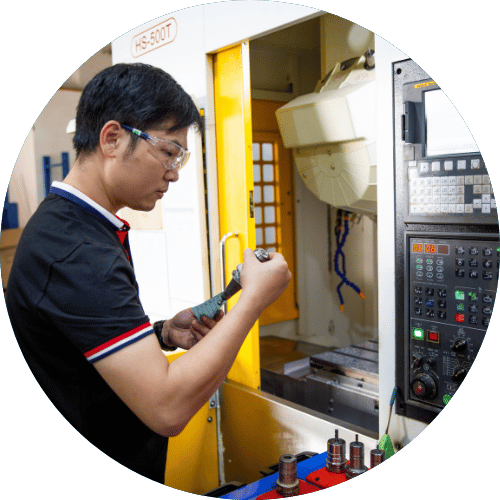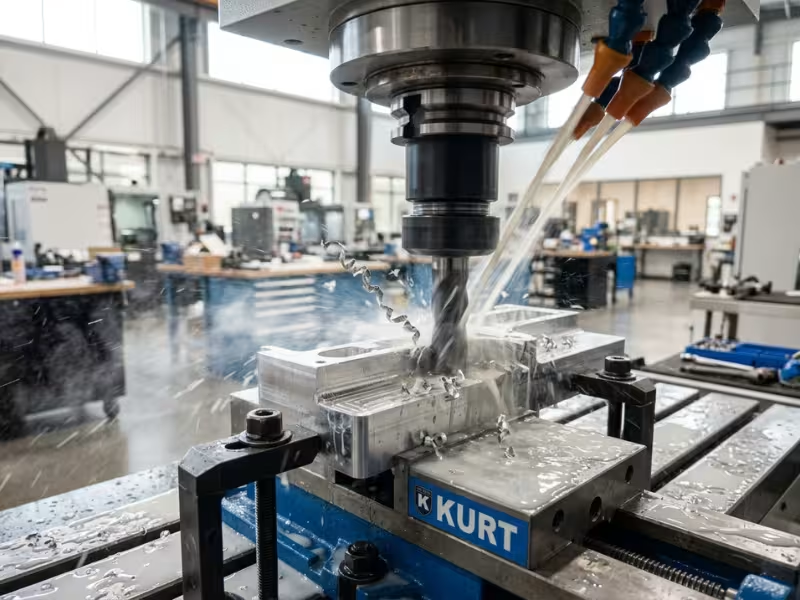
Picture two parts on a bench. One is a palm-sized bracket with a tolerance of ±0.0005 in. The other is a large plate with a tolerance of ±0.010 in.
Most buyers assume the large plate is harder to machine. In many cases, it is not. The small bracket often causes more trouble, takes more time, and costs more.
That’s the real issue with CNC part size. You can’t judge it by machine capacity alone. A part may fit inside the machine and still be difficult to make well.
What matters is the combination of size and tolerance. Small parts aren’t always cheap. Large parts aren’t always the hardest.
This article helps you judge three things: whether a part fits standard CNC equipment, whether its tolerance is realistic, and which design choices quickly raise machining cost.
What Really Determines CNC Part Size
When someone asks how big their part can be, they’re usually picturing one thing: length, width, and height. That’s only part of the story. On the shop floor, I look at part size in three layers, and each one changes how a job runs.
Start with the overall envelope. This is the outer box your part lives in. It tells me whether your part fits the machine and how I need to grip it. Simple, but it’s just the first check.
Next comes feature size. A part can fit the machine easily and still fight me at the small stuff. Think tiny holes, thin walls, or a narrow slot buried deep in the block. I have to reach those features with a tool strong enough not to break and small enough to fit. That balance often matters more than the outer dimensions.
Then there’s size against tolerance and stiffness. Here’s where parts get sneaky. A long, thin piece flexes when the cutter pushes on it. A big flat plate can spring or warp as I remove material. So the real question isn’t “how big is it?” It’s “can this shape hold its shape while I cut it?”
That last layer trips up the most people. Reachable depth, minimum feature size, and how a part deforms under cutting all shape what I can deliver. So when you think about part size, think in all three layers. It’ll save you surprises when the quote comes back.
What Sets the Maximum Size of a CNC Machined Part
The most common question I get is simple: how big can you make it? The honest answer takes a little unpacking, because the machine’s spec sheet rarely tells the full story.
Machine Travel vs. Usable Work Envelope
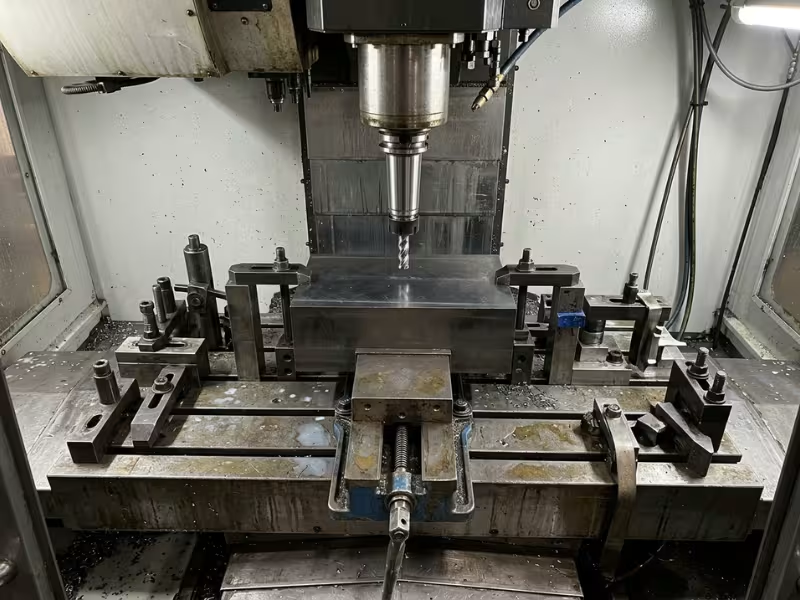
Machine travel is the number on the brochure. Usable work envelope is what you actually get once the part is clamped down and ready to cut.
Those two numbers are never the same. Travel measures how far the axes move. It says nothing about the room your fixture, workpiece, and tool all need at once.
Every clamp and vise eats into the work area. Your part has to sit on something, and that something takes up travel. Then there’s the tool. A long toolholder and the spindle nose need vertical room above the part. That’s Z-clearance, and it’s the dimension people misjudge most.
I’ve seen parts fit the X and Y travel perfectly, then fail on Z. Once you add stock height, a chuck, and a tool that reaches deep pockets, the ceiling drops fast.
|
Factor |
Why it reduces usable size |
|---|---|
|
Fixtures and clamps |
Take up travel and block tool paths around edges |
|
Toolholder length |
Needs clearance above the part, cutting into Z |
|
Z-axis stack-up |
Stock, workholding, and tool combine to eat vertical room |
|
Tool access angle |
Reaching a feature may push the part off-center or up |
Why a “Fitting” Part Can Still Be Hard
Fitting inside the envelope doesn’t mean easy. Geometry decides that. A tall part might fit but leave no room for a tool to reach its base. A wide plate might fit but flex the moment the cutter touches it.
And here’s a myth worth killing: 5-axis machines don’t automatically handle bigger parts. They give you better angles and fewer setups, not more travel. Sometimes their work zones are smaller.
When You Need a Large-Format Shop
Push past standard machine limits, and your options narrow quickly. Fewer shops own large-format equipment, so quotes get scarce. That scarcity shows up in your timeline and your bill. Lead times stretch, and minimum charges climb.
If your part flirts with those limits, ask early whether trimming a dimension keeps it in the standard range. For big turned work, a shop set up for large diameter parts can be the smarter route. That one question can save you weeks and real money.
Minimum Part Size and Minimum Feature Limits
Going small sounds like it should be easier. It rarely is. When parts and features shrink, the trouble isn’t the size on paper. It’s holding the part, reaching the feature, and keeping tiny tools alive.
The Smallest Features I Trust in Production
I can cut fine details every day, but “possible” and “reliable in production” aren’t the same thing. A tiny cutter is fragile. It breaks fast and chatters when it spins hard. Chatter leaves marks and blows your tolerance. So I aim for features a sturdy tool can handle at production speed, not a hero-run one-off.
Wall Thickness and Aspect Ratio
Thin walls are where small parts go wrong. A wall that looks fine in CAD can flex, ring, or crack under the cutter. Aspect ratio matters just as much. Push a feature too deep for its width, and the tool loses stiffness. That means slower cutting, more deflection, and worse finish.
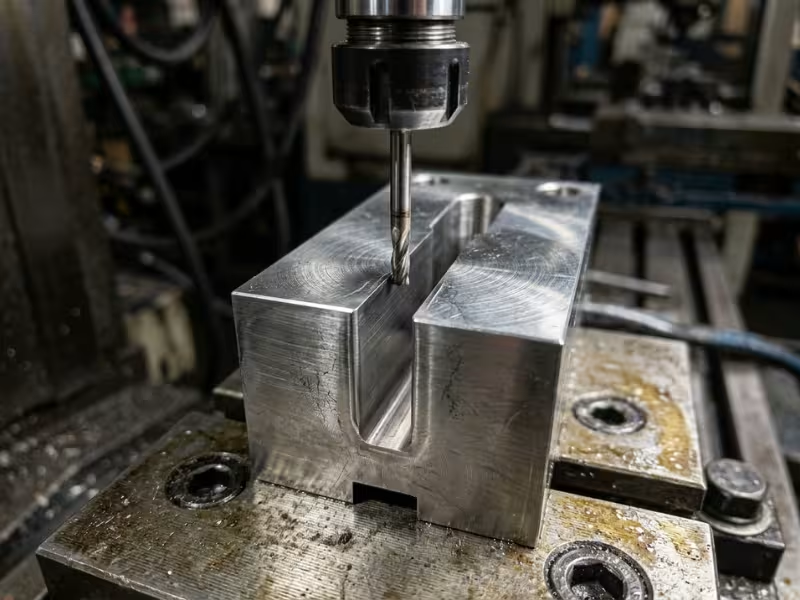
The rule I live by: keep depth reasonable against width, and keep walls thick enough to stand up to the tool.
|
Feature type |
Practical rule of thumb |
What happens if you push it too far |
|---|---|---|
|
Thin walls |
Keep walls thick enough to resist tool pressure |
Walls flex, chatter, and crack |
|
Small holes |
Depth stays near 4–5× the hole diameter |
Drills wander, break, or leave rough walls |
|
Deep pockets |
Depth stays close to 3–4× tool diameter |
Tool deflects, finish suffers, scrap climbs |
|
Tiny features |
Match feature to a tool strong enough for production |
Tools chatter and break, quotes climb |
When a Small Part Belongs Somewhere Else
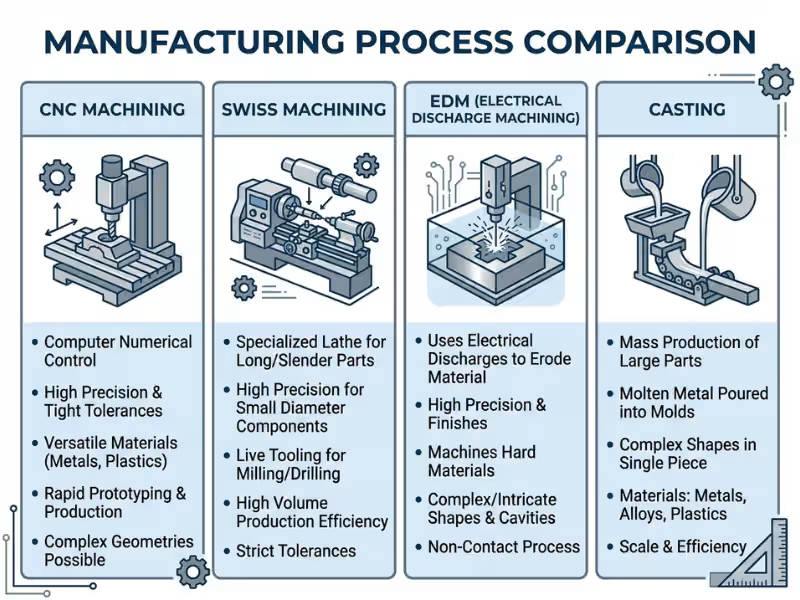
Sometimes the smart move is admitting CNC isn’t the right home for the part. Very small, slender turned parts often run better on Swiss machining. The guide bushing supports the work right where the tool cuts, so slim parts stay steady.
Sharp internal corners, deep narrow slots, or features too fine to reach? That’s EDM territory. It burns the shape without pushing on the part at all. If your part is too small to grip securely, tell me early. Picking the right process beats forcing a tiny job through the wrong machine.
Tolerances: What CNC Machining Can Really Hold
Ask “how accurate can you make it?” and the true answer is “it depends.” Not on the machine alone, but on the feature, the material, and how tight you really need to be.
Standard, Precision, and High-Precision
Most parts don’t need heroics. Standard precision covers general fits, brackets, and housings where a little play is fine. Precision tightens things up for parts that mate, slide, or seal. High-precision is for the critical stuff, where a tiny slip means the part fails.
Here’s the trap: my default quote assumes standard precision. If you need tighter and don’t say so, we’ll both be surprised later.
|
Tolerance range |
Typical meaning |
What it usually requires |
|---|---|---|
|
Standard (±0.005 in / ±0.13 mm) |
General fits, non-critical parts |
Normal cutting, standard inspection |
|
Precision (±0.001 in / ±0.025 mm) |
Mating and moving features |
Careful setup, sharp tooling, in-process checks |
|
High-precision (±0.0005 in / ±0.013 mm or tighter) |
Critical fits and seals |
Grinding or lapping, controlled inspection, extra measurement |
Why the Feature Matters More Than the Machine
The same tolerance number lands very differently depending on where you put it. Hold ±0.001 in on a short, chunky face? Easy. Hold that same ±0.001 in on a tiny deep hole, a thin wall, or a long slender part? That’s a whole different job.
Small holes fight back because the tool is weak. Thin walls flex and spring. Long parts sag and warp. And heat-sensitive materials grow and shrink as they cut, so the number moves while I’m chasing it. This is why material choice matters so much. Softer metals cut cleaner, while tougher alloys handled through titanium CNC machining demand slower speeds and tighter heat control.
What Tight Tolerance Really Costs You
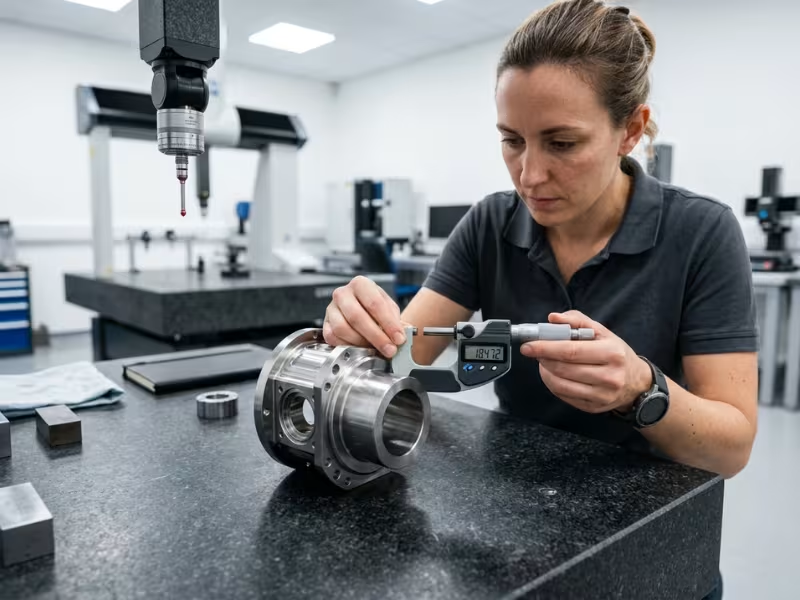
Push into high-precision, and the process itself changes. Cutting alone won’t get you there. I start reaching for grinding or lapping to nail the last few tenths. Inspection moves to a temperature-controlled room, because a part measured warm reads wrong when it cools. I also check parts mid-cut, not just at the end, to catch drift before it ruins the piece.
All of that adds time and cost. Worth it on a sealing face. Wasteful on a corner nobody touches. So use tight tolerance only on the features that actually function that way. Spend your accuracy where the part earns it.
Why Part Size and Tolerance Interact
Here’s the mistake I see most: people treat size and tolerance as two separate boxes to check. On the shop floor, they’re never separate. They pull on each other the whole time I’m cutting.
Big parts have their own enemies. Heat is the first one. As I cut, the part warms up and grows, then shrinks as it cools. On a large piece, that swing is big enough to blow a tight number. Vibration piles on too, and how I support the part decides whether it stays put or shivers under the tool.
Small parts fight me from the other direction. Clamp them too hard, and they distort right in the fixture. The tolerance was fine until the vise squeezed it out of shape. Tool size matters more here as well, since a tiny feature needs a tiny, fragile cutter. And local stiffness drops fast, so a thin section flexes the moment the tool touches it.
Now put the same tolerance on both. Say ±0.001 in. On a small, solid block, that’s a comfortable ask. On a large plate that warps with heat, or a slender part that springs under clamping, that same number turns into a real fight. The value on the drawing didn’t change. The difficulty did.
That’s why “big or small?” is the wrong question. The question I actually want you to ask is this: at this size, is this tolerance realistic? So before you lock a tolerance, picture your part heating up, getting clamped, and taking tool pressure. If it can hold steady through all three, your number is safe. If not, we should talk before the quote.
How Part Size and Tolerance Drive CNC Machining Cost
When a quote lands higher than expected, the size of the part usually gets the blame. But size is rarely the real reason. Let me walk you through what actually moves the number.
Material and Stock Cost
Every part starts as a block or bar, and I have to buy more material than the finished shape. That extra is the stock allowance for clamping and cutting. Bigger parts need bigger stock, so pricey metals hurt fast. And I can’t shave the excess to zero. Some waste is baked in.
Machining Time and Toolpath Length
This is the driver people underrate the most. Machine time often matters more than the part’s raw size. A part covered in fine detail takes longer to cut than a big, simple block. More features mean a longer toolpath, and every extra minute under the spindle shows up in your bill. Tight tolerance slows me down too, since holding precision means lighter cuts and more passes.
Setup, Fixturing, and Programming
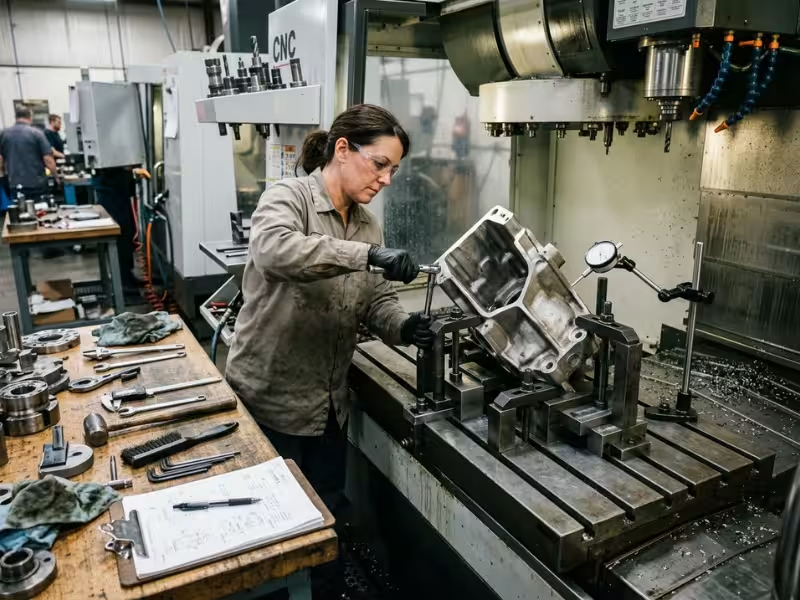
Before I make a single chip, there’s work you never see. I program the job, build or pick the fixture, and dial in each setup. That cost is fixed. It’s the same whether I make one part or fifty. So on a small run, setup can dominate the whole price. Awkward parts make it worse, since a shape that needs a custom fixture or five sides of access piles on setups.
Inspection, Scrap Risk, and Low-Volume Penalty
Tight parts get measured more, and that inspection time gets priced in. Scrap risk matters just as much. If a part is expensive to cut and one slip ruins it late, I have to price that gamble into the job. And low volume stings. Spread a big setup over one part, and each piece carries the full cost.
|
Cost driver |
Why it raises cost |
Typical trigger |
|---|---|---|
|
Material and stock |
Larger stock and costly alloys mean more spend and waste |
Big envelope, exotic metals, thick block |
|
Machining time |
Longer toolpaths and lighter cuts eat spindle hours |
Dense features, tight tolerance, complex shape |
|
Setup and fixturing |
Fixed cost hits hard on small runs; odd shapes need custom holding |
Multiple setups, five-sided work, custom fixtures |
|
Inspection and scrap |
Tight parts need more measurement; late failures get priced in |
Critical tolerances, expensive parts, high scrap risk |
|
Low volume |
Setup spread over few parts inflates each one |
One-offs and small batches |
Here’s the thing to remember: a part does not become expensive just because it is large. It becomes expensive when its size forces slower cutting, special workholding, tighter inspection, or more setups. So before you assume a big part costs more, ask which of these drivers your design is triggering.
Design Rules That Keep CNC Parts Manufacturable
You’ve seen how size, tolerance, and cost tangle together. So here’s the payoff: a handful of design moves that make your quote better instead of worse.
Match your size to a common machine. Most shops run standard-sized equipment. Keep your part inside that range, and a dozen shops can bid your job. Push past it, and you’re hunting for the rare large-format shop that charges a premium. If your part sits just over the line, ask whether trimming one dimension pulls it back into the crowd.
Tighten tolerance only where the part works that way. I get drawings with one tight tolerance slapped across every feature. That forces inspection where function doesn’t need it, and you pay for accuracy on corners nobody touches. Mark the sealing faces and mating bores tight. Let the rest breathe.
Keep walls, depth, and corners realistic. Thin walls flex under the tool and chatter. Deep narrow features make cutters wander. And a round tool can’t cut a square inside corner, so add a radius that matches a real tool. These aren’t nitpicks. They decide whether I cut clean or fight your part all day.
Design for workholding and tool access. A part has to be gripped and reached, not just drawn. A deep closed pocket is harder than an open pocket cut from the side, because the tool has room to breathe when it comes in from the edge. Most of this comes down to smart CNC milling planning before a single chip flies.
Cut setups before you ask for a lower quote. This is the big one. Five-sided machining sounds clean in CAD, but it often adds setups in the shop. Every time I flip and re-clamp the part, I add time, cost, and a chance to lose alignment. Group features onto fewer faces, and your price drops on its own.
|
Design choice |
Why shops like it |
What happens if ignored |
|---|---|---|
|
Fit a common machine size |
Many shops can bid, prices stay competitive |
Few shops qualify, quotes climb, lead times stretch |
|
Tolerance only where needed |
Inspection stays fast and cheap |
You pay for precision on features that don’t use it |
|
Realistic walls, depth, radius |
Clean cuts, less scrap, steady finish |
Chatter, tool deflection, cracked walls, rework |
|
Open features for tool access |
Simple fixturing, faster cutting |
Deep closed pockets slow cutting and raise scrap risk |
|
Fewer setups |
Less handling, tighter alignment, lower cost |
Extra flips add time, cost, and stack-up error |
Notice the pattern. Each rule either widens your pool of shops or shortens my time at the machine. Both show up as a friendlier number on your quote. So before you release a drawing, walk it through these five checks.
When CNC Is the Wrong Process
I’d rather lose a job than force your part through the wrong machine. Sometimes CNC just isn’t the answer, and a good engineer says so early. Here are the four times I steer clients elsewhere.
Too small or too slender. When a turned part gets tiny and thin, CNC struggles to hold it steady. Swiss machining supports the work right at the cut, so slim parts stay true.
Too deep, too narrow, or too sharp inside. A tool can’t reach a deep slit or cut a truly square internal corner. EDM and wire EDM burn the shape without pushing on the part, so those features come out clean.
Too large for standard machines. Once your part outgrows common equipment, few shops can even bid it. Large-format machining or splitting the part into a welded assembly often wins on both price and lead time.
High volume, simple shape. Cutting thousands of basic parts one at a time wastes money. Molding, stamping, or casting makes them faster and cheaper once the tooling pays off.
|
Situation |
Better option |
Why |
|---|---|---|
|
Tiny, slender parts |
Swiss machining |
Supports slim work at the cut for stability |
|
Deep, narrow, sharp internal features |
EDM or wire EDM |
Shapes without tool pressure or reach limits |
|
Too big for standard machines |
Large-format or split assembly |
Fewer shop limits, better cost and timing |
|
High volume, simple geometry |
Molding, stamping, casting |
Far cheaper per part at scale |
So before you commit, ask whether CNC truly fits. When it does, a full-service CNC metal machining partner can guide the material and process choice with you.
Practical FAQ
What is the maximum size a CNC machine can cut?
It depends on the machine’s usable work envelope, not the travel numbers on the spec sheet. Once you add stock, fixtures, and tool clearance, the real space shrinks. Standard shops handle plenty of everyday parts. Go beyond that, and you’ll need a large-format shop.
What tolerance does CNC machining typically hold?
Standard work holds around ±0.005 in without fuss. Ask for precision, and I can hit ±0.001 in on the right features. High-precision pushes to ±0.0005 in or tighter, but that usually means grinding, lapping, and controlled inspection. The feature carrying the tolerance matters more than the machine.
Does part size affect machining cost?
Yes, but not the way most people think. A large part isn’t automatically pricey. Cost climbs when size forces slower cutting, special workholding, extra setups, or tighter inspection. A big, simple block can cost less than a small part packed with fine detail.
What is the smallest feature a CNC machine can produce?
I can cut very fine details, but “possible” and “reliable in production” aren’t the same. Tiny tools break and chatter when they run fast. So I aim for features a sturdy tool can handle at production speed. When features get too fine, Swiss machining or EDM often does a cleaner job.
Can a part be larger than a machine’s work envelope?
Not in one piece on that machine. You have two real options. Move the job to a large-format shop with bigger travel, or split the part into sections and join them, often by welding. Splitting can save both money and time when the part barely overshoots standard limits.
How do I reduce machining cost without losing critical tolerance?
Spend your accuracy where the part earns it. Mark the sealing faces and mating bores tight, then let everything else breathe. Then cut setups, since every flip and re-clamp adds time and cost. Keep the part inside a common machine size too, so more shops can bid. Best move of all: send your drawing and ask which features are driving the quote.
Wrapping It Up
Let’s boil this down. Size decides whether your part fits the machine. Tolerance decides how hard it is to cut. And cost? That comes from the two working together. Get one right and ignore the other, and you’ll pay for it in the quote.
So here’s what I want you to do before you release that drawing:
- Size your part to a common machine envelope. More shops can bid, and your price stays fair.
- Tighten tolerance only where the part functions that way. Let the rest breathe.
- Ask the shop which features are driving the quote before you commit.
Do those three things, and you’ll design smarter parts every time.