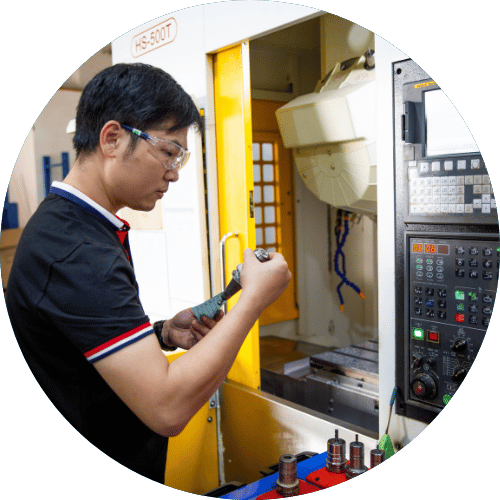
CNC (Computer Numerical Control) maching has fundamentally transformed production environments by delivering superior accuracy, rapid cycle times, and remarkable adaptability. Ranges extend from rigid 3-axis configurations to dynamic 5-axis architectures, accommodating sectors as diverse as aerospace, automotive, and medical device manufacturing. Within modern CNC discourse, a persisting question is the relative merit of 4-axis versus 5-axis machining. Mastering the distinctions emerges as a prerequisite for the prudent procurement of advanced processing equipment. This review systematically examines the kinematic capabilities, operational advantages, and strategic applications of 4-axis and 5-axis machines, thereby furnishing the engineering manager with the expertise needed to select the most suitable manufacturing architecture.
Understanding CNC Machines
What is a CNC Machine?
A Computer Numerical Control (CNC) machine is a form of advanced manufacturing equipment in which pre-determined algorithms executed by embedded numerical control computers dictate the kinematic behavior of the machine. Relative to the manual paradigm, in which an operator exercises continuous tactile feedback to guide the equipment, CNC effectuates a complete programmatic translation of geometric intent, thus enhancing dimensional repeatability and inter-part uniformity. Presently, sectors such as automotive, aerospace, and electronics exploit these devices for operations as varied as contour cutting, axial drilling, planar milling, and rotary turning.
The functional cycle commences with the ingestion of a geometrical representation, typically authored in Computer-Aided Design (CAD) software. The CAD output is in turn compiled into a standardized malignancy of codes—predominantly G-code—whose commands systematically dictate the axis interpolated motions, spindle velocities, and servohydraulic engagements. The transformation culminates in the automatic execution of intricate geometries underscored by minimal allowable tolerances, thereby rendering the manufacturing of skeptical components both reliable and expeditious.
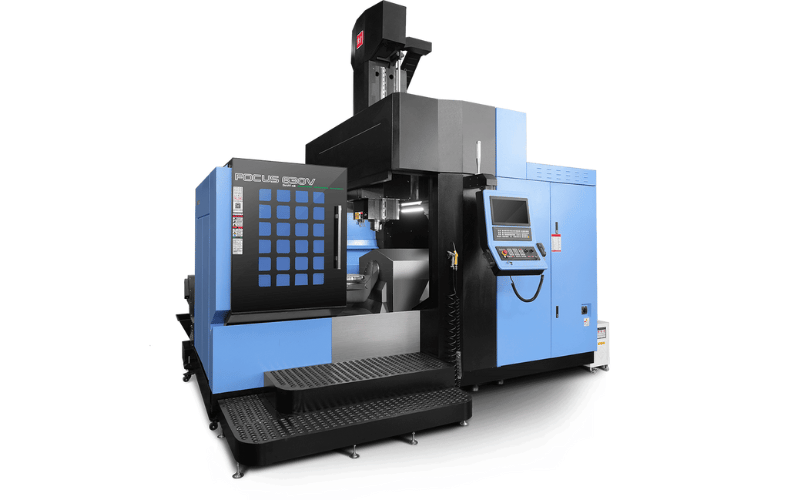
Types of CNC Machines
CNC machines are tailored to meet the diverse needs of various industries, each type excelling in specific applications. Below is a closer look at the most common types and their unique capabilities:
-
CNC Milling Machines
CNC milling machines use rotating cutting tools to remove material from a workpiece precisely. They excel in tasks like drilling, boring, and contouring, making them indispensable for creating complex shapes and surfaces in industries such as aerospace, automotive, and manufacturing. -
CNC Lathes
CNC lathes rotate the workpiece while a stationary cutting tool shapes it, making them ideal for producing cylindrical components like shafts, pipes, and bushings. These machines are widely used in industries requiring high precision, such as automotive and oil and gas. -
CNC Routers
CNC routers specialize in cutting and engraving materials like wood, plastic, and soft metals. They are commonly used in furniture manufacturing, signage production, and decorative arts, where intricate designs and smooth finishes are essential. -
CNC Plasma Cutters
Plasma cutters utilize a high-temperature plasma torch to slice through conductive materials like steel, aluminum, and brass. They are a staple in metal fabrication industries, offering speed and precision for tasks like cutting sheet metal and creating custom parts. -
CNC Laser Cutters
Laser cutters employ focused laser beams to cut or engrave materials with exceptional accuracy. They are widely used in industries like jewelry, electronics, and medical device manufacturing, where intricate designs and fine details are critical. -
CNC Grinders
CNC grinders utilize abrasive wheels to refine surfaces or remove small amounts of material, resulting in smooth finishes and precise tolerances. These machines are essential in industries like aerospace and automotive, where polished metal components are a necessity.
The Evolution of CNC Technology
CNC technology has advanced significantly since its introduction in the mid-20th century. Early CNC machines relied on punched tape to store instructions, which limited their flexibility and efficiency. Over time, advancements in computing and software have transformed CNC machines into highly sophisticated tools.
- 1970s: The introduction of microprocessors allowed for more complex programming and greater precision. Machines became faster and more reliable.
- 1980s: CAD and CAM (Computer-Aided Manufacturing) software became widely adopted, streamlining the design-to-production process.
- 1990s: Networking capabilities enabled machines to communicate with each other, paving the way for automated production lines.
- 2000s and Beyond: Modern CNC machines now incorporate AI, IoT (Internet of Things), and advanced sensors, making them smarter and more efficient. These innovations have led to the rise of smart factories and Industry 4.0, where machines can self-monitor and optimize their performance.
CNC technology continues to evolve, with trends like additive manufacturing (3D printing) and hybrid machines combining traditional and modern techniques. This constant innovation ensures that CNC machines remain at the forefront of manufacturing technology.
4-Axis CNC Machines
Definition and Functionality of 4-Axis CNC Machines
A 4-axis CNC machine is an advanced manufacturing tool that operates similarly to a standard 3-axis CNC machine but with an additional rotational axis. While 3-axis machines move along the X, Y, and Z axes, a 4-axis machine introduces rotation around the X-axis, known as the A-axis. This added functionality allows the machine to work on multiple sides of a workpiece without manual repositioning.
The 4-axis capability is handy for creating complex geometries, such as cylindrical or curved surfaces. For example, it can carve intricate designs on a cylindrical object or drill holes at precise angles. The machine interprets G-code instructions to control both linear and rotational movements, ensuring high precision and repeatability.

Applications of 4-Axis CNC Machining
4-axis CNC machines are celebrated for their ability to handle complex geometries and streamline production processes. Their versatility and precision make them indispensable across a variety of industries. Here’s a closer look at their applications:
-
Aerospace Industry
In aerospace, 4-axis CNC machines are used to manufacture turbine blades, engine components, and structural parts. These components often feature intricate designs and require tight tolerances to ensure safety and performance in high-stress environments. -
Automotive Industry
The automotive sector relies on 4-axis CNC machines to produce critical components like camshafts, gearboxes, and custom parts for high-performance vehicles. Their ability to machine angled surfaces and cylindrical shapes ensures precision and durability in automotive engineering. -
Medical Field
Precision is paramount in the medical field, and 4-axis CNC machines deliver. They are used to create surgical instruments, prosthetics, and implants with complex shapes and biocompatible materials, ensuring both functionality and patient safety. -
Jewelry and Art
The ability to carve intricate patterns on curved surfaces makes 4-axis CNC machines a favorite in the jewelry and art industries. From custom rings to detailed sculptures, these machines bring creative visions to life with unmatched precision. -
Furniture and Woodworking
In woodworking, 4-axis CNC machines are used to craft decorative elements like ornate table legs, intricate carvings, and custom furniture pieces. Their ability to handle complex designs and curved surfaces adds a touch of artistry to functional items.
Advantages of Using 4-Axis CNC Machines
4-axis CNC machines offer a range of benefits that make them a vital tool in modern manufacturing. Their ability to handle complex tasks with precision and efficiency sets them apart. Let’s explore these advantages in greater detail:
-
Enhanced Precision and Consistency
The addition of a rotational axis (A-axis) allows 4-axis CNC machines to machine intricate parts with exceptional accuracy. This eliminates the need for manual adjustments, ensuring consistent quality across production runs. Whether it’s carving detailed patterns or machining angled surfaces, these machines deliver unmatched precision. -
Increased Efficiency
By automating the rotation of the workpiece, 4-axis CNC machines eliminate the need for manual repositioning. This significantly reduces setup time and boosts productivity, especially in high-volume production environments. Manufacturers can complete complex tasks in a single operation, saving both time and effort. -
Versatility Across Materials
4-axis CNC machines are capable of working with a wide variety of materials, including metals like aluminum and steel, plastics, and even wood. This versatility makes them suitable for industries ranging from aerospace and automotive to furniture and jewelry, where diverse material handling is essential. -
Cost-Effectiveness in the Long Run
While the upfront cost of a 4-axis CNC machine may be higher than simpler models, the long-term savings are substantial. Reduced labor costs, faster production times, and minimal material waste contribute to a lower overall cost per part, making these machines a smart investment for businesses focused on efficiency. -
Simplifying Complex Geometries
The ability to rotate the workpiece along the A-axis enables the creation of intricate designs, undercuts, and features that would be difficult or impossible to achieve with a 3-axis machine. This capability is particularly valuable in industries like aerospace and medical, where complex geometries are often required.
By combining precision, efficiency, and versatility, 4-axis CNC machines empower manufacturers to tackle challenging projects with ease. Their ability to streamline production while maintaining high-quality standards makes them an indispensable asset for businesses aiming to stay competitive in today’s fast-paced market.
5-Axis Milling Machines
Overview of 5-Axis CNC Milling
A 5-axis CNC milling machine is a highly advanced tool that operates along five different axes simultaneously. In addition to the standard X, Y, and Z linear axes, it incorporates two rotational axes, often referred to as the A-axis (rotation around the X-axis) and the B-axis (rotation around the Y-axis). This capability allows the machine to approach the workpiece from virtually any angle, enabling the creation of highly complex and precise parts.
Unlike traditional 3-axis machines, 5-axis milling eliminates the need for multiple setups, as the workpiece can be machined in a single operation. This not only saves time but also reduces the risk of errors caused by repositioning. The machine is controlled by advanced software that interprets CAD/CAM designs, ensuring seamless and accurate execution of intricate tasks.

Benefits of 5-Axis Milling
5-axis milling machines are at the forefront of modern manufacturing, offering unparalleled capabilities that set them apart from traditional 3-axis and 4-axis systems. Here’s a closer look at the key benefits they bring to the table:
-
Unmatched Precision and Accuracy
The ability to machine from multiple angles simultaneously ensures that even the most intricate and complex designs are executed with exceptional precision. This is especially critical in industries like aerospace, medical, and automotive, where tight tolerances and flawless accuracy are non-negotiable. -
Reduced Setup Time and Increased Efficiency
With 5-axis milling, the workpiece can be machined in a single setup, eliminating the need for manual repositioning. This not only saves time but also reduces the risk of errors caused by misalignment during multiple setups. The streamlined process significantly boosts overall productivity, making it ideal for high-precision, high-volume production. -
Enhanced Surface Finish
By allowing the cutting tool to approach the workpiece from optimal angles, 5-axis machines achieve smoother and more refined surface finishes. This minimizes the need for additional finishing processes, such as sanding or polishing, saving both time and resources while delivering superior-quality parts. -
Versatility Across Materials
5-axis milling machines can handle a wide variety of materials, including metals like titanium and aluminum, composites, plastics, and even exotic alloys. This versatility makes them suitable for diverse applications, from creating lightweight aerospace components to crafting durable medical implants. -
Cost Efficiency Over Time
While the initial investment in a 5-axis milling machine is higher, the long-term benefits outweigh the costs. Faster production times, reduced labor requirements, and minimized material waste contribute to significant cost savings. For businesses focused on efficiency and scalability, 5-axis milling is a smart, future-proof investment. -
Capability to Produce Complex Geometries
The additional rotational axes (A and B) enable the creation of intricate shapes, undercuts, and cavities that would be impossible or highly challenging with 3-axis or 4-axis machines. This capability is invaluable for industries requiring advanced designs, such as turbine blades in aerospace, molds in automotive, or custom prosthetics in the medical field.
By combining precision, efficiency, and versatility, 5-axis milling machines empower manufacturers to push the boundaries of what’s possible. Their ability to handle complex geometries, reduce production time, and deliver exceptional quality makes them an indispensable tool for industries striving to stay ahead in a competitive market.
Applications of 5-Axis CNC Machining
5-axis CNC machining stands out as a game-changer in modern manufacturing, offering unmatched precision and flexibility for creating complex components. Its ability to machine intricate geometries from virtually any angle makes it indispensable across a wide range of industries. Here’s a closer look at its applications:
-
Aerospace Industry
The aerospace sector demands components with extreme precision and complex geometries, and 5-axis CNC machines deliver. They are used to manufacture turbine blades, engine components, and structural parts that must withstand high stress and operate flawlessly in critical environments. The ability to machine undercuts and intricate designs in a single setup ensures both efficiency and accuracy. -
Automotive Sector
In the automotive industry, 5-axis machines are essential for producing high-performance engine components, molds, and custom parts. These machines ensure the precision required for parts like cylinder heads, gearboxes, and suspension components, while also enabling the creation of lightweight designs that improve vehicle efficiency and performance. -
Medical Field
Precision and biocompatibility are critical in the medical field, and 5-axis CNC machining excels in meeting these requirements. It is widely used to create surgical instruments, dental implants, prosthetics, and orthopedic devices. The ability to machine intricate shapes and smooth surfaces ensures that these components meet stringent medical standards. -
Energy Industry
The energy sector relies on 5-axis CNC machines to produce components for wind turbines, oil rigs, and other energy-related equipment. These parts often feature complex designs and require high durability to perform in demanding conditions. The precision of 5-axis machining ensures optimal performance and longevity of these critical components. -
Tool and Die Making
The production of intricate molds and dies requires exceptional accuracy, and 5-axis CNC machines are up to the task. They are used to create detailed molds for plastic injection, die-casting, and stamping, ensuring that the final products meet exact specifications. This capability is vital for industries like automotive, consumer goods, and electronics. -
Art and Design
Artists and designers leverage 5-axis CNC machines to bring their creative visions to life. From intricate sculptures and architectural models to custom furniture and decorative pieces, these machines enable the creation of highly detailed and complex works that would be nearly impossible to achieve manually.
By excelling in these diverse applications, 5-axis CNC machining has become a cornerstone of modern manufacturing. Its ability to handle complex geometries, reduce production time, and deliver exceptional quality empowers industries to innovate and push the boundaries of what’s possible.
Comparing 4-Axis and 5-Axis Machines
Key Differences Between 4-Axis and 5-Axis Machines
The primary distinction between 4-axis and 5-axis CNC machines lies in their range of motion. A 4-axis machine operates on the X, Y, and Z linear axes, with an additional rotational movement around the X-axis (A-axis). In contrast, a 5-axis machine adds a second rotational axis, typically around the Y-axis (B-axis), enabling it to approach the workpiece from virtually any angle.
This additional axis in 5-axis machines allows for greater flexibility and precision when machining complex geometries. For example, while a 4-axis machine can handle cylindrical parts or angled cuts, a 5-axis machine excels at creating intricate designs, undercuts, and multi-faceted components without requiring manual repositioning.
Another key difference is the level of automation. 5-axis machines reduce the need for multiple setups, making them more efficient for high-precision tasks. However, this added capability often comes with a higher cost and steeper learning curve compared to 4-axis machines.
When to Choose 4-Axis vs 5-Axis
Selecting the right CNC machine—4-axis or 5-axis—depends on the complexity of your project, your budget, and your production goals. Each machine has its strengths, and understanding their capabilities will help you make an informed decision. Here’s a breakdown of when to choose each:
Choose 4-Axis Machines When:
-
Simpler Geometries Are Involved
If your project primarily involves cylindrical parts, angled holes, or straightforward designs, a 4-axis machine is more than capable. It excels at tasks like machining cylindrical objects, engraving, and drilling at precise angles. -
Budget Constraints Are a Priority
For businesses with limited budgets, 4-axis machines offer a cost-effective solution. They provide advanced functionality without the higher price tag of 5-axis systems, making them ideal for small to medium-sized operations. -
Tasks Don’t Require Extreme Precision or Complex Angles
If your production doesn’t demand intricate geometries or multi-faceted components, a 4-axis machine is sufficient. It’s perfect for applications like woodworking, jewelry engraving, and creating moderately complex parts.
Choose 5-Axis Machines When:
-
The Project Involves Complex Designs
For intricate designs, undercuts, or multi-faceted components, a 5-axis machine is the clear choice. Its ability to approach the workpiece from virtually any angle ensures precision and eliminates the need for manual repositioning. -
High Precision and Efficiency Are Critical
Industries like aerospace, medical, and automotive often require tight tolerances and flawless accuracy. A 5-axis machine delivers the precision needed for these demanding applications while streamlining production processes. -
You Need to Reduce Setup Time
If your project involves machining complex parts in a single operation, a 5-axis machine is invaluable. By eliminating the need for multiple setups, it saves time, reduces errors, and improves overall productivity.
Making the Right Choice
When deciding between a 4-axis and 5-axis CNC machine, consider the specific requirements of your project. If you’re working on simpler designs and need a cost-effective solution, a 4-axis machine is a practical choice. However, for projects that demand intricate geometries, high precision, and efficiency, investing in a 5-axis machine will pay off in the long run. By aligning your choice with your production needs and budget, you can ensure optimal performance and cost-effectiveness for your manufacturing operations.
The Difference Between 3-Axis, 4-Axis, and 5-Axis Machines
- 3-Axis Machines
These machines operate along the X, Y, and Z linear axes. They are ideal for basic tasks like drilling, cutting, and milling flat surfaces. However, they require manual repositioning for multi-sided machining, which can increase production time and reduce precision. - 4-Axis Machines
Adding a rotational A-axis to the 3-axis setup, these machines can handle more complex tasks, such as machining cylindrical parts or angled cuts. They are a step up in versatility and efficiency but still have limitations when it comes to intricate geometries. - 5-Axis Machines
With two rotational axes (A and B), 5-axis machines offer unparalleled flexibility and precision. They can approach the workpiece from virtually any angle, making them ideal for creating complex, multi-faceted components in a single setup. This capability significantly reduces production time and improves accuracy.
By comparing these machines, it’s clear that each has its strengths and is suited to specific applications. While 3-axis machines are sufficient for simpler tasks, 4-axis and 5-axis machines provide the advanced capabilities needed for more demanding projects.
Frequently Asked Questions
Q: What is 4-axis machining and how does it differ from 3-axis machining?
A: 4-axis machining adds a rotational axis to the standard X, Y, and Z linear axes of 3-axis machining. This fourth axis, often called the rotary axis, allows the workpiece to rotate, enabling access to multiple sides without manual repositioning. This makes 4-axis machining ideal for creating more complex parts compared to 3-axis machining, which is limited to linear movements.
Q: What are the applications of 4-axis CNC machining?
A: 4-axis CNC machining is widely used in industries like aerospace, automotive, and medical device manufacturing. It excels at producing intricate 3D shapes and components that require high precision, such as turbine blades, camshafts, and surgical instruments.
Q: Can a 4-axis CNC machine perform operations similar to a 5-axis CNC machine?
A: A 4-axis CNC machine can handle many tasks, but it lacks the flexibility of a 5-axis machine. A 5-axis CNC machine allows simultaneous movement along five axes, enabling the creation of highly intricate 3D shapes and reducing the need for multiple setups.
Q: What types of machined parts can be produced using 4-axis milling?
A: 4-axis milling is ideal for parts with features on multiple sides, such as brackets, housings, and components with complex geometries. The rotary axis provides easier access to various angles, making it perfect for parts requiring detailed and precise machining.
Q: How does the spindle work in a 4-axis CNC machine?
A: The spindle in a 4-axis CNC machine holds and rotates the cutting tool. It works in coordination with the linear and rotary axes to execute precise machining operations, ensuring accurate cuts and shapes on complex workpieces.
Q: What is the difference between 4-axis and 5-axis milling?
A: 4-axis milling includes a rotary axis in addition to the three linear axes, while 5-axis milling adds a second rotational axis. This extra axis allows 5-axis machines to approach the workpiece from virtually any angle, enabling greater flexibility and the production of more intricate parts in a single setup.
Q: What are the advantages of using a 4-axis CNC machine?
A: A 4-axis CNC machine offers several advantages, including the ability to machine multiple sides of a workpiece without repositioning, improved efficiency, and the capability to create complex parts with precision. These benefits reduce production time and operational costs.
Q: How do rotary axes enhance the machining capabilities of CNC machines?
A: Rotary axes, such as the fourth axis in a 4-axis machine or the additional axes in a 5-axis machine, enable continuous rotation and precise positioning of the workpiece. This improves machining versatility, allowing access to all sides of a part and enabling the production of intricate geometries with ease.
Conclusion
Summary of Key Points
CNC machines have revolutionized manufacturing by offering precision, efficiency, and versatility. From 3-axis machines for basic tasks to advanced 5-axis systems capable of handling intricate designs, each type serves specific needs. Understanding the differences between 3-axis, 4-axis, and 5-axis machines is crucial for selecting the right tool for your project. While 4-axis machines excel in handling cylindrical parts and angled cuts, 5-axis machines provide unmatched flexibility for complex geometries and multi-faceted components.
Future Trends in CNC Machining
The future of CNC machining is being shaped by advancements in technology, including artificial intelligence, IoT integration, and hybrid manufacturing. AI-powered systems are enabling machines to self-optimize, reducing errors and improving efficiency. IoT connectivity allows for real-time monitoring and predictive maintenance, ensuring minimal downtime. Additionally, hybrid machines that combine CNC milling with additive manufacturing (3D printing) are opening new possibilities for creating complex parts with reduced material waste.
Automation and robotics are also playing a significant role, with fully automated production lines becoming more common. These trends are driving the industry toward smarter, more efficient, and sustainable manufacturing processes.
Final Thoughts on Choosing the Right CNC Machine
Selecting the right CNC machine depends on your specific needs, budget, and production goals. For simpler tasks, a 3-axis machine may suffice, while 4-axis machines are ideal for projects requiring moderate complexity. If precision, efficiency, and the ability to handle intricate designs are priorities, investing in a 5-axis machine is the best choice.
By staying informed about the latest trends and understanding the capabilities of each machine type, you can make a decision that aligns with your business objectives and ensures long-term success.