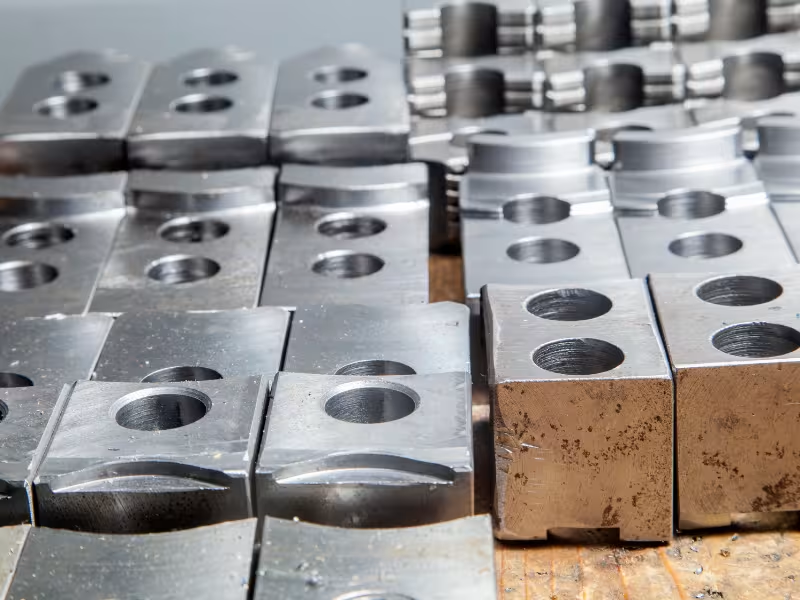
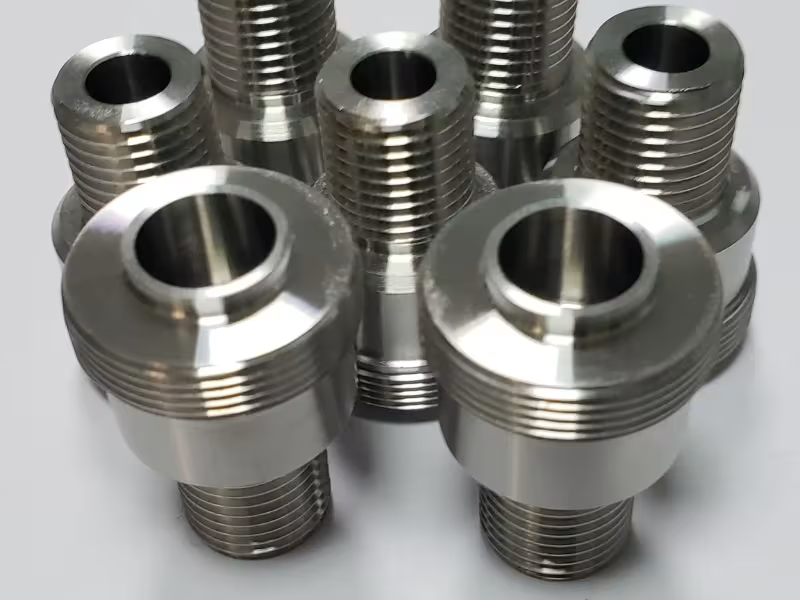
440C stainless steel fills a narrow but important role. It suits parts that need high hardness, strong wear resistance, and lasting edge retention, which is why it shows up in bearings, blades, valve seats, and other precision components.
It is not a general-purpose stainless steel, though. Its corrosion resistance is moderate, and its real-world performance depends heavily on how it is heat treated. Two parts cut from the same bar can perform very differently in service.
This guide explains where 440C fits, where it falls short, and what to confirm before you put it on a drawing. If you are evaluating 440C for machined parts, it also helps to compare it with broader stainless steel CNC machining services so material choice and process choice stay aligned.
What Is 440C Stainless Steel?
Drawings and purchase orders often list this grade as “CRES 440C.” CRES stands for corrosion-resistant steel, a term common in aerospace and defense specifications. CRES 440C and 440C are the same material.
440C belongs to the martensitic stainless steel family. Like tool steels, martensitic grades harden through heat treatment. Austenitic grades such as 304 and 316 cannot be hardened this way. They gain strength only through cold work.
The 440 series includes three grades: 440A, 440B, and 440C. All three carry roughly 16–18% chromium. Carbon content rises from A to C, and 440C has the most, at about 0.95–1.20%. That carbon lets 440C typically reach 58–60 HRC after proper hardening and form hard chromium carbides that resist wear.
The trade-off is corrosion resistance. 440C handles mild moisture well but ranks below 304 and 316. A useful way to frame it is this: 440C is a wear-resistant steel with some stainless protection, not a corrosion-resistant steel that also happens to be hard.
| Grade | Common Equivalents | Carbon (wt%) | Core Characteristics |
|---|---|---|---|
| 440A | UNS S44002 / EN 1.4109 | 0.60–0.75 | Lowest hardness, better toughness and corrosion resistance |
| 440B | UNS S44003 / EN 1.4112 | 0.75–0.95 | Middle ground in hardness and toughness |
| 440C | AISI 440C / UNS S44004 / EN 1.4125 / SUS440C | 0.95–1.20 | Highest hardness and wear resistance, moderate corrosion resistance |
Suppliers may sell the same grade under different names depending on the standard they follow. Before approving material, confirm that the mill certificate matches the designation and specification on your drawing.
Why Engineers Choose 440C, and When They Shouldn’t
The most useful question to ask about any 440C part is simple: how will it fail? If the answer is wear, 440C deserves a close look. If the answer is rust, cracking, or impact damage, another grade is usually the better choice.
Most 440C problems do not come from bad steel. They come from good steel placed in the wrong job.
Where 440C Earns Its Place
- Wear drives the design. Sliding contact, rolling contact, and abrasive grit wear parts down. Hardened 440C typically outlasts 420 in these jobs and far outlasts 316.
- The edge must stay sharp. Blades, cutters, and scrapers rely on the hard carbides in 440C to resist dulling.
- Precision parts must hold their size. Bearing races, valve balls, and gauge pins can stay dimensionally stable for years when properly processed.
- The environment stays mild. Indoor air, humidity, freshwater splash, and lubricated assemblies suit it well.
Where 440C Falls Short
- Chloride-rich service. Salt spray, seawater, and chlorine-based chemicals can cause pitting quickly.
- Welded designs. High carbon makes the heat-affected zone brittle and prone to cracking.
- High impact loads. At full hardness, 440C trades toughness for wear resistance. Sharp shocks can chip or crack it.
- Forming and fabrication. 440C does not bend, stretch, or deep-draw well. For tanks, brackets, and enclosures, 304 or 316 usually fabricate more easily.
| Choose 440C if… | Avoid 440C if… |
|---|---|
| Wear or abrasion is the main failure mode | Salt spray, seawater, or chlorides dominate the environment |
| You need a sharp, long-lasting edge | The design requires heavy or frequent welding |
| Precision parts must stay dimensionally stable | The part faces high impact or shock loads |
| The environment is mild, dry, or lubricated | You mainly need formability |
| You can control heat treatment quality | You need a low-cost, easy-to-fabricate general-purpose grade |
Use 440C when hardness solves your problem. When toughness, welding, or easier fabrication is the real challenge, another grade will usually serve you better.
Key Properties of 440C Stainless Steel
Datasheets list dozens of values for 440C, but only a handful drive design decisions. Read every number below with one caveat in mind: each depends on the heat-treated condition of the part.
Hardness and Wear Resistance
This is the main reason to buy 440C. Among widely used stainless grades, it is one of the strongest choices for hardness and wear resistance. After hardening and a low-temperature temper, it typically reaches 58–60 HRC. In the annealed state, it sits near 95 HRB, soft enough to machine.
The wear protection comes from chromium carbides spread through the steel. These hard particles resist sliding, rolling, and abrasive wear, so 440C addresses the root cause when a part fails by wearing down.
Strength and Toughness
Hardened 440C has very high strength. Tensile values can approach 1,900–2,000 MPa at low tempering temperatures.
Toughness is another matter. Impact values stay low, and carbides can act as crack starters. A sharp blow can chip an edge or crack a thin section. Good design practice helps: avoid sharp internal corners and thin walls, especially where shock loads are possible.
Corrosion Resistance
440C generally handles humid air, fresh water, and mild acids. It performs best when fully hardened and finely finished. It is not a substitute for 316 in chloride-heavy service.
Magnetic Behavior
440C is ferromagnetic in both annealed and hardened states. That helps with magnetic chucks on surface grinders and with magnetic sorting. It also rules 440C out of assemblies near MRI equipment, sensitive sensors, or any design that needs low magnetic permeability.
Dimensional Stability
Retained austenite can slowly transform after hardening and grow a part by a few microns. That small change can ruin a bearing fit. Cryogenic treatment followed by tempering converts most of it, which is why precision parts often call for a cryogenic step.
| Property | Why It Matters in Practice |
|---|---|
| Hardness (typically 58–60 HRC) | Longer service life in sliding, rolling, and cutting jobs |
| Wear resistance | Carbides resist abrasion and keep edges sharp longer |
| Strength | Handles high contact stress in bearings and valve seats |
| Toughness | Low, so avoid impact loads, sharp corners, and thin sections |
| Corrosion resistance | Suitable for mild environments, limited in aggressive ones |
| Magnetic behavior | Works with magnetic fixturing, wrong choice for non-magnetic needs |
| Dimensional stability | Benefits from cryogenic treatment and tempering in precision parts |
440C Chemical Composition and What It Means
You do not need to memorize every line on a mill certificate. Three things explain most of 440C’s behavior: high carbon, plenty of chromium, and the hard carbides that form when the two combine.
| Element | Typical Range (wt%) | What to Watch |
|---|---|---|
| Carbon (C) | 0.95–1.20 | Drives hardness and wear resistance |
| Chromium (Cr) | 16.00–18.00 | Sets baseline corrosion resistance |
| Molybdenum (Mo) | 0.75 max | Small benefit, sometimes optional by spec |
| Manganese (Mn) | 1.00 max | Minor role |
| Silicon (Si) | 1.00 max | Minor role |
| Phosphorus (P) | 0.040 max | Keep low for toughness |
| Sulfur (S) | 0.030 max | Keep low for toughness and corrosion |
| Iron (Fe) | Balance | — |
Carbon: Where the Hardness Comes From
440C carries several times more carbon than 420. During hardening, that carbon locks into martensite and pushes the steel into the high-50s HRC range.
The same carbon causes most of the headaches. It lowers toughness and makes welding risky. If a design needs welds or takes impact loads, the carbon level alone often rules 440C out.
Chromium: The Stainless Baseline
At 16–18%, chromium sits well above the level needed to form a protective oxide film. That film is what earns 440C its stainless label.
Do not read too much into the molybdenum line. Up to 0.75% Mo is far below the 2–3% in 316, so it adds little pitting resistance.
Chromium Carbides: Strength and Limitation in One
Carbon and chromium bond into very hard carbides that give 440C its wear resistance and edge retention. But every carbide pulls chromium out of the surrounding steel. Actual corrosion resistance therefore falls below what the 16–18% figure might suggest. Carbides also wear down cutting tools and grinding wheels, which slows machining and raises cost.
Read the chemistry as a trade-off map. Carbon buys hardness, chromium buys baseline protection, and carbides tie both to the limits you need to design around.
Heat Treatment of 440C: The Part That Decides Performance
The same 440C bar can become a bearing that runs for years or a part that cracks in a week. The difference usually comes down to heat treatment. Each step has a specific job, and exact parameters vary with section size, equipment, and the governing specification.
| Step | Typical Range | Purpose | What to Confirm |
|---|---|---|---|
| Annealing | 845–900°C, slow furnace cool | Softens steel for machining | Incoming hardness on the mill cert |
| Hardening | Preheat ~760–790°C, austenitize 1010–1065°C, then quench | Forms hard martensite | Furnace type, atmosphere, quench method |
| Cryogenic treatment | −75°C to −196°C, soon after quench | Converts retained austenite | Maximum delay between quench and cryo |
| Tempering | 150–370°C, usually twice | Balances hardness and toughness | Exact temperature and number of cycles |
Annealed Condition
Mills usually ship 440C annealed, at roughly 95 HRB (about 269 HB max). Annealing heats the steel to about 845–900°C and cools it slowly in the furnace, which spheroidizes the carbides and relieves stress.
Poorly annealed stock chews through tools and can crack during heavy cuts. Check the hardness on the mill cert, and spot-check bars on large orders.
Hardening
Hardening gives 440C its real strength. The part is preheated, then raised to 1010–1065°C so carbon and chromium dissolve into the matrix. A quench in oil, air, or pressurized gas locks that structure into martensite. The preheat reduces thermal shock and distortion in complex shapes.
Getting the temperature wrong in either direction causes trouble:
- Too hot: Excess carbon dissolves, retained austenite increases, grains coarsen, and hardness can drop while brittleness rises.
- Too cool: Too little carbon dissolves, and the part never reaches full hardness regardless of tempering.
- Open-air heating: The surface loses carbon and forms a soft skin that wears quickly, even over a hard core.
Ask for a vacuum furnace or protective atmosphere, and get the austenitizing temperature and hold time in writing.
Cryogenic Treatment
After quenching, 440C still holds some retained austenite. Cryogenic treatment chills the part to −75°C or as low as −196°C, converting most of it. The result is typically a gain of 1–2 HRC and much better long-term size stability.
Timing matters. The part should go cold soon after quenching and before tempering. If it sits at room temperature too long, the austenite stabilizes and resists conversion. For precision parts, put the cryogenic step and a maximum delay in the drawing notes.
Tempering
Fresh martensite is hard but brittle. Tempering relieves stress and restores some toughness.
For most wear parts, shops temper at 150–200°C to hold hardness near 58–60 HRC. Higher tempers, up to about 370°C, trade some hardness for toughness. Double tempering is common practice for critical parts.
Avoid the 425–565°C range. In this window, 440C loses toughness and corrosion resistance at the same time. If your heat treater proposes it, ask why.
Common Heat Treatment Mistakes
Most of these errors do not show up at inspection. They show up in the field, months later.
| Mistake | What Happens | How to Prevent It |
|---|---|---|
| Over-austenitizing | Excess retained austenite, coarse grains, lower hardness | Specify temperature range and hold time |
| Skipping cryogenic treatment | Parts grow over time and lose fit | Require cryo for precision parts |
| Long delay before cryo | Austenite stabilizes and resists conversion | Set a maximum delay in the spec |
| Tempering at 425–565°C | Brittleness and reduced corrosion resistance | Exclude this range on the drawing |
| Skipping or single tempering | Residual stress, cracking risk | Require double tempering |
| Slow or uneven quench | Soft spots, low hardness | Match quench method to section size |
| Heating in open air | Soft, decarburized surface | Use vacuum or protective atmosphere |
If you are sourcing custom components through a broader CNC metal machining service, this is the point where process control matters just as much as material selection. On 440C drawings, avoid writing “harden to suit.” Spell out the target hardness, tempering range, cryo requirement, and furnace atmosphere, then request a heat treatment report with every batch.
Corrosion Resistance of 440C: Good for a Martensitic Grade, Not for Marine Duty
This is where costly mistakes happen most often. A buyer sees “stainless” on a quote, assumes broad protection, and places 440C somewhere it does not belong.
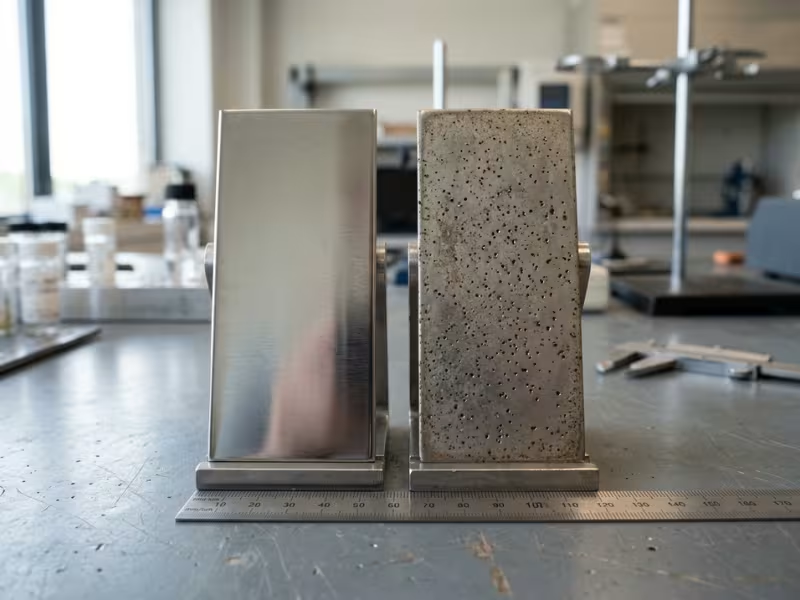
Compared with other hardenable stainless grades, 440C holds its own. Compared with 304 and 316, it falls well behind. Treat its corrosion resistance as moderate: enough for many jobs, but not a margin you can stretch.
Where 440C Performs Well
- Indoor air and normal humidity
- Fresh water, such as splash, rinse cycles, or brief immersion
- Some food-processing components in mild, well-controlled conditions, subject to cleaning chemistry and applicable regulations
- Many mild acids, including dilute nitric acid
- Lubricated assemblies, where oil or grease shields the surface
Where 440C Struggles
Chlorides break down the oxide film and start pits, often at carbide edges. Problem environments include salt spray, coastal air, seawater, road de-icing salts, and chlorine-based sanitizers.
If a part needs hardness and faces chlorides, consider a coating, a different alloy, or a design that keeps the wear surface sealed and lubricated.
Surface Finish Changes the Outcome
Polishing removes scratches where moisture and debris collect. A mirror-polished, fully hardened part resists staining much better than a rough-ground one.
Passivation per ASTM A967 dissolves free iron left by machining and grinding and helps the oxide film form evenly. Surface condition matters enough that it is worth coordinating material choice with the final CNC machining surface finish requirement before release.
Passivation cleans the surface. It does not change the alloy.
| Environment | Suitability of 440C |
|---|---|
| Indoor air, normal humidity | Good |
| Fresh water, rinse cycles | Good |
| Food processing with routine cleaning | Generally good, depending on cleaners |
| Mild acids | Fair to good |
| Outdoor industrial air | Fair, needs maintenance |
| Coastal air, salt spray | Poor |
| Seawater, brine, chlorine sanitizers | Not suitable |
440C vs 316 Stainless Steel
These two grades solve opposite problems. 440C fights wear. 316 fights corrosion. Asking which is “better” misses the point; the right question is which failure mode you need to prevent.
| Factor | 440C | 316 |
|---|---|---|
| Metallurgy | Martensitic, 0.95–1.20% C | Austenitic, 0.08% C max, 10–14% Ni, 2–3% Mo |
| Hardens by heat treatment? | Yes | No, only by cold work |
| Typical hardness | 58–60 HRC hardened | About 80–95 HRB annealed |
| Wear resistance | Excellent | Poor, galls in sliding contact |
| Corrosion resistance | Moderate | Very good, including chloride service |
| Magnetic? | Yes | No, when annealed |
| Weldability | Poor | Excellent (316L for heavy sections) |
| Formability | Poor | Excellent |
| Common forms | Bar, wire, balls, limited plate | Sheet, plate, pipe, tube, bar, wire, fittings |
| Main cost drivers | Heat treatment, grinding, finishing | Nickel and molybdenum content |
| Best-fit jobs | Bearings, blades, valve seats, wear parts | Marine hardware, tanks, piping, food and pharma equipment |
Different Structures, Different Jobs
440C forms hard, carbon-rich martensite when quenched. 316 stays austenitic at every temperature because of its nickel. You cannot quench 316 hard, but it stays tough, ductile, and non-magnetic.
In wear, 440C wins easily. Hardened 440C is roughly three times harder than annealed 316, and 316 tends to gall and seize in sliding contact, especially against itself. In aggressive environments, 316 takes the lead thanks to its molybdenum and stable passive film. Neither grade delivers both properties at full strength.
Fabrication and Real Cost
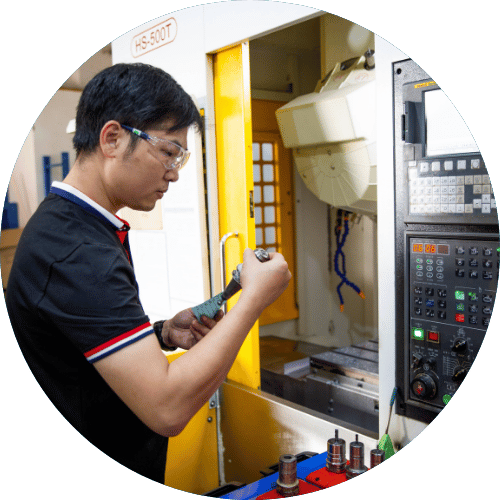
316 welds, bends, and deep-draws easily, which makes it the default for tanks, piping, and enclosures. 440C asks more of your shop: machine annealed, send out for hardening, then grind to final size.
Raw material price can mislead. 316 often costs more per kilogram because of nickel and molybdenum, yet a finished 440C part frequently costs more once heat treatment and precision grinding are added. Compare finished-part cost, not bar price.
Choose 440C when wear, contact stress, or edge life limits the part in a mild environment. Choose 316 when corrosion, welding, or forming drives the design and wear is minimal.
440C vs 420 Stainless Steel
Both grades are martensitic, hardenable, and magnetic. The performance gap comes down to carbon: 420 carries roughly 0.15–0.40%, while 440C carries 0.95–1.20%.
| Factor | 440C | 420 |
|---|---|---|
| Carbon content | 0.95–1.20% | About 0.15–0.40% |
| Chromium | 16–18% | 12–14% |
| Typical hardened hardness | 58–60 HRC | About 48–53 HRC, depending on carbon |
| Wear resistance | Excellent | Moderate |
| Corrosion resistance | Moderate | Moderate |
| Toughness | Low | Better |
| Weldability | Poor | Fair, with preheat and post-weld temper |
| Machinability (annealed) | Fair, wears tools quickly | Good |
| Cost | Higher material and processing cost | Lower |
| Best-fit applications | Bearings, premium blades, valve seats, wear parts | Surgical tools, cutlery, plastic molds, pump shafts, valve trim |
Where 440C Pulls Ahead
Higher hardness plus a large volume of chromium carbides gives 440C far better wear resistance and edge retention. For bearing races and long-life cutting edges, it is the clear choice.
Where 420 Is the Smarter Buy
Harder is not always better, and assuming so can cost money. 420 offers real advantages:
- Toughness: Fewer carbides mean better resistance to chipping and cracking.
- Machining and polishing: 420 cuts more easily and polishes to a bright finish.
- Welding: 420 tolerates limited welding with proper preheat and a post-weld temper.
- Cost: It costs less per bar and takes less grinding time.
Corrosion resistance is closer than the chromium numbers suggest. Much of 440C’s extra chromium is tied up in carbides, so the two grades behave similarly in mild environments.
Choose 440C when wear or edge life limits the part and justifies the higher cost. Choose 420 when moderate hardness, better toughness, easier machining, or a lower price matters more.
Common Applications of 440C Stainless Steel
Successful 440C applications share a pattern: the part fails by wear, and the environment stays mild. Each of the applications below fits that pattern, and each carries a specific risk.
Bearings and Races
Rolling contact concentrates huge stress on a small patch of metal, and hardened 440C handles it well. It also resists rust far better than 52100 bearing steel, making it a common choice for pumps, instruments, and other moisture-exposed components.
Watch for: Coarse carbides limit fatigue life, so 440C typically falls behind 52100 or M50 in very high-speed, high-fatigue bearings. Match the grade to the duty cycle.
Knife Blades and Cutting Edges
A 440C blade holds its edge noticeably longer than a 420 blade and still polishes to a clean finish. Kitchen knives, scissors, and industrial slitters use it for that reason.
Watch for: Thin edges at full hardness can chip on bone, staples, or frozen product. A slightly thicker edge geometry helps for rough work, and blades should be dried after washing.
Valve Seats and Wear Components
Valve balls, seats, nozzles, and pump wear rings face sliding contact, erosion, and constant cycling. 440C holds a lapped sealing surface much longer than softer stainless grades.
Watch for: Water hammer and pressure spikes can crack hardened parts. Always confirm the fluid chemistry before approving 440C for a valve.
Precision and Medical Instruments
Gauge pins, measuring anvils, dental tools, and some surgical cutters need a lasting edge or surface plus stable dimensions. Properly hardened and stabilized 440C can deliver both.
Watch for: Long-term performance under sterilization depends on surface finish, passivation, cleaning agents, and reprocessing practice. Instruments left wet with saline or blood residue can pit.
Machining, Welding, and Surface Finishing
440C rewards a careful shop and punishes a rushed one. Most of the cost and risk sit in three areas: how you cut it, whether you weld it, and how you finish it.
Machining
Machine 440C in the annealed state. Once hardened, only grinding or EDM will work. Even annealed, its carbides act like grit in the cut, so tool life is short. These habits help:
- Rigid setups: Short tool stick-out and solid workholding prevent chatter that chips carbide inserts.
- Sharp carbide tooling: Change inserts before they dull. A worn edge rubs instead of cutting.
- Moderate speeds, steady feeds: Run slower than you would for 304, and never let the tool dwell.
- Grinding stock: Hardening causes slight distortion. Leaving about 0.15–0.30 mm per side on critical surfaces is a common starting point, with more on long or thin parts.
Finish holes, threads, and any features you cannot grind before hardening. Tapping hardened 440C is rarely practical.
Welding
The best approach is to design welds out. Practical alternatives include press fits, shrink fits, bolted joints, or a two-piece design with a 304 or 316 body and a 440C wear insert.
If a weld truly cannot be avoided, treat preheat and post-weld treatment as mandatory. Preheat to roughly 260°C, maintain it through the weld, and temper or anneal immediately afterward. Cracks can appear hours after welding if either step is skipped.
Grinding, Polishing, and Passivation
- Grinding: Grind to final size after hardening using a sharp wheel, light passes, and generous coolant. Excess heat can burn and soften the surface or cause fine cracks.
- Polishing: A smooth finish removes the surface defects where corrosion starts.
- Passivation: Specify ASTM A967 and a vendor familiar with martensitic grades.
| Stage | Condition | Key Control |
|---|---|---|
| Machining | Annealed, ~95 HRB | Rigid setup, sharp carbide, grinding stock |
| Welding | Avoid where possible | Preheat and post-weld temper if unavoidable |
| Grinding | Hardened | Light passes, coolant, burn check |
| Polishing and passivation | Final | Smooth finish, ASTM A967 |
How to Choose Between 440C, 420, and 316
Five questions, asked in order, usually narrow these three grades down to one.
1. Will the part see chlorides or salt spray?
If yes, start with 316. Move away from it only if a coating or sealed design protects the wear surface.
2. Does the part need high hardness or wear resistance?
Heavy wear points to 440C. Moderate hardness with better toughness points to 420. If wear barely matters, 316 stays in the running.
3. Does the design need welding?
Heavy welding points to 316. 420 tolerates limited welds with preheat and temper. Keep 440C weld-free.
4. Can your supply chain support heat treatment?
Both martensitic grades need hardening and tempering. 440C often adds cryogenic treatment and precision grinding. If that is not practical, 420 or 316 makes more sense.
5. How will the part most likely fail?
Rank the risks: wear, corrosion, cracking, or distortion. Pick the grade that beats the top risk, then confirm it survives the second.
| Decision Factor | Choose 440C | Choose 420 | Choose 316 |
|---|---|---|---|
| Chlorides or salt spray | No | No | Yes |
| Hardness need | 58–60 HRC, heavy wear | 48–53 HRC, moderate wear | Low, little wear |
| Welding | Avoid | Limited, with preheat and temper | Yes, easily |
| Heat treatment | Full process, often with cryo | Harden and temper | Not needed |
| Top failure risk | Wear or edge loss | Moderate wear with some impact | Corrosion |
| Finished-part cost | Higher | Lower | Moderate, driven by alloy price |
When two questions point to different grades, avoid a compromise grade that only half-solves both. Change the design instead. A 316 housing with a 440C wear insert often outperforms any single material.
FAQ
What is CRES 440C stainless steel?
CRES means corrosion-resistant steel, a label common on aerospace and military drawings. CRES 440C is standard 440C, a high-carbon martensitic stainless steel also listed as UNS S44004, EN 1.4125, or SUS440C. Confirm that the mill cert matches the specification called out on your drawing.
Is 440C stainless steel magnetic?
Yes. 440C is magnetic in both annealed and hardened conditions. That helps with magnetic chucks during grinding. For assemblies that need low magnetic permeability, an austenitic grade such as 316 is the usual alternative.
Does 440C rust?
It can. 440C generally handles humid air and fresh water, especially when hardened, polished, and passivated. It is not suited to marine or chloride-heavy service without additional protection.
Can 440C be welded?
It can be, but it is not recommended. The heat-affected zone forms brittle martensite that is prone to cracking. Mechanical joints or a 440C insert in a weldable body usually work better. If welding is unavoidable, preheat and post-weld tempering are essential.
How hard can 440C be heat treated?
After hardening and a 150–200°C temper, 440C typically reaches 58–60 HRC, and cryogenic treatment can add 1–2 HRC. Higher tempers up to about 370°C trade some hardness for toughness.
Is 440C better than 316 stainless steel?
Neither wins across the board. 440C is far harder and more wear-resistant. 316 offers much better corrosion resistance, weldability, and formability. The right choice depends on how the part is most likely to fail.
What is the difference between 440C and 420?
440C carries 0.95–1.20% carbon and reaches 58–60 HRC with excellent wear resistance. 420 carries about 0.15–0.40% carbon, typically tops out near 48–53 HRC, and offers better toughness, easier machining, and lower cost.
Does 440C need cryogenic treatment?
Not always. Precision parts such as bearing races, gauges, and valve balls benefit most, since cryogenic treatment improves long-term dimensional stability. For knives and loose-tolerance wear parts, a proper hardening cycle with double tempering is usually sufficient.
Getting the Most From 440C
440C does one job extremely well: it delivers high hardness, strong wear resistance, and an edge that lasts. It does not offer all-around stainless protection, and it is not a substitute for 316.
On your next project, work in this order. First, check the service environment. If chlorides are present, rule 440C out or protect the wear surface. Next, confirm that the part truly needs hardness in the high-50s HRC. Then agree on the processing route with your heat treater and finisher, in writing, before releasing the drawing.
Handled that way, 440C becomes one of the most dependable wear materials in the stainless family.