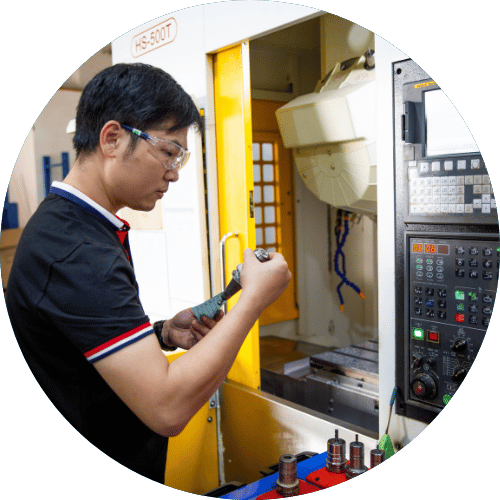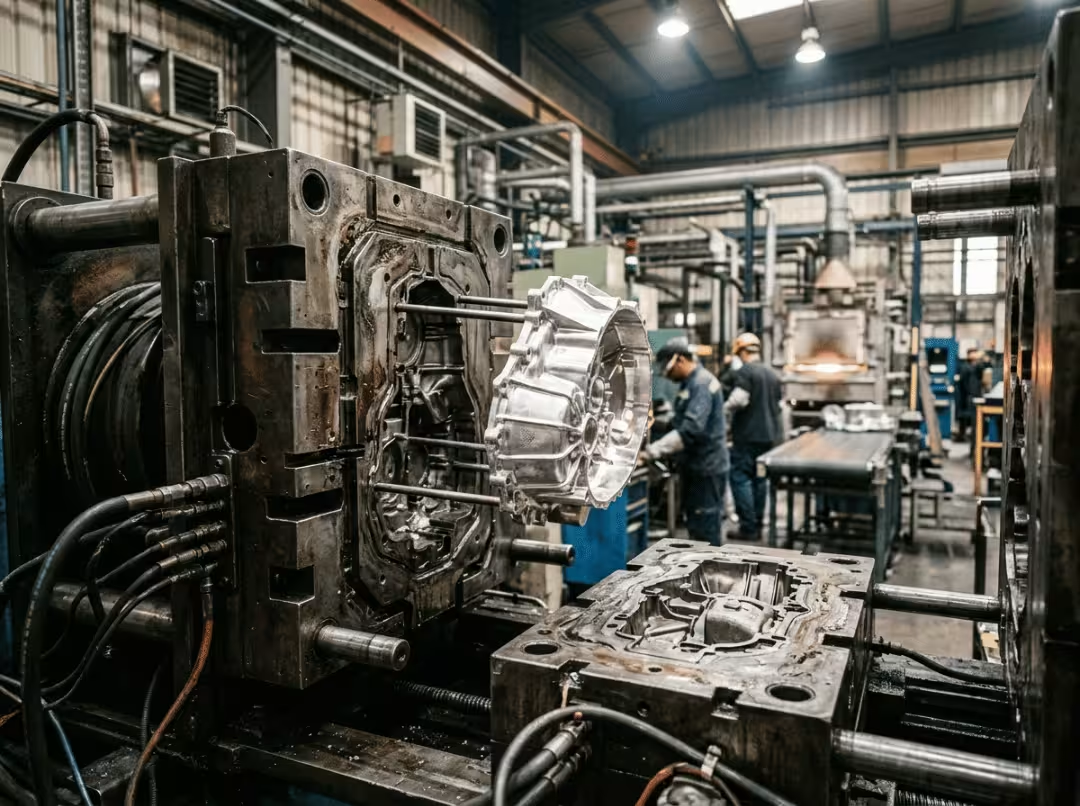
Die casting can turn out thousands of consistent metal parts at a low unit cost. It can also burn through a budget fast when the part, alloy, or volume doesn’t fit. The process forces molten metal into a steel mold under high pressure, and that steel mold is where the money and the commitment sit.
The tooling comes first, and it’s expensive. Once it’s cut, changing the design means cutting steel again. So the real question isn’t whether die casting is “good” — it’s whether it’s right for your part, your alloy, your volume, and your budget.
This guide is built to help you make that call. We’ll walk through the genuine advantages, the downsides and what they cost you, the conditions that favor die casting, and the ones that rule it out. By the end, you should be able to look at your own part and know whether die casting is the smart move or whether another process will serve you better.
What Is Die Casting?
Die casting is a manufacturing process that forces molten metal into a reusable steel mold under high pressure, then ejects a near-finished part once it solidifies. It’s fast, repeatable, and built for volume.
In practice, it works almost entirely with non-ferrous metals — aluminum, zinc, magnesium, and copper alloys. These melt at temperatures the steel dies can handle without wearing out quickly. Steel and iron melt far hotter, which shortens die life and drives up cost, so they rarely go through die casting at all.
Hot chamber vs cold chamber
There are two machine types, and the alloy decides which one you use.
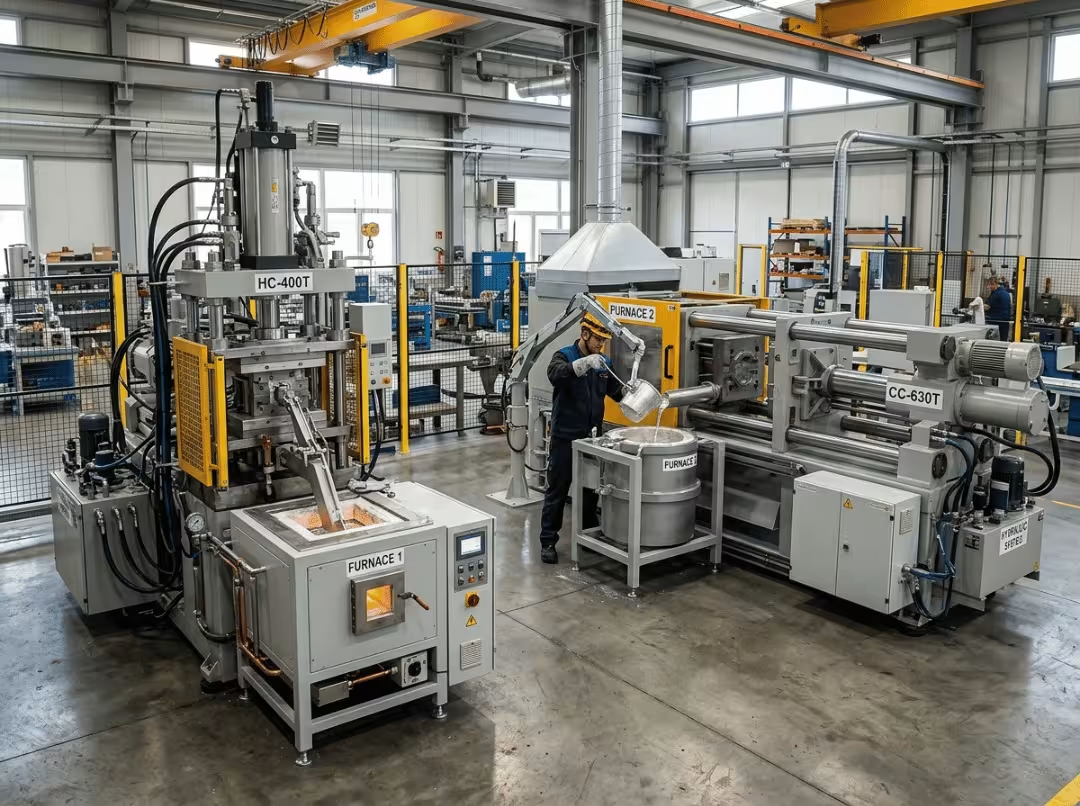
Hot chamber machines keep the molten metal in a built-in furnace tied directly to the injection system. That setup allows faster cycles, but it only suits low-melting alloys like zinc and magnesium. The higher heat of aluminum would chew through the machine’s internal parts.
Cold chamber machines melt metal in a separate furnace, then ladle it in for each shot. The extra step slows the cycle, but it handles higher-melting alloys like aluminum and brass. Aluminum parts, the most common die castings by far, run on cold chamber machines.
The alloys die casting actually uses
- Aluminum — the workhorse. Light, corrosion-resistant, and strong enough for structural and cosmetic parts. It’s the most common die casting alloy, and the reason many die-cast parts later head to a machine shop for finishing. If your part is aluminum, it’s worth knowing how aluminum machining handles the critical features casting can’t hold.
- Zinc — easy to cast, allows very thin walls, and sets up fast in hot chamber machines. Good for small, detailed, or plated parts.
- Magnesium — the lightest structural option, favored where weight is the priority.
- Copper alloys — strong and conductive, but they run hot and wear dies quickly, which pushes up cost per part over a long run.
The Main Advantages of Die Casting
Die casting earns its place for specific reasons. Each one matters only if it actually applies to your part.
High-speed, repeatable production
Once the tooling is dialed in, die casting runs fast and steady. Cycle times are short, and part-to-part consistency stays high across the run. For a program that needs tens of thousands of identical parts, this is the core reason to cast. The setup cost is real, but per-part speed is hard to beat at volume — which means the advantage only shows up once your quantities are high.
Thin walls and complex shapes
High-pressure filling pushes metal into thin sections and fine detail that other casting methods can’t reach. Aluminum walls can drop to around 0.5 mm, and zinc can go thinner still. You get complex geometry — ribs, bosses, mounting features — in a single shot instead of an assembly of separate pieces. This matters because it cuts part count, fastener count, and often a whole assembly step downstream.
Good dimensional accuracy and repeatability
Die-cast parts hold tight, repeatable tolerances across a long production run, and that accuracy trims secondary machining on many features. It doesn’t erase it, though. Critical interfaces — sealing faces, bearing bores, threaded holes — still usually need machining after casting. The trade-off is that you save on general dimensions but should plan to finish the features that actually control fit.
Strong mechanical properties and good surface finish
Because the metal solidifies under pressure, you get a dense, fine-grained structure with solid strength and hardness. The as-cast surface comes out smooth, which cuts finishing work on cosmetic parts. For housings and visible hardware, that surface quality removes a real step from the process — one you’d otherwise pay for in tumbling, sanding, or coating prep.
Low cost per part at volume
This is the heart of the economic case. The die is expensive, but once that cost spreads across enough parts, the price per part drops sharply. At high volume, die casting is one of the cheapest ways to produce a complex metal part. The catch — and it’s a big one — is that “at volume” does most of the work in that sentence. Below the right quantity, the math never lands.
The Main Disadvantages of Die Casting
Every advantage has a cost attached. Here’s what actually goes wrong and what it does to your project.
High upfront tooling cost
Steel dies are costly to design and cut, and you pay for them before a single good part ships. The consequence is direct: if you can’t spread that cost over enough parts, die casting is the wrong process. Low volumes and designs that aren’t locked down get punished hardest, because the tooling bill lands whether you make 500 parts or 500,000.
Porosity and trapped gas
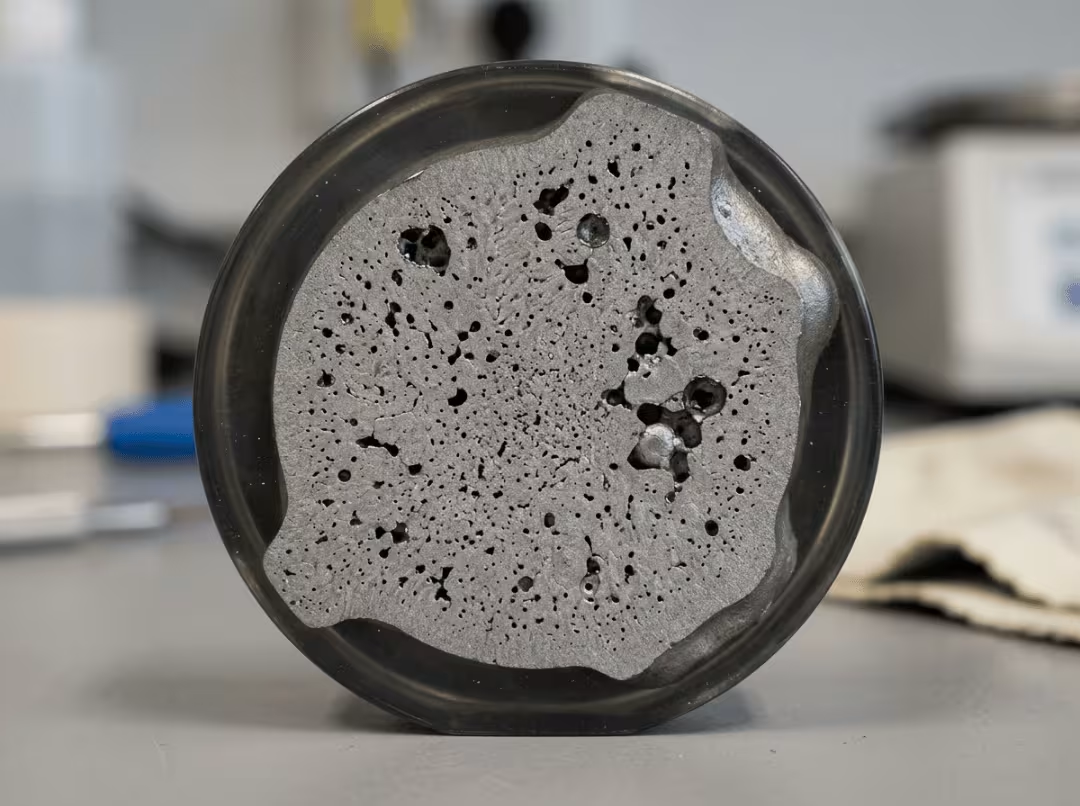
Metal fills the cavity fast and under pressure, and that speed can trap gas inside the part. The result is internal voids. Those voids create weak spots and potential leak paths, and they cause real trouble downstream — porous parts can blister during heat treatment and often fail pressure-tight requirements. This matters because for structural or sealed parts, porosity isn’t a cosmetic issue; it’s a reject.
Mostly non-ferrous only
Steel and iron run too hot for practical die casting. They wear dies quickly and add complexity most shops won’t take on. The consequence is simple: if your part has to be steel, die casting is off the table before you start, and the part moves to sand casting, investment casting, forging, or machining.
Not built for large parts
Machine tonnage and die size cap how big a part you can cast. Push past that limit and tooling and equipment costs climb out of reason. The limiting factor is the press itself, which is why large components usually move to sand casting or fabrication.
Design changes are expensive
Once the die is cut, changing the part means reworking or recutting hardened steel. That’s slow and costly. Die casting rewards a frozen, stable design and punishes one that’s still moving. If your part is likely to change after the first samples, you’re signing up for repeated tooling revisions — and each one resets part of the bill.
When Die Casting Is a Good Fit
Die casting is the right call when your part clears most of these conditions:
- High, repeatable volume — enough parts to spread the tooling cost, typically thousands and up.
- Non-ferrous alloy — aluminum, zinc, magnesium, or copper.
- Thin walls or complex geometry — features that would be slow or wasteful to machine from solid.
- Stable, frozen design — the part won’t change once tooling is cut.
- Cosmetic surface needs — a smooth as-cast finish reduces finishing work.
- Near-net-shape goals — you want the casting to do most of the shaping, with minimal secondary work.
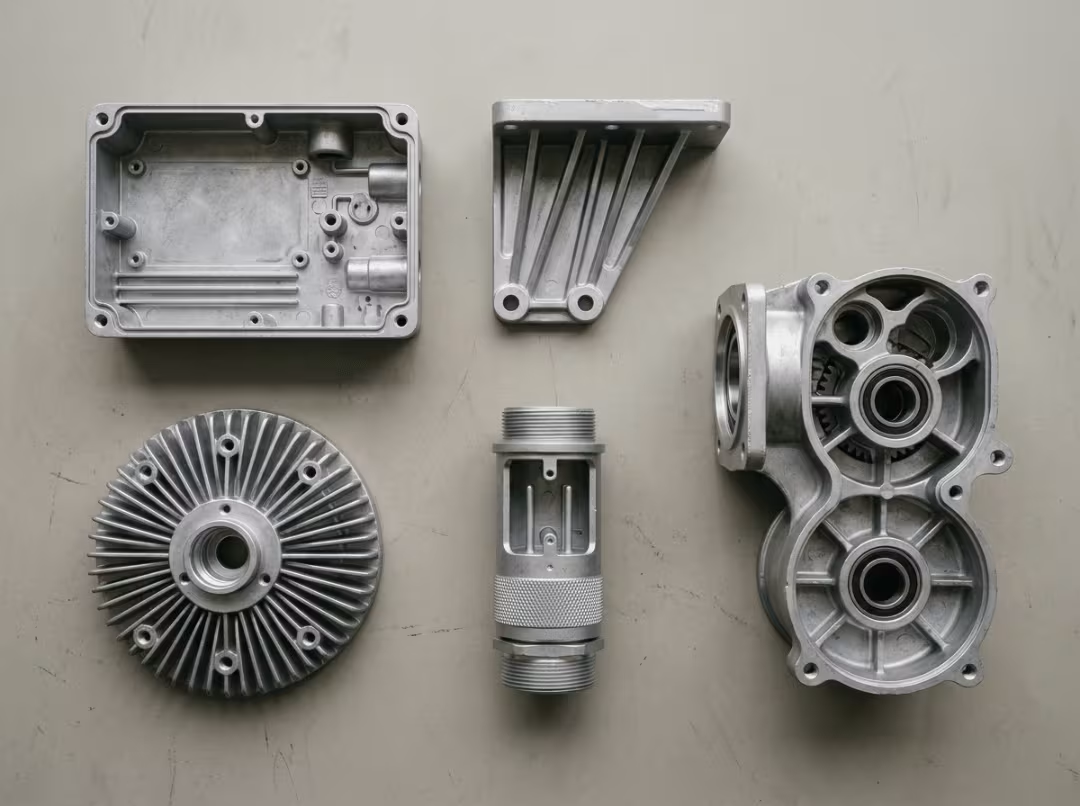
Parts that tend to fit: enclosures and housings, brackets, gearbox cases, electrical connectors, lighting bodies, and automotive or consumer hardware made in the thousands. Aluminum housings and brackets are the classic candidates — high volume, complex shape, and usually a mix of cast features and machined critical surfaces.
When Die Casting Is NOT the Right Choice
Knowing when to walk away saves more money than any other decision on this page. Each case below points to a better alternative.
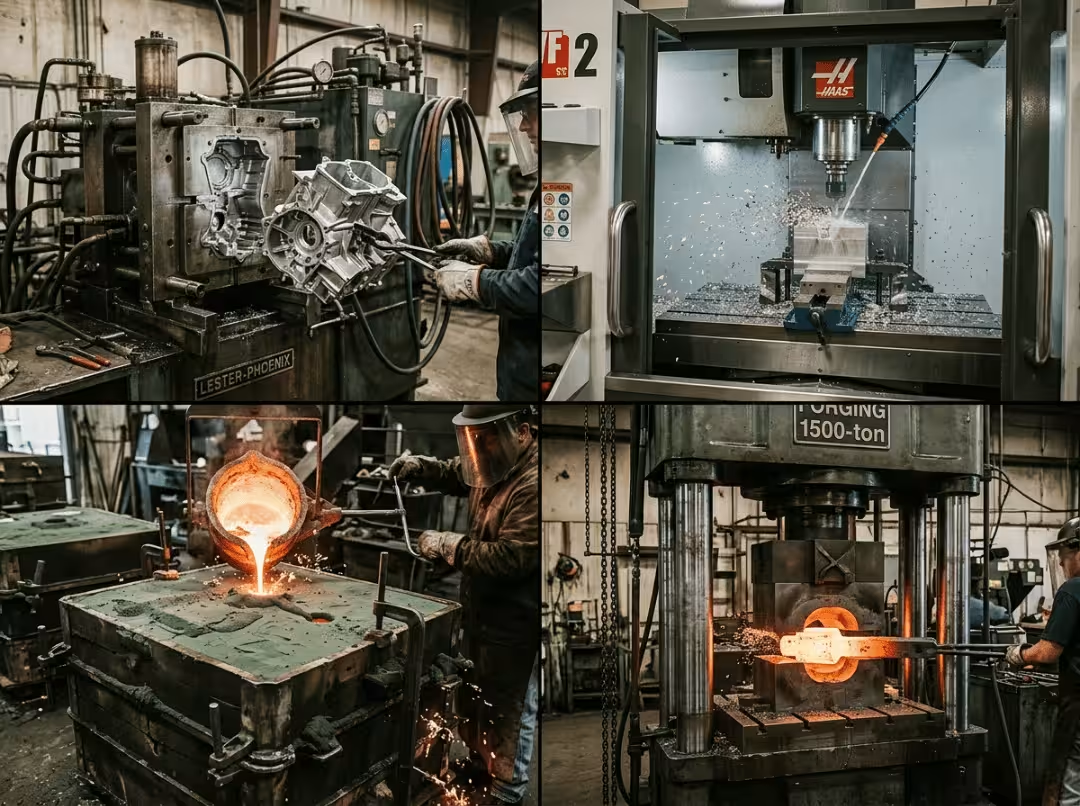
Low or uncertain volume → machining or sand casting
If you can’t amortize the tooling, the per-part math collapses. For low runs or projects where demand is still unclear, CNC machining from solid stock is the safer alternative — no die to fund first. For larger low-volume parts, sand casting keeps tooling cost down instead.
Designs still changing → machine first, tool later
If the design isn’t frozen, a cut die becomes a liability, and every revision costs tooling money. The safer path is to machine the early versions, lock the design once it’s proven, and only then commit to a die. That sequence turns expensive tooling changes into cheap program iterations.
Ferrous alloys or full-density parts → forging, machining, or investment casting
Steel and iron parts don’t belong in die casting, and neither do parts that must be fully dense — pressure-tight components, heavily loaded structural parts, or anything headed for aggressive heat treatment. Porosity risk makes casting a gamble here. Forging wins on strength, machining wins on density and control, and investment casting covers detailed ferrous parts.
Very large parts or a few high-value parts → sand casting, fabrication, or machining
Size limits rule out big components, and one-off or low-count parts can’t justify the tooling. Large parts usually favor sand casting or fabrication, while a handful of precision parts is almost always cheaper to machine from solid.
Die Casting Cost: Why Volume Matters
Cost is the decision most buyers actually care about, and die casting cost comes down to one relationship: tooling versus per-part.
Tooling cost vs per-part cost
There are two buckets. The first is the die — a large, fixed cost you pay once, upfront. The second is the per-part cost, which is low once the line runs. As volume rises, the fixed tooling cost spreads thinner across each part, so the effective cost per part keeps dropping. At low volume, that fixed cost dominates and every part looks expensive on the quote.
The break-even mindset
The useful question is: at what point does the per-part saving cover the die? Below that break-even volume, another process is cheaper. Above it, die casting pulls ahead and keeps winning. Low-volume programs rarely reach break-even, which is why they get steered toward machining. Before tooling pays off, machining from solid is often the cheaper route, with no die to fund first.
What quietly inflates die casting cost
A few things drive the number up more than people expect:
- Frequent design revisions — each change can mean recutting steel.
- Deep undercuts and side actions — these add slides and complexity to the die.
- Unnecessarily tight tolerances — over-specifying precision forces extra machining and inspection.
- Thin walls that still need machining — you pay for the casting detail, then machine it anyway.
None of these show up on the first quote line, but they all show up in the final bill.
Common Limitations and Defects
This is where the design decisions get made. Plan around these constraints, and you avoid most of the trouble.
Porosity and how it limits parts
Porosity happens when gas gets trapped as metal fills the cavity fast. It matters most in pressure-tight parts, structural parts, and anything heat-treated, where hidden voids turn into failure points. Good gating and venting help, and vacuum die casting reduces it further. But no casting is guaranteed void-free, so critical parts need the design and process planned with porosity in mind from the start.
Draft angles and parting lines
Cast parts need draft — a slight taper on walls so the part releases from the die. That taper affects your dimensions and has to be built into the design early. The parting line, where the two die halves meet, leaves a visible seam and a small flash that may need trimming. On cosmetic parts, where that line lands is a design decision, not an afterthought.
Tooling complexity from undercuts and slides
Undercuts — features that lock the part into the die — force the tool to use moving slides to release it. Every slide adds cost, maintenance, and lead time. Stripping out unnecessary undercuts is one of the easiest ways to bring tooling cost down, so it’s worth reviewing before the die is designed.
Die wear and alloy choice
The hotter the alloy, the harder it is on the die. Aluminum and copper wear tooling faster than zinc. That wear shows up as shorter die life and higher cost per part over a long run, so the alloy you pick carries a cost tail well beyond the raw material price.
Machining allowance for critical features
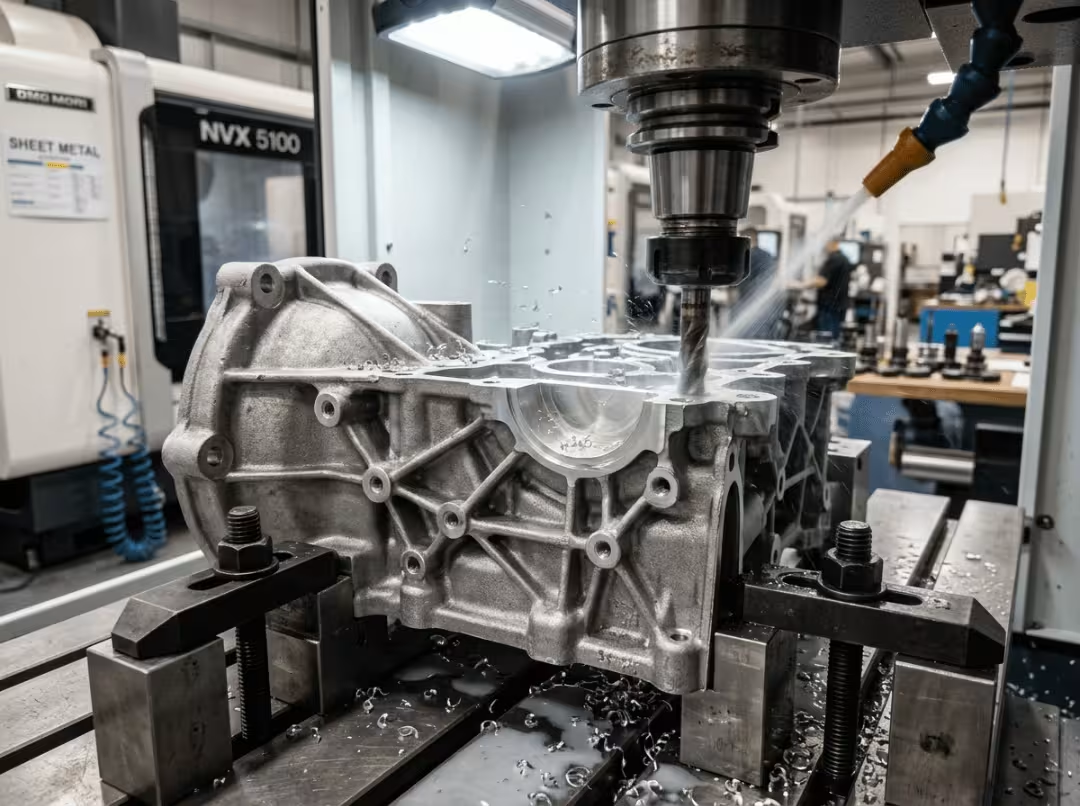
Most die-cast parts still get machined somewhere. Sealing faces, bearing bores, mating surfaces, and threaded holes usually can’t hold their tolerances straight from the die, so you leave stock and finish them afterward. Sealing faces and precision bores are typically cleaned up on a CNC milling service once the casting is out of the die. This matters because designing that allowance in from the start is the difference between a part that assembles and a batch of scrap.
Die Casting vs CNC Machining, Sand Casting, Investment Casting, and Forging
No process is universally best. The right one depends on your part and your volume.
|
Process |
Best volume |
Upfront tooling |
Part size |
Material fit |
Density / strength |
Typical use |
|---|---|---|---|---|---|---|
|
Die casting |
High |
High |
Small to medium |
Non-ferrous |
Good, some porosity risk |
High-volume housings, brackets |
|
CNC machining |
Low to medium |
None |
Small to large |
Nearly any metal |
Full density, high strength |
Prototypes, precision parts, low runs |
|
Sand casting |
Low to medium |
Low |
Small to very large |
Ferrous and non-ferrous |
Moderate |
Large or low-volume castings |
|
Investment casting |
Medium |
Medium |
Small to medium |
Wide range |
Good density, fine detail |
Complex, high-detail parts |
|
Forging |
Medium to high |
Medium to high |
Small to medium |
Ferrous and non-ferrous |
Highest strength/fatigue |
Load-bearing solid parts |
Choose die casting when you need high volumes of non-ferrous parts with thin walls or complex shapes, the design is frozen, and surface finish matters.
Choose CNC machining when volume is low to medium, the design is still evolving, you need full density and tight tolerances, or you want parts fast without paying for tooling. Turned or cylindrical parts fit a CNC turning service, while prismatic parts run on milling.
Choose sand casting when parts are large, volumes are low, or you’re casting ferrous alloys and need tooling cost to stay low.
Choose investment casting when the part is complex and detailed, needs a fine finish and good density, and runs at moderate volume.
Choose forging when the part is solid and load-bearing, and you need the highest strength and fatigue resistance you can get.
What Parts Are Best Suited to Die Casting?
Run your part through this quick check. The more “yes” answers, the better the fit:
- Is the alloy non-ferrous (aluminum, zinc, magnesium, copper)?
- Is the volume high and repeatable — thousands of parts or more?
- Does it have thin walls or complex geometry?
- Is the design frozen and unlikely to change?
- Does it need a smooth cosmetic surface?
- Is the part size within die casting machine range?
- Can the part tolerate some porosity — no full-density requirement?
Strong candidates include enclosures, brackets, housings, electrical connectors, and lighting or heat-sink bodies. If most of your answers are “no,” go back to the process-comparison section — machining or another casting method is likely the better route.
How to Get Die-Cast-Ready Parts
Die casting rarely ends at the casting. The part comes out of the die close to final shape, but the features that actually control fit and function — sealing faces, bearing bores, threaded holes, and tight-tolerance interfaces — are usually machined afterward. That’s a machining problem, not a casting one, and it’s where fit issues and rework show up when it isn’t planned well.
Starting with a partner who understands both sides keeps parts out of the scrap bin. When the machining allowance, datums, and critical dimensions are set from the start, the finished part assembles right the first time. And if your part turns out to be a poor die casting fit — low volume, changing design, or a full-density requirement — machining it from solid is often the smarter path anyway.
Send us a drawing or 3D model, and we’ll flag the features that need machining, check them against your tolerances, and quote the work through our CNC machining services. Whether your part is cast-then-finished or machined start to finish, we’ll help you get it built to assemble cleanly.
Frequently Asked Questions
What are the main pros and cons of die casting?
The main advantages are fast, repeatable production, thin walls and complex shapes, good dimensional accuracy, strong mechanical properties, and low cost per part at high volume. The main drawbacks are high upfront tooling cost, porosity risk, a non-ferrous-only material range, part-size limits, and expensive design changes. In short, it shines at volume and struggles most everywhere else.
Is die casting cheaper than CNC machining?
It depends entirely on volume. Die casting carries a large upfront tooling cost, so it’s more expensive for low quantities. CNC machining has no tooling cost, which makes it cheaper for prototypes and low-to-medium runs. Once you’re making enough parts to spread the die cost, die casting becomes the cheaper option per part.
What volume do you need for die casting to make sense?
There’s no single number, but die casting generally makes sense in the thousands of parts and up, where the tooling cost spreads thin enough to lower the per-part price. Below that, machining or sand casting usually costs less overall. The real test is break-even: whether your total volume covers the die.
Can you die cast steel or other ferrous metals?
In practice, no. Steel and iron melt at temperatures that wear steel dies out quickly and add heavy complexity, so die casting is limited to non-ferrous alloys like aluminum, zinc, magnesium, and copper. Ferrous parts typically go to sand casting, investment casting, forging, or machining.
Why do die-cast parts have porosity, and can it be prevented?
Porosity comes from gas trapped as molten metal fills the die fast under high pressure. It can’t be eliminated entirely, but good gating and venting reduce it, and vacuum die casting reduces it further. For pressure-tight or structural parts, the design and process have to account for it from the start.
Do die-cast parts still need machining?
Most do. The casting gets the part close to final shape, but critical features — sealing faces, bores, threaded holes, and tight-tolerance surfaces — are usually machined afterward because casting can’t hold those dimensions reliably. Planning that machining allowance into the design prevents rework later.
Die casting vs sand casting — which should I choose?
Choose die casting for high volumes of smaller non-ferrous parts that need thin walls, fine detail, and a good surface finish. Choose sand casting for large parts, low volumes, or ferrous alloys, where low tooling cost matters more than finish and speed. Volume and part size usually make the decision for you.
What’s the biggest disadvantage of die casting?
For most projects, it’s the upfront tooling cost combined with how it locks in your design. You pay a lot before the first good part ships, and changing the part after the die is cut is slow and expensive. That’s why die casting only makes sense with high volume and a frozen design.
Conclusion: Match the Process to the Part
Die casting isn’t good or bad on its own. It’s right or wrong for a specific part, alloy, volume, and budget. It wins when you’re producing high volumes of non-ferrous parts with a frozen design and complex geometry — and it loses money fast on low volumes, changing designs, ferrous alloys, or parts that must be fully dense.
Run your part through the fit conditions and the cost logic before you commit to tooling. If it clears the bar, die casting is one of the most economical processes you can pick. If it doesn’t, machining or another casting method will serve you better — and cost you less.
If you have a part headed for die casting, send us the drawing or model. We’ll check the features that need machining, confirm they hold your tolerances, and help you get the finished part built right the first time. And if the part turns out to be a poor casting fit, we’ll show you what machining it from solid would take instead.