Here’s a situation I’ve seen more than once: a drawing calls out “nylon,” the supplier quotes PA66 GF30, and procurement approves it without flagging the discrepancy. The parts come back stiffer and more brittle than expected, the assembly team starts asking questions, and someone eventually traces it back to a spec that left too much room for interpretation.
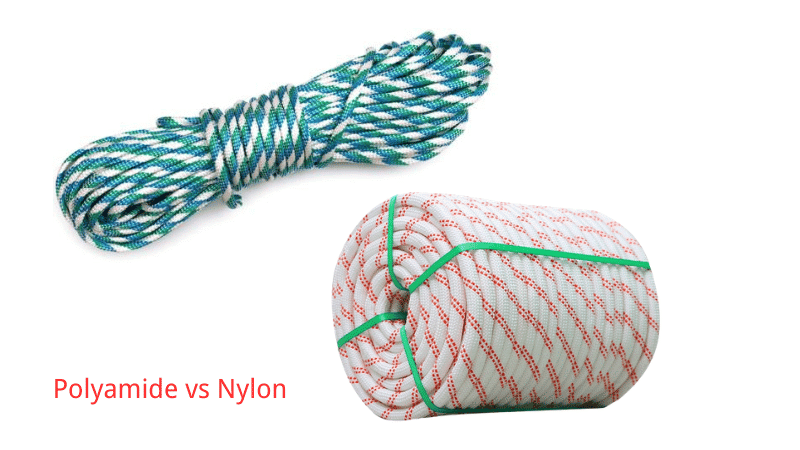
“Polyamide” and “nylon” are often used as synonyms, and most of the time that doesn’t cause problems. When it does, the failure mode is usually one of three things: wrong grade, wrong moisture behavior, or a process that doesn’t suit the material. This guide explains where the terms overlap, where they don’t, and how to make the right call for your parts.
Quick Answer: Are Polyamide and Nylon the Same?
Nylon is a polyamide, but the category goes well beyond nylon.
“Polyamide” (PA) is the technical term for any polymer with repeating amide (-CO-NH-) bonds in the backbone — a broad class that includes natural materials like wool and silk, high-performance aramids like Kevlar®, and the engineering thermoplastics most engineers work with daily. “Nylon” refers to a specific subset of those: the aliphatic polyamides PA6, PA66, PA11, and PA12, developed for general industrial and commercial use. Every nylon is a polyamide. Not every polyamide is a nylon.
In everyday engineering-plastics conversation, the terms are close enough to be interchangeable when the context is PA6 or PA66. The distinction starts to matter when aramids or high-temperature semi-aromatics enter the picture, or when grade differences change the mechanical or thermal behavior of the finished part. On a drawing, “nylon” is ambiguous. “PA66 GF30” is not.
If you want the full breakdown before the details, here’s how the two compare side by side.
Polyamide vs Nylon at a Glance
| Factor | Polyamide (PA) | Nylon |
|---|---|---|
| Definition | Any polymer with repeating amide bonds | A subset of aliphatic polyamides |
| Scope | Broad: aliphatic, aromatic, semi-aromatic | Narrow: mainly PA6, PA66, PA11, PA12 |
| Common grades | PA6, PA66, PA11, PA12, PPA, PA46, Kevlar?, Nomex? | PA6, PA66, PA11, PA12 |
| Tensile strength | ~45 MPa to ~3,600 MPa (aramid fiber) | ~45–85 MPa (common grades, unfilled) |
| Moisture absorption | Very low (aramids) to high (PA6/PA66) | ~0.5–3% at 50% RH depending on grade |
| Processing | Some melt-processable aramids are not | All melt-processable (molding, extrusion, AM) |
| Naming on specs | Use specific grade code (PA6, PPA, etc.) | "Nylon 6," "Nylon 6/6," or PA equivalent |
| Typical uses | Ballistic protection, high-temp parts, gears | Gears, bearings, housings, 3D-printed parts |
One note before reading further: property values vary significantly with grade and condition. A dry-as-molded test bar and the same material after moisture equilibration can differ enough to change a design decision. Always confirm whether a datasheet value is dry or conditioned before you use it. It’s the detail that gets skipped most often.
What Is Polyamide?
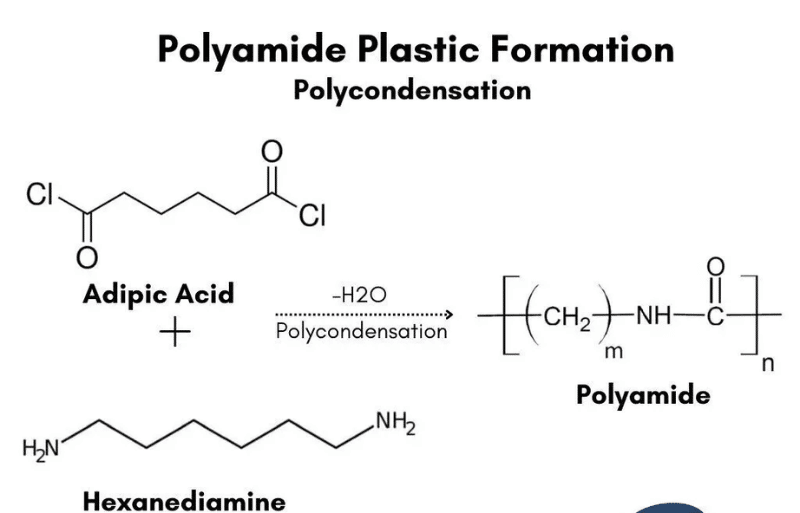
Polyamide is the formal polymer chemistry term for any material whose repeat units are linked by amide (-CO-NH-) bonds. The family includes natural materials such as wool, silk, and collagen, as well as a wide range of synthetic engineering polymers. In manufacturing, when engineers say “polyamide,” they mean a synthetic polymer.
Synthetic polyamides split into three distinct families.
Aliphatic Polyamides (PA6, PA66, PA11, PA12)
These are the materials most engineers work with daily. They offer a practical balance of strength, toughness, wear resistance, and processability at a cost that makes them viable for high-volume production. Nylon lives entirely within this family. If you’ve specified a polyamide for injection molding, extrusion, or powder-bed 3D printing, this is almost certainly what you’ve been working with.
Aromatic Polyamides — Aramids (Kevlar®, Nomex®)
Aramids are purpose-built for performance at the extremes: tensile strengths an order of magnitude above common nylons, outstanding cut resistance, and inherent flame resistance. Neither grade is melt-processable, which substantially limits the available geometries and manufacturing routes. For most engineering-plastics decisions, aramids are worth understanding as context for the broader polyamide family, but they sit outside the nylon selection conversation.
Semi-Aromatic Polyamides (PPA, PA6T)
Semi-aromatics sit between aliphatic nylons and aramids in both performance and cost. They retain stiffness and dimensional stability at temperatures where PA6 and PA66 would creep, and they hold up well against automotive powertrain fluids. They can be injection-molded and extruded but require higher barrel temperatures, careful drying protocols, and tooling designed for their higher viscosity. If you’re engineering parts for continuous service above 130–150°C, semi-aromatics are worth the effort to specify.
Why Structure Drives Performance
The behavior of any polyamide depends on three structural variables: crystallinity, hydrogen-bonding density, and chain flexibility. Higher crystallinity and denser hydrogen bonding generally mean higher stiffness, strength, and melting point — but at a cost to toughness. More flexible backbone segments flip the trade-off, producing softer, tougher materials. Moisture absorption tracks the same chemistry: the amide groups that give polyamides their strength also attract water. It’s why PA12 stays dimensionally stable while PA6 swells in the same humid room, despite sharing the same basic bond type.
What Is Nylon?
Nylon is the most commercially established subset of synthetic polyamides. In plastics and textiles, when someone says “polyamide,” they typically mean a nylon-type material.
Origin
The name originated as a DuPont trademark in the late 1930s, coined for the synthetic aliphatic polyamides PA6 and PA66 developed for fiber and molding applications. The trademark eventually became the generic name for the aliphatic polyamide family in everyday use.
Common Commercial Nylons
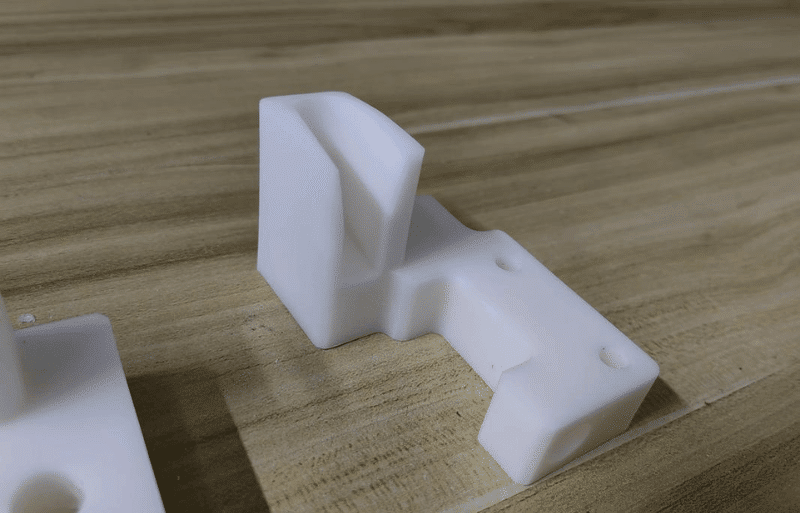
The grades most commonly used in engineering specifications are PA6, PA66, PA11, and PA12. Their semi-crystalline microstructure and hydrogen-bonding network give them solid baseline properties across strength, toughness, wear resistance, and chemical resistance. They undergo a wide range of conventional and additive methods, which explains why they’ve remained the most widely specified engineering plastics for decades.
When the Terms Are Interchangeable
For informal conversation or general material selection, “nylon” and “polyamide” are functionally the same when the context is PA6 or PA66. The distinction starts to matter when high-temperature grades or reinforced specialty compounds come into play. On any technical document — drawings, purchase orders, material specs — write the full grade code. “Nylon” as a sole callout leaves too many decisions to chance downstream.
Key Differences Between Polyamide and Nylon
With both terms defined, here’s where they actually diverge on the shop floor.
Terminology and Scope
Polyamide is the umbrella term; nylon is one subset of it. Every nylon is a polyamide. The reverse is not true. That asymmetry is the source of most spec confusion.
Chemistry and Material Range
Polyamide covers aliphatic, aromatic, and semi-aromatic chemistries. Nylon covers only aliphatic grades produced from a relatively narrow set of monomers. The chemical window for polyamides as a whole is considerably larger, which also means “polyamide” alone, on a spec, conveys almost no useful information about what the finished part will do.
Performance Range
Common nylons have tensile strengths of roughly 45–85 MPa in unfilled form, with consistent toughness and moderate thermal capability. That spread carries real engineering consequences: if your spec says “polyamide” without a grade code, the supplier has no reliable way to know whether you need PA12’s dimensional stability or a reinforced semi-aromatic’s thermal stiffness.
Processing Implications
Most nylons melt-process cleanly through injection molding, extrusion, and additive manufacturing. Semi-aromatic grades melt-process but demand elevated temperatures, careful moisture control before processing, and tooling designed for their higher viscosity. The grade code tells you what the material will do on the machine. The family name does not.
How They Appear on Drawings and Specs
This is where imprecise language has a practical cost. A drawing that reads “nylon” can be quoted with PA6, PA66, PA12, or a glass-filled variant — and all are technically correct. A drawing that reads “PA66 GF30, dry-as-molded” leaves the supplier and the engineer with the same understanding. Specify the grade, reinforcement level, and conditioning state. That’s the minimum for a manufacturable callout.
Common Grades Compared
Knowing the grades is half the job. The other half is matching one to your part.
| Grade | Common Name | Tensile Strength | Melting Temp | Moisture @50% RH | Standout Trait |
|---|---|---|---|---|---|
| PA6 | Nylon 6 | 60¨C75 MPa | 220–225°C | 2.4–3.2% | Tough, easy to process |
| PA66 | Nylon 6,6 | 70¨C85 MPa | 255–265°C | 2.5–3.5% | Higher stiffness and heat resistance |
| PA11 | Bio-based PA | 50¨C65 MPa | 185–190°C | 1.5–2.0% | Toughness, low-temperature performance |
| PA12 | Long-chain PA | 45¨C55 MPa | 178–180°C | 0.5–1.0% | Dimensional stability, low moisture pickup |
| PPA | Semi-aromatic | 80¨C100 MPa+ | ~295°C+ | Low | High-temperature engineering |
PA6 (Nylon 6)
PA6 is the reliable generalist. Tough, impact-resistant, easy to process on standard equipment, and consistent across a wide range of molding conditions. Its limitations are moisture sensitivity and a lower heat deflection temperature compared to PA66. A PA6 part running tight tolerances in a humid environment needs to be designed for its conditioned dimensions, not dry-as-molded. Common applications: gears, bushings, structural housings, and functional prototypes.
PA66 (Nylon 6,6)
PA66 runs stiffer and hotter than PA6. The higher melting point gives it more headroom for under-hood and high-cycle applications, and its improved wear resistance makes it a better long-term choice for loaded sliding contacts. The trade-off is a more demanding melt that requires tighter process control. It absorbs moisture at nearly the same rate as PA6, so service dimensional stability is a similar concern. Default choice for structural and thermally demanding parts.
PA11 (Bio-Based)
PA11 is made from castor oil-derived feedstock, which gives it a sustainability angle that increasingly appears in product requirements. More practically, its long, flexible chain delivers superior low-temperature toughness that PA6 and PA66 can’t match, and its lower moisture absorption helps keep dimensions stable in environments with variable humidity. Use it for parts that must flex, absorb shock, or survive cold-temperature service. Common applications: flexible fluid lines, connectors, snap-fit assemblies, and prosthetic components.
PA12 (Long-Chain)
PA12 has the lowest moisture absorption of the common nylons — typically 0.5–1.0% at 50% RH — which translates directly into better dimensional stability over the part’s service life. It also offers strong resistance to fuels, oils, and many aliphatic hydrocarbons. It’s the standard powder-bed polyamide for SLS and MJF and handles chemical exposure that would degrade PA6 over time. If dimensional consistency and chemical contact are both requirements, PA12 is the usual answer.
PPA (Semi-Aromatic / High-Temp)
When a part must hold its stiffness and geometry at temperatures where PA66 would creep — typically above 130–150°C sustained — PPA is the direction to look. It’s significantly more demanding to process than aliphatic nylons and costs more, but its thermal and mechanical performance at elevated temperatures is in a different category. Common in automotive powertrain, fluid management, and high-temperature electrical hardware.
Reinforced and Specialty Variants
- Glass beads (GB): Raise stiffness and improve surface finish with isotropic behavior. Good choice when you need consistent properties in all directions without the warping risk associated with fiber reinforcement.
- Glass fibers (GF): Deliver the biggest gains in tensile strength and stiffness. The trade-off is higher warping tendency, reduced impact resistance, and more brittle failure modes. Match glass content to actual load requirements — 30% GF doesn’t always outperform 15% GF on impact-loaded parts.
- Flame retardant (FR): Additive packages for electrical enclosures, switch housings, and connectors where UL94 ratings are required. Verify that FR additives are compatible with both the base grade and the manufacturing process before specifying.
How to Choose Between Polyamide and Nylon Grades
Start from what the part actually needs, not from what’s most familiar.
Choose by Performance Priority
- Tightest dimensional tolerances and lowest moisture pickup → PA12
- Best toughness, especially at low temperature → PA11
- Lowest material cost with broad supplier availability → PA6 or PA66
- Service above 130–150°C or demanding powertrain fluids → PPA or glass-reinforced semi-aromatic
- Extreme tensile strength or cut resistance beyond any nylon grade → Aramid; requires a fundamentally different design and manufacturing approach
Choose by Application
- Fuel, hydraulic, and fluid lines: PA11 or PA12 for chemical compatibility and long-term fuel resistance
- Gears, bearings, wear pads, and bushings: PA6 or PA66 for the combination of low friction, abrasion resistance, and consistent processing
- Housings, enclosures, and structural panels: PA12 for stability; GF-reinforced PA66 or PPA where stiffness and heat matter more
- High-cycle mechanical assemblies under sustained load: PA66 or reinforced grades; verify creep behavior at operating temperature, not just room-temperature tensile
A Simple Decision Path
- Does the part require tight tolerances, moisture stability, or chemical resistance? Start with PA12.
- Does it need to absorb impact or perform in cold service? Consider PA11.
- Is cost and supply chain the primary constraint? PA6 or PA66.
- Does it experience sustained elevated temperatures or heavy mechanical loads? Evaluate PPA or a glass-reinforced grade.
- Does it need tensile performance or cut resistance beyond what any nylon delivers? Move to an aramid and reassess the manufacturing route.
Polyamide vs Nylon for 3D Printing
Grade-to-process fit is what separates a clean print from a warped one. Polyamides are among the most capable materials for functional 3D-printed parts, but printing a PA6 FDM part and expecting SLS PA12 behavior is a design error, not a material failure.
PA12 for SLS and MJF
PA12 is the baseline powder-bed polyamide for good reason: it combines low moisture pickup, good dimensional accuracy, and reliable chemical resistance in a material that consistently fuses and sinters across SLS and MJF platforms. It’s the safe starting point for functional prototypes, housings, snap-fits, and end-use production parts that don’t face unusually high loads or temperatures.
PA11 for Tough, Flexible Parts
When parts need to flex repeatedly, absorb impact, or survive cold-temperature cycling, PA11 pulls ahead. Its bio-based origin also matters for projects with sustainability requirements. The trade-off is slightly lower stiffness and a higher cost per kilogram. Reach for PA11 for living hinges, flexible connectors, prosthetic components, and parts that take dynamic loading.
PA6 for FDM
PA6 filament produces tough, strong FDM parts with better impact resistance than most common FDM plastics. The practical challenge is moisture: PA6 absorbs moisture readily, which softens the filament, causes inconsistent extrusion, and increases the risk of warping. Dry the filament thoroughly before use, seal it during runs, and tune bed adhesion carefully. Appropriate for structural prototypes, gears, and bearing surfaces where toughness and machinability post-print are priorities.
Reinforced Powders (PA12 GF / PA12 GB)
Same materials, different selection driver here: choose based on load direction and part geometry rather than absolute property numbers. Glass-bead-reinforced PA12 gives isotropic stiffness gains and a finer surface texture without the directional warping that glass fibers introduce. Glass-fiber-reinforced PA12 delivers greater stiffness and tensile strength improvements but also exhibits increased warping tendency and more brittle fracture behavior. For highly anisotropic stress states, GF grades can create problems that aren’t apparent until the part is in service.
Match Material to Process
| Grade | Best Process | Best-Fit Parts |
|---|---|---|
| PA12 | SLS, MJF | Housings, snap-fits, end-use production parts |
| PA11 | MJF, SLS | Flexible connectors, fuel lines, and impact-loaded parts |
| PA6 | FDM | Structural prototypes, gears, machinable functional parts |
| PA12 GF | SLS | Load-bearing fixtures, stiff housings, brackets |
| PA12 GB | MJF | Fixtures, tooling, and jigs needing isotropic stiffness |
Common Mistakes in Material Selection
1. Treating “Nylon” as a Synonym for All Polyamides
It’s a shortcut that works until it doesn’t. Writing “nylon” on a callout invites grade substitutions that alter stiffness, moisture behavior, and thermal performance in ways the design didn’t account for. Specify the grade code, the reinforcement level, and any relevant conditioning notes. That’s what the supplier actually needs to quote correctly.
2. Ignoring Moisture Absorption
Moisture absorption is probably the most underestimated variable in polyamide design. PA6 can absorb 2–3% moisture at equilibrium — enough to shift dimensions by several thousandths of an inch on a moderate-sized part and reduce stiffness by 20–30%. If tolerances matter, either design the part for its conditioned dimensions or specify a low-moisture-absorption grade, such as PA12.
3. Specifying on Tensile Strength Alone
Room-temperature dry tensile strength is the most visible number on a datasheet and one of the least useful in isolation. Creep under sustained load, stiffness at operating temperature, impact resistance, and dimensional stability in real service conditions are usually more relevant. Pull the full property profile and check it against the actual service environment before locking a grade.
4. Overlooking Process Compatibility
A grade that injection molds well may not suit SLS, MJF, or FDM. Confirm material and process compatibility together before committing to a specification, not after the first failed print or a short shot.
5. Comparing Dry vs. Conditioned Data Inconsistently
Datasheets commonly report dry-as-molded properties because they’re repeatable. Parts in service are rarely dry. When comparing grades, verify that the values come from the same conditioning state. Comparing a dry PA66 stiffness number to a conditioned PA12 stiffness number is an apples-to-oranges comparison that can lead you to the wrong material.
Frequently Asked Questions
Is nylon the same as polyamide?
Not exactly. Nylon is a class of polyamide — specifically, the common aliphatic grades such as PA6, PA66, PA11, and PA12. All nylons are polyamides, but polyamides also include high-temperature grades like PPA and aramids like Kevlar®, which are not nylons.
Why do engineers use “PA” instead of “nylon”?
Because it’s precise. “PA66 GF30” identifies the exact polymer, the reinforcement type, and the loading level. “Nylon” does none of that. In engineering documentation, vague material callouts create ambiguity between design intent and what gets built.
Which absorbs more moisture, PA6 or PA12?
PA6 absorbs significantly more — typically 2.4–3.2% at 50% RH, compared to 0.5–1.0% for PA12. Where dimensional stability matters, that difference is consequential.
Which is better for SLS or MJF — PA11 or PA12?
PA12 is the standard starting point: stiff, stable, and widely qualified across platforms. PA11 is the right answer when toughness, impact resistance, or cold-temperature flexibility matter more than maximum stiffness. If neither of those is a hard requirement, go with PA12.
What’s the difference between PA6, PA66, PA11, and PA12?
PA6 is tough and easy to process — the all-purpose choice. PA66 adds stiffness and thermal headroom for more demanding service. PA11 is bio-based, exceptionally tough at low temperatures, and absorbs less moisture than PA6/PA66. PA12 has the lowest moisture absorption of the group and the best dimensional stability. The clearest dividing lines between grades are moisture pickup and melting point — those two numbers drive most of the real-world selection decisions.
Does nylon need to be dried before 3D printing?
Yes, and this step is skipped more often than it should be. Nylon — whether filament for FDM or powder for SLS/MJF — absorbs moisture from ambient air quickly. Wet filament causes inconsistent extrusion, poor surface finish, and weaker layer bonding. Wet powder affects sintering quality and can introduce porosity. Dry material at the temperature and duration specified by the supplier, store it, sealed with a desiccant, between runs, and don’t assume a freshly opened bag is dry enough after sitting in a humid shop.
Is nylon suitable for outdoor or fuel-contact use?
With the right grade, yes. PA11 and PA12 offer good fuel and chemical resistance and handle outdoor exposure without significant degradation. PA6 and PA66 absorb more moisture, which can cause dimensional change and may require UV stabilizers or protective coatings for sustained outdoor service. For fuel contact, confirm compatibility with the specific fuel type and temperature range rather than relying on general chemical resistance ratings.
Conclusion
Nylon is a well-established subset of polyamides, not a separate material class, and the distinction matters once performance requirements push outside the PA6/PA66 comfort zone into aramids or high-temp grades. The most reliable selection process starts with the operating environment, moves through the part’s specific mechanical and thermal demands, and ends with a grade and reinforcement package compatible with your manufacturing process.
Pull the conditioned data, check it against your tolerance requirements, and make that call before the design is locked.
Working through a material decision? Share your part requirements with our team, and we’ll review grade fit, flag moisture or tolerance risks, and recommend the right process.
Ready to build? Request a prototype or production quote for SLS, MJF, FDM, or injection molding — and get the material right before the parts are made.