Injection molding and CNC machining stand as two of the most versatile and widely used manufacturing processes, each offering unique advantages for creating high-quality parts. Selecting the right method can significantly impact production efficiency, cost, and product performance, making this decision a critical step in any manufacturing journey. This guide cuts through the complexity, delivering a clear and actionable roadmap to help you make the best choice for your specific needs.
Understanding Injection Molding and CNC Machining
Simplified Definitions
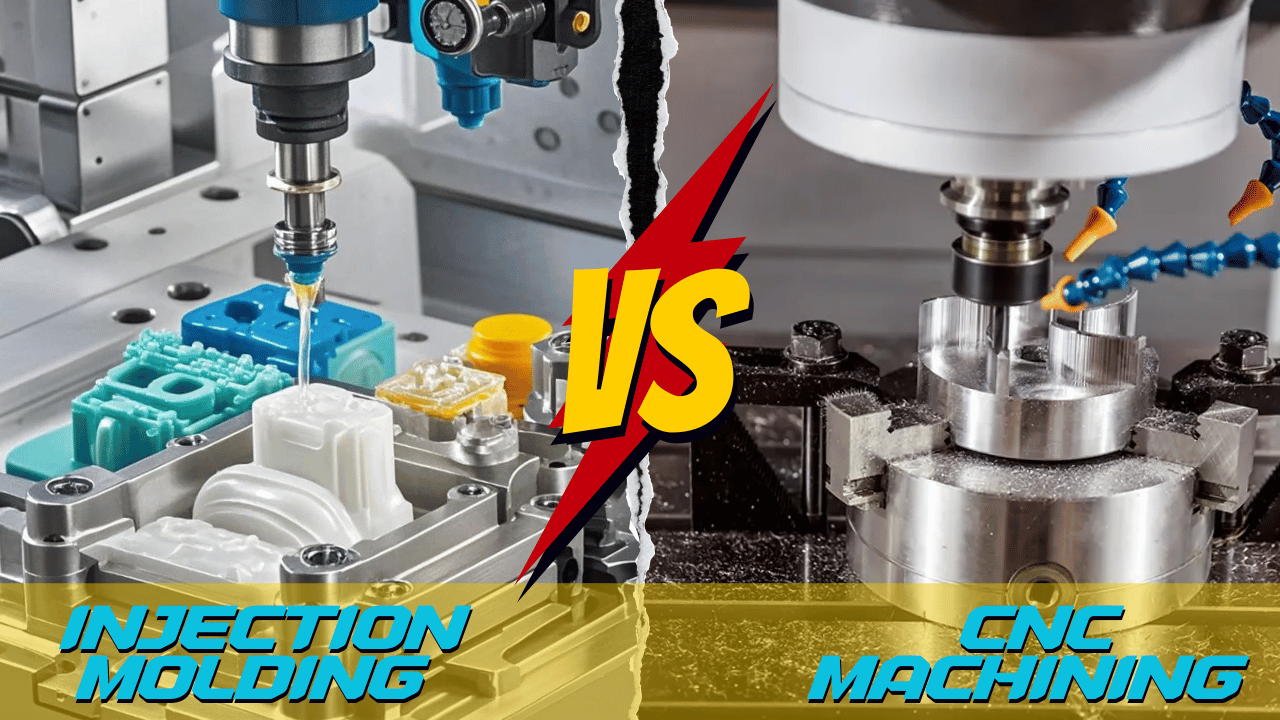
Injection molding and CNC machining represent two distinct yet essential manufacturing techniques, each tailored to specific production needs. Injection molding involves creating parts by injecting molten material, such as plastic or metal, into a pre-designed mold. This process excels in producing high volumes of identical parts with intricate designs, making it a go-to choice for industries like automotive, consumer goods, and medical devices.
On the other hand, CNC (Computer Numerical Control) machining utilizes computer-controlled tools to precisely cut, drill, or shape materials such as metal, plastic, or wood. Unlike injection molding, CNC machining removes material from a solid block, or “workpiece,” to create the desired shape. This method is ideal for low- to medium-production runs, prototypes, and parts that require tight tolerances or complex geometries.
Key Differences in Working Principles
While both processes aim to produce high-quality parts, their working principles differ significantly. Injection molding relies on molds, which act as the blueprint for the final product. The process begins by heating the material until it becomes molten, then injecting it into the mold cavity under high pressure. Once the material cools and solidifies, the mold opens to release the finished part. This cycle repeats, enabling rapid production of identical components.
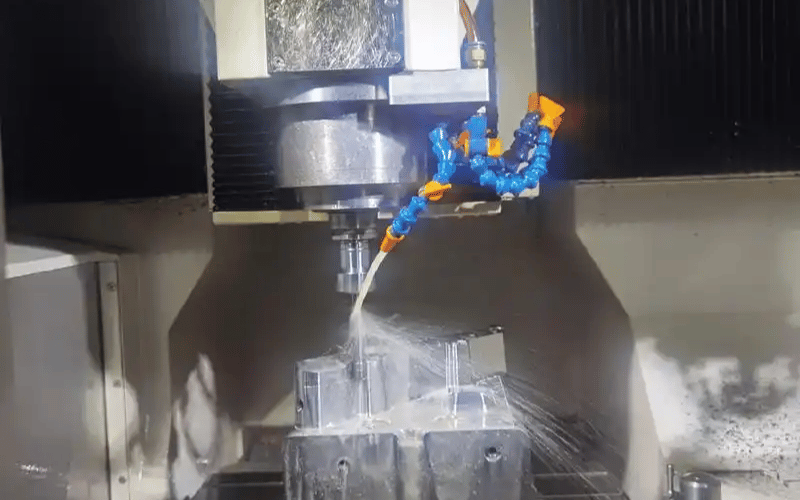
CNC machining, in contrast, operates through a subtractive process. A computer program guides the cutting tools, which systematically remove material from the workpiece to achieve the desired shape. This method offers unparalleled precision and flexibility, allowing manufacturers to create parts with intricate details or unique designs. Unlike injection molding, CNC machining does not require molds, which reduces upfront costs but may increase per-unit expenses for larger production runs.
By understanding these fundamental differences, manufacturers can better align their production strategies with their specific project requirements, ensuring optimal results.
When to Choose Injection Molding
Ideal Scenarios for Using Injection Molding
Injection molding is best suited for projects that require the large-scale production of identical parts with consistent quality. Industries such as automotive, consumer electronics, and medical devices often rely on this method to manufacture components, including car dashboards, phone cases, and syringes. If your project requires thousands—or even millions—of units, injection molding offers unmatched efficiency and cost-effectiveness. Additionally, this process excels when creating parts with intricate designs, as the mold can capture fine details that other methods might struggle to replicate.
Another ideal scenario involves products made from thermoplastics or other materials that benefit from the precision and repeatability of this process. For example, manufacturers often use injection molding to produce lightweight, durable parts that meet strict industry standards.
Advantages of Injection Molding
Injection molding offers several benefits that make it a preferred choice for high-volume manufacturing:
- Cost-Effectiveness for Large Runs: Once the mold is created, the per-unit cost drops significantly, making it an economical option for mass production.
- Material Efficiency: This process minimizes waste by reusing excess material, which reduces overall production costs and supports sustainability goals.
- Design Flexibility: Injection molding accommodates complex geometries, allowing manufacturers to produce parts with intricate details, undercuts, and thin walls.
- High Production Speed: The cycle time for each part is relatively short, enabling rapid production and faster time-to-market.
- Consistent Quality: The use of molds ensures uniformity across all parts, which is critical for industries requiring precision and reliability.
Limitations of Injection Molding
Despite its advantages, injection molding comes with certain limitations that manufacturers must consider:
- High Upfront Costs: Creating molds requires significant investment, which can be a barrier for small-scale projects or startups with limited budgets.
- Longer Lead Times for Mold Creation: Designing and fabricating molds can take weeks or even months, delaying the start of production.
- Limited Material Options: While injection molding supports a wide range of materials, it may not be suitable for certain specialized or high-performance materials.
- Less Cost-Effective for Small Runs: For low-volume production, the high initial costs of mold creation can outweigh the benefits, making other methods like CNC machining more practical.
By weighing these advantages and limitations, manufacturers can determine whether injection molding aligns with their production goals and budget constraints.

When to Choose CNC Machining
Best Use Cases for CNC Machining
CNC machining shines in projects that demand precision, flexibility, and customization. This method works exceptionally well for low-to-medium production runs, prototypes, and parts requiring tight tolerances. Industries like aerospace, medical, and automotive often rely on CNC machining to create components such as engine parts, surgical instruments, and custom fixtures.
If your project involves complex geometries or requires materials that are difficult to process with other methods, CNC machining offers a reliable solution. It also excels in situations where rapid prototyping is essential, as manufacturers can quickly adjust designs without the need for costly molds. This adaptability makes CNC machining a go-to choice for projects with evolving requirements or unique specifications.
Advantages of CNC Machining
CNC machining offers a range of benefits that make it a versatile and reliable manufacturing method:
- Unmatched Precision: CNC machines deliver exceptional accuracy, often achieving tolerances as tight as ±0.001 inches. This level of precision is crucial for industries such as aerospace and medicine, where even minor deviations can compromise performance.
- Material Versatility: CNC machining supports a wide range of materials, including metals such as aluminum, steel, and titanium, as well as plastics, composites, and even wood. This flexibility enables manufacturers to select the most suitable material for their specific application.
- No Need for Molds: Unlike injection molding, CNC machining eliminates the need for molds, which reduces upfront costs and shortens lead times. This makes it an ideal choice for custom or low-volume projects.
- Design Flexibility: CNC machines can handle intricate designs and complex geometries, enabling the production of parts with unique features or challenging shapes.
- Quick Turnaround for Prototypes: Manufacturers can quickly produce prototypes or small batches, enabling faster design iterations and a reduced time-to-market.
Drawbacks of CNC Machining
While CNC machining offers numerous advantages, it also has some limitations that manufacturers should consider:
- Higher Costs for Large Volumes: The per-unit cost of CNC machining remains relatively high compared to methods like injection molding, making it less cost-effective for mass production.
- Material Waste: As a subtractive process, CNC machining generates more material waste than additive or molding methods, which can increase costs for expensive materials.
- Longer Production Times for Complex Parts: While CNC machines can handle intricate designs, the machining process may take longer for highly detailed or large components, potentially delaying production schedules.
- Equipment and Maintenance Costs: CNC machines require significant investment in equipment and ongoing maintenance, which can add to overall production expenses.
By understanding these advantages and drawbacks, manufacturers can determine whether CNC machining aligns with their project’s scale, budget, and material requirements.
Side-by-Side Comparison
| Factor | Injection Molding | CNC Machining |
|---|---|---|
| Cost | Low per-unit cost for high volumes but high upfront mold costs. | Higher per-unit cost, especially for large volumes, but no mold expenses. |
| Speed | Fast production once the mold is ready; ideal for mass production. | Slower for large batches but quick for prototypes and small runs. |
| Precision | High consistency for identical parts but less suited for extremely tight tolerances. | Exceptional precision, achieving tight tolerances for complex designs. |
| Material Options | Limited to materials compatible with the molding process, primarily thermoplastics. | Supports a wide range of materials, including metals, plastics, and composites. |
| Setup Time | Longer setup due to mold creation. | Minimal setup time, allowing for faster project initiation. |
| Waste | Minimal material waste is achieved through the efficient reuse of excess materials. | Generates more waste as it removes material from a solid block. |
| Best For | High-volume production of identical parts with intricate designs. | Low- to medium-production runs, prototypes, and custom parts with complex geometries. |
How to Decide: Key Questions to Ask
What Is the Volume of Production?
The scale of your production plays a crucial role in determining the proper manufacturing process. Suppose you need to produce thousands or millions of identical parts. In that case, injection molding offers the most cost-effective solution due to its low per-unit cost after mold creation is established. However, for smaller production runs or one-off prototypes, CNC machining provides better value by eliminating the need for expensive molds. Consider the long-term production goals and weigh the upfront investment against the per-unit savings to make an informed decision.
What Are the Material Requirements?
Your choice of materials can significantly influence the manufacturing process. Injection molding is most effective with thermoplastics and certain metals, making it ideal for producing lightweight, durable parts. On the other hand, CNC machining supports a broader range of materials, including high-performance metals like titanium, composites, and even wood. If your project demands specialized materials or a combination of different materials, CNC machining offers the flexibility to meet those needs. Evaluate the material properties required for your product, such as strength, heat resistance, or weight, to guide your decision.
How Complex and Flexible Is the Design?
The complexity of your design and the need for flexibility during production are critical factors. Injection molding excels at producing intricate designs with consistent quality, but it requires a finalized mold, which limits design changes once production begins. CNC machining, however, allows for greater adaptability. You can easily modify designs during the production process, making it ideal for prototypes or projects with evolving requirements. If your design includes tight tolerances, undercuts, or unique geometries, CNC machining provides the precision and customization needed to achieve your goals.
What Are Your Budget and Timeline?
Budget constraints and project deadlines often dictate the choice of manufacturing method. Injection molding involves high upfront costs for mold creation, but it becomes more economical for large-scale production. The mold fabrication process can also extend the timeline, making it less suitable for projects with tight deadlines. CNC machining, while more expensive per unit, eliminates mold costs and offers faster turnaround times, especially for prototypes or small batches. Assess your financial resources and time constraints to determine which process aligns with your project’s priorities.
By addressing these key questions, you can align your manufacturing strategy with your production goals, ensuring the best balance of cost, efficiency, and quality.
Emerging Trends and Innovations
Advancements in Injection Molding and CNC Machining Technologies
Both injection molding and CNC machining have seen significant technological advancements, reshaping their capabilities and applications. In injection molding, the integration of automation and smart manufacturing systems has streamlined production. Robotic arms now handle tasks such as part removal and quality inspection, reducing human error and increasing overall efficiency. Additionally, innovations like micro-molding enable manufacturers to produce tiny and precise components, which are crucial in industries such as medical devices and electronics.
CNC machining has also evolved with the adoption of multi-axis machining centers. These machines, capable of operating on five or more axes simultaneously, enable the creation of highly complex geometries in a single setup. Furthermore, the use of AI and machine learning in CNC systems has enhanced toolpath optimization, resulting in reduced machining time and material waste. Hybrid machines that combine CNC machining with additive manufacturing have also emerged, offering the best of both subtractive and additive processes.
Sustainability and Eco-Friendly Practices
Sustainability has become a driving force in manufacturing, and both injection molding and CNC machining are adapting to meet eco-friendly goals. In injection molding, manufacturers are increasingly utilizing recycled and biodegradable materials to minimize their environmental impact. Advanced mold designs now minimize material waste by optimizing flow paths and reducing excess flash. Additionally, energy-efficient molding machines consume less power, further lowering the carbon footprint of the process.
CNC machining is also embracing greener practices. Many manufacturers now recycle metal shavings and scrap material generated during the machining process. Coolant systems have become more efficient, using less water and reducing chemical waste. Some companies are even adopting renewable energy sources to power their CNC operations, aligning with global sustainability initiatives.
By leveraging these emerging technologies and sustainable practices, manufacturers can enhance efficiency, reduce costs, and meet the growing demand for environmentally responsible production methods.
FAQs
Q: Which process is cheaper for prototyping?
A: CNC machining is usually the more cost-effective option for prototyping. It eliminates the need for expensive molds, which are required in injection molding. With CNC machining, you can produce small quantities or even single units quickly and affordably, making it ideal for testing and refining designs before scaling up production.
Q: Can CNC machining handle complex internal geometries?
A: CNC machining can handle intricate designs, but it has limitations when it comes to highly complex internal geometries. Features like deep undercuts or hollow sections may require additional setups or specialized tools, which can increase costs and time. For extremely intricate internal structures, other methods like additive manufacturing might be more suitable.
Q: Is injection molding suitable for low-volume production?
A: Injection molding is not the most cost-effective choice for low-volume production due to the high upfront cost of mold creation. However, if you plan to scale up production later, investing in a mold early can save money in the long run. For small runs, CNC machining or 3D printing often provides a better balance of cost and flexibility.
Q: How do material options differ between the two processes?
A: CNC machining supports a wider range of materials, including metals, plastics, composites, and even wood, making it highly versatile. Injection molding, on the other hand, primarily works with thermoplastics and some metals. If your project requires specialized or high-performance materials, CNC machining offers more flexibility.
Q: What is the difference between CNC machining and injection molding?
A: CNC machining and injection molding use different approaches to manufacturing. CNC machining is a subtractive process that removes material from a solid block to create parts, while injection molding injects molten material into a mold to form shapes. The choice depends on factors like production volume, material, and design complexity.
Q: When is injection molding ideal for production runs?
A: Injection molding works best for high-volume production. It can produce large quantities of parts quickly and efficiently after the mold is created. This method becomes highly cost-effective for mass production due to its low per-unit cost and fast cycle times.
Q: Can CNC machining produce high-precision parts?
A: CNC machining excels at producing high-precision parts with tight tolerances. Its accuracy makes it a preferred choice for industries like aerospace and medical, where components require exceptional detail and surface quality.
Q: What are the advantages of using CNC machining for prototypes?
A: CNC machining offers rapid prototyping, allowing manufacturers to quickly produce prototypes with complex geometries. It also supports easy design modifications without the need for new molds, making it more flexible than injection molding for iterative development.
Q: How does injection molding work?
A: Injection molding heats plastic or other materials until they become molten, then injects the material into a mold. Once the material cools and solidifies, the mold opens to release the finished part. This process is ideal for creating parts with intricate designs and consistent quality.
Q: What types of materials can be used in CNC machining and injection molding?
A: CNC machining supports a wide range of materials, including metals, plastics, and composites, offering great versatility. Injection molding primarily uses thermoplastics but can also work with some metals. The material choice depends on the project’s requirements, such as strength, weight, or heat resistance.
Q: How do lead times compare between CNC machining and injection molding?
A: CNC machining typically offers shorter lead times for low-to-medium production volumes since it doesn’t require molds. Injection molding, however, involves longer lead times upfront for mold creation. Once the mold is ready, production runs are much faster and more efficient.
Q: Which method is better for producing complex geometries?
A: Injection molding is ideal for high-volume production of complex geometries, as it can replicate intricate shapes consistently. CNC machining, however, is better suited for low-volume production or when tight tolerances and design flexibility are required.
Q: What are CNC machining services, and how do they relate to injection molding?
A: CNC machining services specialize in creating precise parts from various materials. These services complement injection molding by producing prototypes, molds, or parts requiring high precision that injection molding may not achieve. Together, they offer a comprehensive solution for diverse manufacturing needs.
Conclusion
Choosing between CNC machining and injection molding depends on factors like production volume, material requirements, design complexity, and budget. Each method offers unique advantages, from CNC machining’s precision and flexibility to injection molding’s efficiency in high-volume production. To make the best decision for your project, consult industry experts or leverage online tools that simplify the process and provide tailored recommendations.